
If you want to reheat leftovers
You get home after an evening class and want to reheat a portion of curry you saved, without paying for oven functions you don’t need.


If you mainly want to reheat vegetable curry, a solo microwave will usually do the job, provided it has controls you find easy to use and a turntable that fits your dish. A combination microwave is worth considering if you also want to bake or grill. For any model, check its dimensions, ventilation clearance and the safety information for the exact version. Stir the curry while heating and make sure it is piping hot throughout.
You get home after an evening class and want to reheat a portion of curry you saved, without paying for oven functions you don’t need.
You want to leave enough room for your dish and place the appliance safely. The external dimensions don’t tell you how much clearance the manual requires.
You want to bake or grill dishes as well as reheat leftovers, so you’re comparing a combination microwave with a solo microwave.
First, measure your dish and the space where the appliance will go. Then decide whether reheating is enough, or whether you also want oven or grill functions.
| What to consider | What should you check? | Who is this important for? |
|---|---|---|
| Heating curry thoroughly | Will your covered dish fit on the turntable, and can you easily pause the microwave to stir? | If you want to heat a saved portion evenly after class, make this a priority; around 36% of consumers say thorough reheating matters most to them. |
| Making sure your dish and space fit | Measure your dish and worktop or alcove. Also check the placement and ventilation requirements for the exact model. | If you have limited space or a particular dish, you’ll want to make sure both fit beforehand; around 29% of consumers say this is their main concern when buying. |
| Easy to use | Check whether the time and power are easy to set, and whether you can pause the microwave to stir. | If you want to heat your meal after a long day without complicated settings, ease of use is important; around 21% of consumers make ease of use their top priority. |
| Baking or grilling too | Check which oven, grill and combination settings the exact model has, and how much space it takes up. | If you want to bake or grill as well as heat curry, these extra functions may be useful; around 14% of consumers say this is their main concern when buying. |
Capacity, turntable diameter and the clearance around the appliance answer different questions. Your dish may be too large for the turntable, even if the capacity looks generous.
Measure your dish and the space where you plan to put the microwave, and check the manual for the exact model.
Even with a turntable, it’s still important to stir the curry while heating and make sure it is hot throughout, according to the Netherlands Nutrition Centre.
Choose a dish that’s easy to lift out of the microwave, and stir the curry part-way through heating.
A standard solo microwave is designed for reheating and defrosting. Baking requires an oven function; extra features aren’t essential if you only want to heat a portion of curry.
First decide whether you really want to bake or grill, then compare solo and combination models.
Samsung has not confirmed that the MS20A3010AL/EN and MS20A3010AL/EF are identical versions.
Check the full model code and documentation for the version on offer before making a decision.
The MN205SZ is an example of a freestanding solo microwave with rotary controls.
The TMS2003B is a freestanding solo microwave with rotary controls. Tomado also offers the TMC2302B combination microwave for anyone looking for extra functions.
The MS20A3010AL/EN is an example of a 20-litre solo microwave with two rotary controls.
The NN-S29KSM shows the features a solo microwave can offer, including automatic programmes and a quick-start setting.
Bosch offers both freestanding and built-in microwaves. A built-in model may be worth considering if you want to make use of a suitable alcove.
This selection includes microwaves for reheating leftovers, including models with additional grill or fan-assisted cooking functions. Before buying, check the safety information and documentation for the specific version.
 No image available
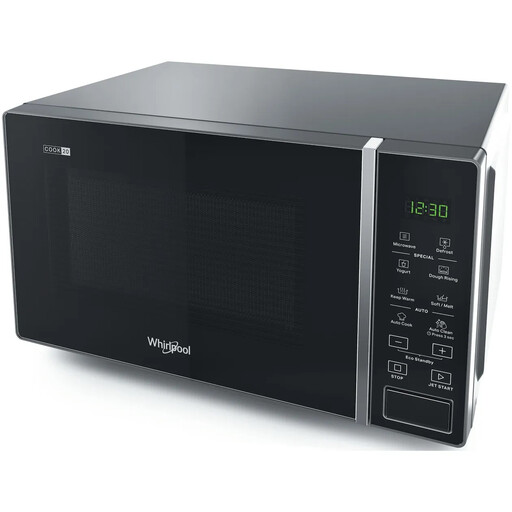
A freestanding model for anyone who mainly wants to reheat leftovers. The product name lists a 20-litre capacity and 700 W output.
Leave at least 10 cm of clearance at the sides and 20 cm above, and don’t block the ventilation openings.
 No image available
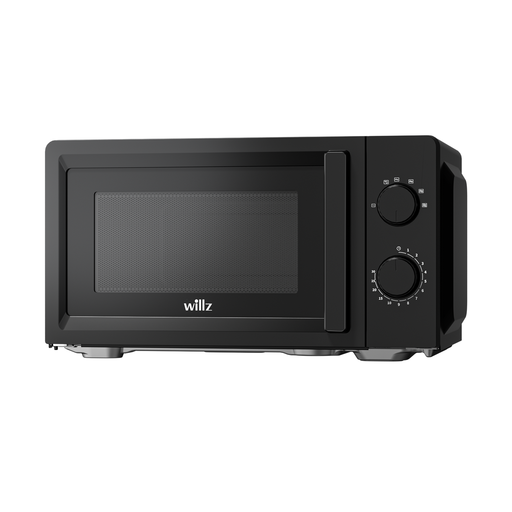
The product name describes it as suitable for small spaces and easy to use.
The name lists a 20-litre capacity. Measure your dish and the available space too before choosing a model.
 No image available
A combination microwave for anyone who wants grill and fan-assisted cooking functions as well as reheating.
The product name lists a 25-litre capacity. Check the space required for the specific version.
 No image available
A freestanding combination microwave for anyone who wants to grill or bake with convection as well as reheat food.
The product name lists a 20-litre capacity. According to the product information, a suitable bracket is needed to install it in a cupboard; make sure there is enough ventilation clearance.
 No image available
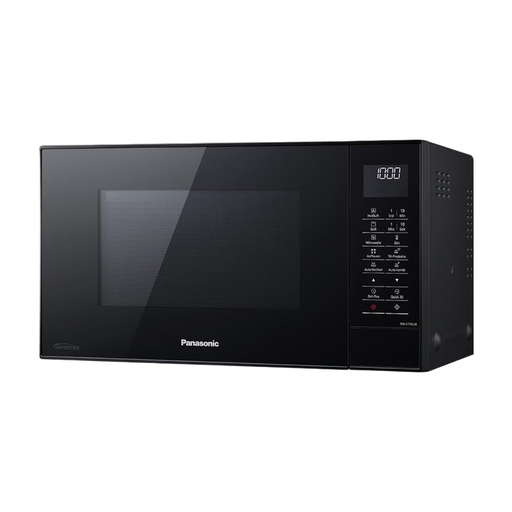
A combination microwave for anyone who wants grill and fan-assisted cooking functions as well as reheating.
The product name lists a 27-litre capacity, 1000 W output and inverter technology. Place the appliance on a stable, level, heat-resistant surface and leave at least 10 cm of ventilation clearance.
Reheat a covered portion in a microwave-safe dish, stirring the curry part-way through. The Netherlands Nutrition Centre advises heating leftovers thoroughly; its general guidance is that refrigerated leftovers can be kept for up to two days.
The Netherlands Nutrition Centre also advises keeping cooked rice in the fridge for up to two days and not leaving leftovers out of the fridge for more than two hours. If you’re reheating a packaged meal, follow the storage instructions on the packaging too.
Not without checking the manual for the exact model first. Ventilation clearance varies by version, so follow the placement instructions rather than relying on the external dimensions alone.
Electrical equipment covered by the Dutch Commodities Act Decree on Electrical Equipment, including appliances with a rated AC voltage between 50 V and 1000 V, must meet safety requirements and carry the CE mark. Check the mark and documentation for the specific version; the product name alone doesn’t confirm that it meets the requirements.
You have a statutory right to a product that meets what you can reasonably expect, and the retailer is your point of contact if something goes wrong. According to the Dutch government, there is no fixed statutory warranty period in the Netherlands; a manufacturer’s warranty is an additional benefit.