
Cooking for a shared meal
You want to reheat a dish of couscous or several portions, so you’re paying attention to usable space and how to avoid cold spots. The Dutch Nutrition Centre advises stirring leftovers while they’re heating.


If you mainly use a microwave to reheat couscous, a solo microwave is an obvious choice, as long as your dish fits inside and can turn. A turntable or larger capacity doesn’t guarantee that a whole portion will heat evenly: if necessary, divide the couscous into smaller, shallow portions, add a little water and stir halfway through. Choose a combination microwave only if you also want to bake or grill.
You want to reheat a dish of couscous or several portions, so you’re paying attention to usable space and how to avoid cold spots. The Dutch Nutrition Centre advises stirring leftovers while they’re heating.
You’re mainly looking for simple settings for regular reheating and defrosting, without extra oven functions you won’t use.
You want to use the microwave cavity for baking or grilling too, and are weighing up whether those extra functions suit your dishes and the space available.
Choose this if: reheating and defrosting are what you’ll mainly use it for, and your dish fits inside.
Bear in mind: this type doesn’t have an oven or grill function. Even with a turntable, you’ll need to stir the couscous and check it as it heats.
Choose this if: you genuinely want to bake or grill as well as reheat food.
Bear in mind: extra functions won’t prevent cold spots if you don’t stir the portion. Compare the usable interior space and external dimensions too.
Choose this if: your kitchen layout calls for a built-in model.
Bear in mind: check the niche dimensions and installation requirements for the exact model. A built-in microwave isn’t essential just for reheating couscous.
| What to consider | What should you look for? | Who is it important for? |
|---|---|---|
| Even, moist reheating | Choose a microwave-safe dish that can rotate freely. If necessary, divide a large portion into smaller, shallow portions, add 1 to 2 tablespoons of water and stir while it heats. | When I’m reheating food for several people, I don’t want some parts to stay cold or dry. Around 36% of consumers prioritise even, moist reheating. |
| Room for your dish and portions | Measure your dish, including the handles, and compare its size with the turntable or usable interior space of the exact model. Also check how much room you have for the appliance. | For a shared meal, I want to know whether my dish will fit or whether I’ll need to divide the food into portions. Around 29% of consumers prioritise space for dishes and portions. |
| Easy-to-use controls | Check that the controls, timer and power settings suit the way you want to reheat leftovers. Compare the model’s manual and product information. | If I mainly use the microwave regularly for leftovers, I want to choose the time and setting without any fuss. Around 21% of consumers prioritise ease of use. |
| Extra cooking functions | Check that the appliance has the oven or grill function you actually want to use, and that its usable space is suitable for those dishes. | If I want to bake or grill as well as make couscous, I want the extra function to suit my other dishes. Around 14% of consumers give these cooking functions top priority. |
The stated capacity doesn’t tell you whether your wide dish will fit or can turn freely on a turntable. If your dish doesn’t fit, you may need to heat the food in several batches or use a different dish.
Measure your dish and compare it with the turntable or maximum dish diameter, as well as the interior dimensions of the exact model.
The Dutch Nutrition Centre says that cold spots can remain when food is heated in a microwave, even if it rotates.
Stir the couscous while it heats, then check that the whole portion is piping hot before serving.
An extra service plan may cost money, but it doesn’t replace your statutory rights if a product is faulty.
Read exactly what additional service the plan offers. If there’s a problem with a product, contact the seller to find a solution.
An optional service plan may incur an additional cost.
Inventum offers freestanding solo models for simple reheating, including the MN205SZ.
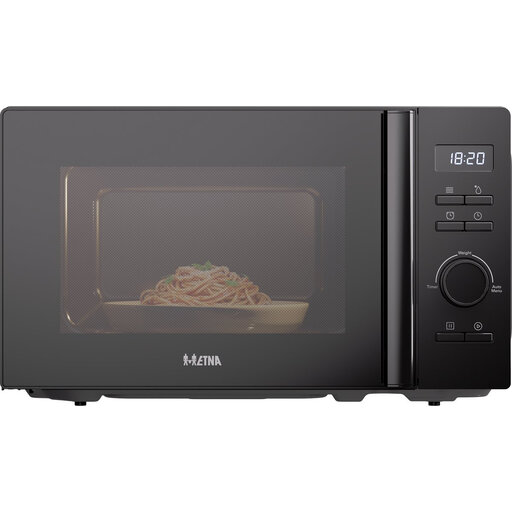
ETNA’s range includes the freestanding solo microwave SMV720, designed for manual reheating and defrosting.
Samsung’s Dutch product page describes the solo microwave MS23K3513AK.
Panasonic describes the NN-SM22QBEPG as a compact solo model with rotary controls.
This selection includes microwaves for reheating couscous, with both turntable and flatbed models. Compare the stated space with your own dish and check which controls suit you.
 No image available
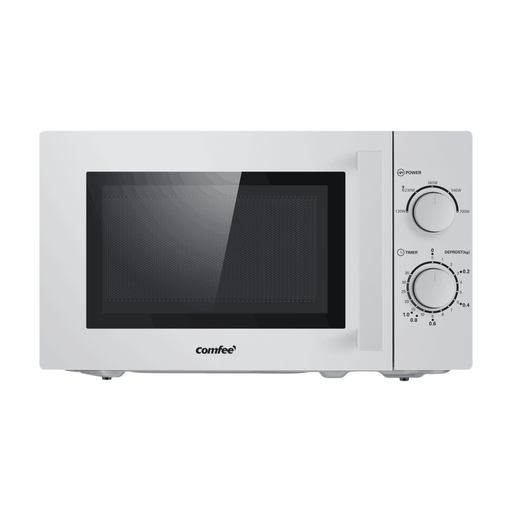
The manual controls and turntable are worth comparing if you regularly reheat couscous in a dish that fits.
The product information lists a 20-litre capacity, 700 W, two rotary dials, five power settings and a 255 mm glass turntable. You’ll need at least 30 cm of clearance above and 20 cm to the side of the microwave.
 No image available
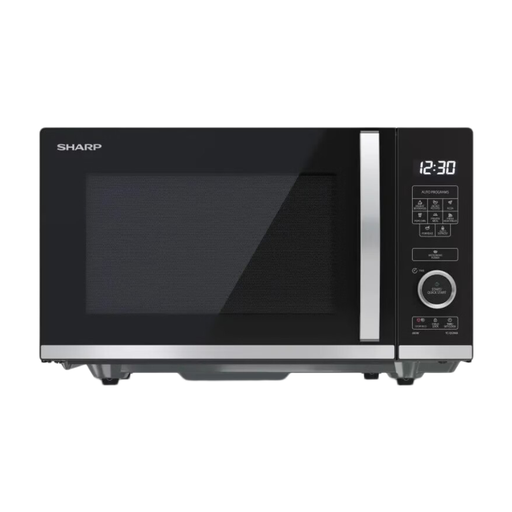
The flatbed design may be useful if you don’t want to put a dish on a turntable. Be sure to measure the available space before you choose.
The product information lists a 20-litre capacity, 800 W, ten power settings and a flat interior measuring 262 × 262 mm. This model doesn’t have a turntable.
 No image available
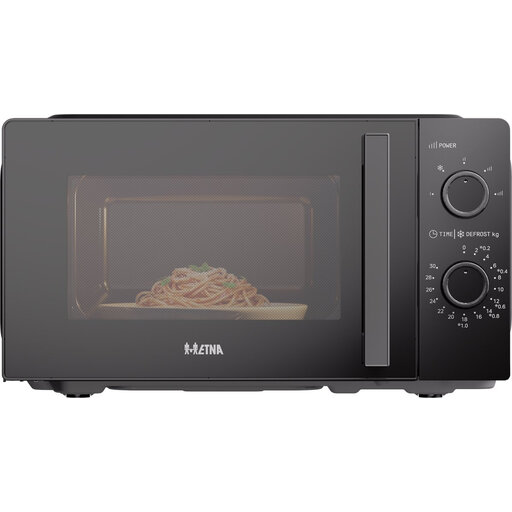
The rotary controls and turntable are worth considering if you’re looking for a straightforward microwave and want to use your dish on the turntable.
ETNA specifies five power settings and a 24.5 cm glass turntable. Measure your dish to check that it has enough room.
 No image available
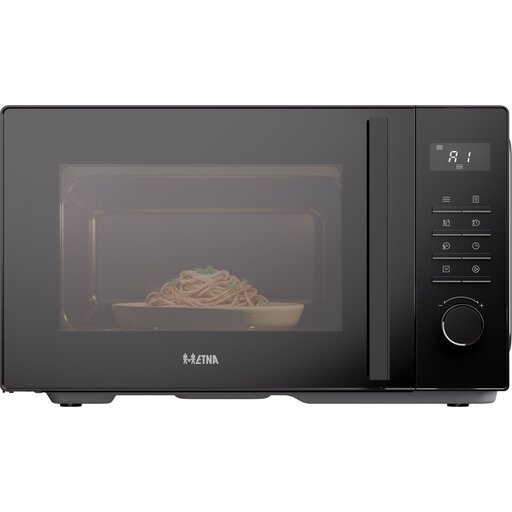
The stated turntable size is a practical point to compare if you want to use a wider dish. Check the clearance around it too.
The product information lists five power settings, eight automatic programmes and a 28.8 cm glass turntable.
 No image available
This model is worth comparing if you want rotary controls and have a dish that fits on the turntable.
The product information lists five power settings, eight automatic programmes and a 25.5 cm glass turntable.
The Dutch Nutrition Centre says cooked couscous can be kept in the fridge for two days or in the freezer for three months. Cool prepared leftovers within two hours and keep them chilled. Reheating won’t make food that has been stored incorrectly safe to eat.
Divide the couscous into small, as-flat-as-possible portions in microwave-safe dishes. In its general microwave guidance, the Dutch Nutrition Centre advises adding 1 to 2 tablespoons of water, covering the dish and stirring the food once or twice while it heats. Reheat leftovers until piping hot throughout, adjusting the amount of water and the heating time to suit the portion.
No, the microwave function is all you need to reheat it. A combination microwave is worth considering if you also want to use the oven or grill function; those extra features won’t replace the need to stir and check the couscous.
When you buy online from a business, you’ll usually have a 14-day cooling-off period; the Dutch government advises checking the applicable terms. You’re also entitled to a product that works properly under statutory consumer rights. According to the Dutch government, there’s no fixed statutory warranty period in the Netherlands, and the seller is your point of contact if a product is faulty.
Use dishes that are labelled as microwave-safe and are approved for use in the appliance’s manual. The Dutch Consumers’ Association warns that metal in microwave mode can cause sparks and a fire risk.