
Vandaag of morgen in huis

Kwaliteit gegarandeerd

Welkomstaanbiedingen ontgrendelen: GRATIS bezorging | Tot 80% korting | Gratis 30 dagen JoyPlus-proefperiode
Download de app
A new microwave sounds like a straightforward purchase. Yet many disappointments stem from misplaced expectations. A compact model may not take large plates, while a combination microwave can take up needless space if you only reheat meals.
So don’t just look at colour, price or the number of automatic programmes. Check the space you’ve got, the power, the capacity and the type of microwave above all.
A 700-watt microwave is fine for reheating and defrosting, but it generally does so more slowly than an 800-watt microwave or a 900-watt model. The highest power isn’t automatically necessary. For soup, leftovers and frozen meals, having multiple power levels matters more than the maximum wattage alone.
Also note the difference between microwave power output and total connected load. Overall consumption can be higher, especially on models with a grill.
A 20-litre microwave won’t automatically fit every worktop. Check the appliance’s width, height and depth, and allow for ventilation space. A freestanding model shouldn’t be placed flush against a wall or cabinet if the manual requires clearance around it.
Also look at the turntable diameter. A 26 cm plate won’t fit in every microwave with turntable. Flatbed models have no turntable, which can make it easier to place rectangular dishes.
A microwave with grill can give dishes a nicely browned top, but it adds extra controls, accessories and cleaning points. A combination microwave with oven function is even more versatile, but usually needs more space and a larger budget.
If you mainly reheat and defrost, a solo microwave is often all you need. For automatic programmes, also check exactly what’s being set: some models ask for the weight of the dish, others run to fixed times.
A 20-litre microwave suits standard plates, bowls and normal portions. For families or larger oven dishes, 23 to 28 litres can be more practical. Don’t just compare litres: the shape of the cavity and the turntable diameter decide whether your crockery fits.
A power output of 700 to 800 watts is often sufficient for everyday use. Models with five or more power levels give you more control for gentle defrosting and gradual heating. A mechanical dial is straightforward and quick; a digital display can be handy for automatic programmes, a clock and precise timings.
Also check whether the microwave has a defrost function, interior light, child lock or quick start. Choose these based on how you’ll use it, not just the product name.
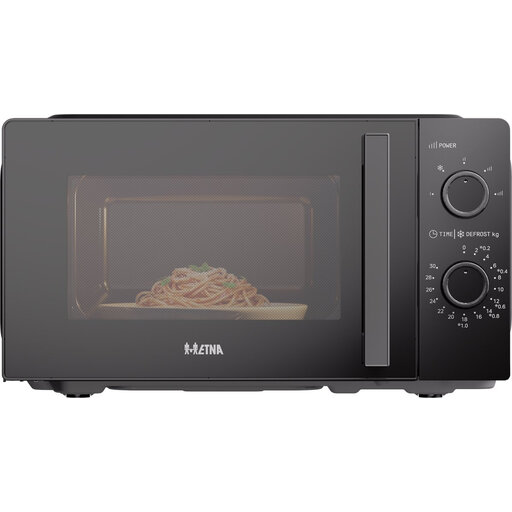
Why it suits this profile: This freestanding microwave focuses on daily reheating and defrosting without digital menus. The dial controls are clear and simple for a student, first-time renter or anyone in a rental.
The specs list 20 litres, 700 watts, five power levels and one automatic defrost programme. That means you’re not paying for a grill or oven function you may never use.
20-litre capacity, 24.5 cm glass turntable, black finish and LED interior light.
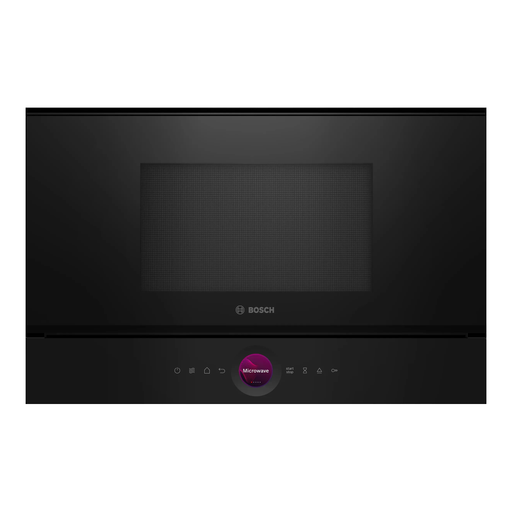
Why it suits this profile: This built-in model is aimed at consumers who value a sleek kitchen finish and digital controls.
Check the stated niche and appliance dimensions before purchase. The product specs list 21 litres, 900 watts and a built-in size of approximately 60 cm wide and 38.2 cm high.
TFT touch display, digital control ring, seven automatic programmes and a black finish.

Why it suits this profile: The 28-litre capacity provides extra room for larger portions. The product specs also list a grill function for users who want to brown or gratinate dishes.
The larger capacity prevents you focusing solely on a compact size when you actually use bigger dishes. Do check the external dimensions of 51.7 × 47.48 × 31 cm.
28-litre capacity, 900 watts microwave power, 1500 watts grill power and a ceramic enamel interior according to the product description.
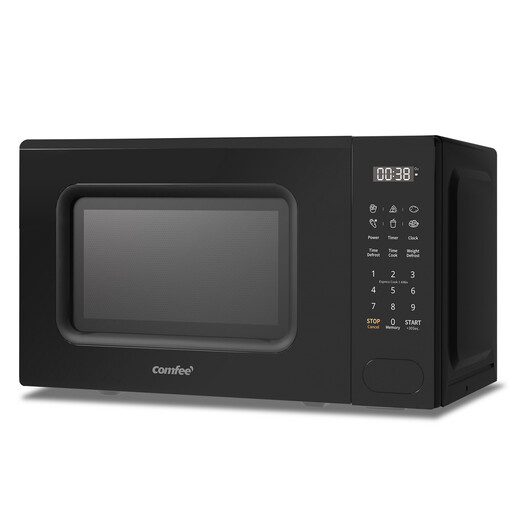
Why it suits this profile: This compact model is designed for small kitchens, student rooms and rented homes where worktop space is limited.
The stated external dimensions are 44 × 31.9 × 25.9 cm. Even so, measure your available space and keep the prescribed ventilation clearance.
20-litre capacity, 700 watts, eleven power levels, six preset programmes and defrost by time or weight.
We’ve compiled a complete, up-to-date list of products that fully meet these strict selection criteria and comply with current European safety regulations.
Only use crockery labelled as microwave-safe. Don’t place metal, aluminium foil or crockery with metallic rims in microwave mode. Never heat sealed jars, bottles or eggs in their shell. Never run a microwave empty.
If you use the grill function, let the appliance and rack cool before cleaning. Clean the door seal, interior and ventilation openings as per the manual. If the door, hinges or seal are damaged, stop using the appliance.
A longer service life mainly depends on correct use, adequate ventilation and regular cleaning. Statutory warranty and any additional manufacturer’s warranty can vary by product and situation; check this before you buy.
For reheating, cooking and defrosting, 700 watts is usually fine. Expect longer cooking times for some dishes than at 800 or 900 watts. A model with multiple power levels helps heat food more gently.
That varies by model. Many product manuals specify at least 10 cm all around, but always follow the manufacturer’s instructions. Never block the ventilation openings and place the appliance on a flat, stable and heat-resistant surface.
Consumption depends on the power, cooking time and function selected. A grill or combination microwave can draw more power than a solo microwave during use. So compare the stated microwave power output and the total connected load when energy costs matter.
