A solo microwave is a good choice if you already have an oven and mainly want to heat ingredients. If you also want to bake in the same appliance, choose a model with an oven function. Being able to control the power and cooking time helps when warming butter, but a low setting doesn’t guarantee that it will soften without melting. If you only need butter for a recipe now and then, Heel Holland Bakt recommends cutting it into pieces first.
Who is this buying guide for?
Bakers who need softened butter
If your recipe calls for butter that’s soft enough to mix but not melted, you’ll want to be able to control how it’s heated. Heel Holland Bakt and King Arthur Baking explain how to soften butter without making it greasy or melting it.
Bakers with limited worktop space
When space is tight, it’s not just the appliance’s external dimensions that matter: allow for ventilation space and room for the door to open. Always follow the instructions for the model you choose.
Bakers without a separate oven
If you want one appliance for both heating ingredients and baking, the difference between a solo microwave and a combination microwave with an oven function is key.
What should you look for when choosing?
Solo microwave
Choose this if: you already have an oven and want an appliance for heating ingredients.
The trade-off: a solo microwave won’t bake cakes or other oven-baked items; also measure the space the model needs.
Combination microwave with oven function
Choose this if: you also want to bake in the same appliance.
The trade-off: an oven function won’t automatically soften butter more precisely; check the space needed and how easy it is to use, too.
No extra microwave
Choose this if: you only want to soften butter for a recipe occasionally.
The trade-off: cutting or grating butter takes preparation, but it won’t take up extra space in your kitchen.
When softening butter for baking, it’s important to check it as you go: Heel Holland Bakt recommends cutting butter into pieces, while King Arthur Baking describes softened butter as yielding when pressed but still firm.
| What to consider |
What to look for when buying |
Who is this important for? |
| Keeping butter soft |
Compare the low power settings and check how you can pause and monitor the heating. |
If I want to soften butter for a recipe, I need to be able to press it without it becoming greasy or melting. Around 33% of consumers put keeping the butter’s texture intact first. |
| Fitting into your kitchen |
Measure the space and allow for the ventilation clearance specified in the model’s instructions. |
If I have limited worktop space, I need room for both the appliance and the recommended ventilation clearance. Around 27% of consumers put the available space first. |
| Being able to bake, too |
Check whether the model has an oven function and which baking settings are described in the instructions. |
If I don’t have a separate oven, I want to know whether the same appliance can also bake for me. Around 20% of consumers put an oven function first. |
| Controls and features |
Consider whether you prefer dials or electronic controls, and how short a time you can set on the timer. |
If I mainly want straightforward controls and features I’ll actually use, I compare the controls before choosing a model. Around 20% of consumers put controls and essential features first. |
Common buying mistakes
-
Assuming a low power setting is a butter-softening programme
Butter can still get too warm and melt on a low setting. If a recipe calls for butter and sugar to be creamed together, melted butter can affect the texture you’re aiming for.
Check the butter as it warms and stop as soon as it yields when pressed but still feels firm. If you don’t need to heat it, cut it into pieces first.
-
Measuring only the external dimensions
A freestanding model may need extra space for ventilation, and the permitted positioning varies from model to model.
Measure the available space and check the installation instructions in the manual for the model you’re considering.
-
Buying a solo microwave for baking, too
A solo microwave heats ingredients, but doesn’t automatically have an oven function for cakes or other oven-baked items. Milieu Centraal recommends an oven or combination microwave if you want to bake.
Before buying, decide whether you only want to heat ingredients or also bake in the same appliance.
Brands worth considering
Bosch
The freestanding FFL020MS2 is worth considering if you want to compare numbered power settings with low power levels.
- Bosch lists five settings from 90 to 800 W and external dimensions of 442 × 345 × 260 mm (w × d × h).
- The heating system listed is microwave only; low settings don’t guarantee that butter will soften to just the right consistency.
ETNA
The freestanding SMV720 is a solo microwave with dials, suited to anyone who prefers manual controls.
- ETNA lists five settings from 120 to 700 W. The manual specifies at least 20 cm of clearance above and 10 cm behind the appliance.
- The mechanical timer dial is marked in two-minute increments; check that this works for short heating times.
Whirlpool
The MWP 201 SB is a solo option with electronic controls, worth comparing if you also want to heat other foods.
- Whirlpool lists a 20-litre capacity, a maximum power of 700 W and external dimensions of 45,2 × 35,0 × 26,2 cm.
- The manufacturer’s extra features don’t prove that it will soften butter more precisely.
Products at Joybuy
This selection includes microwaves for heating ingredients and a combination microwave for anyone who also wants to bake in the same appliance.
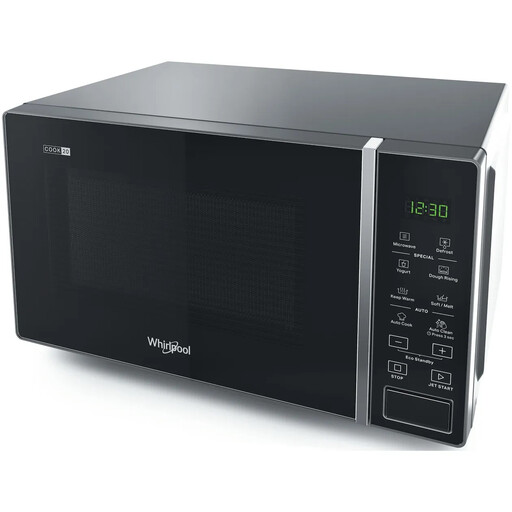 Image unavailable
Whirlpool MWP 201 SB, 20 litres
Five power settings give you options to choose from. Check the butter as it warms, as a low setting doesn’t guarantee the texture you want.
Whirlpool lists a microwave power of up to 700 W.
View at Joybuy
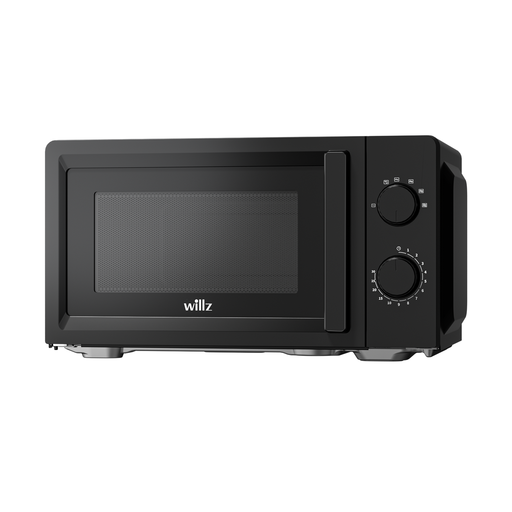 Image unavailable
Galanz P4 Compact, 20 litres
The product name describes a compact microwave for smaller spaces. Measure the available space and check the installation instructions before deciding.
The product name lists a capacity of 20 litres.
View at Joybuy
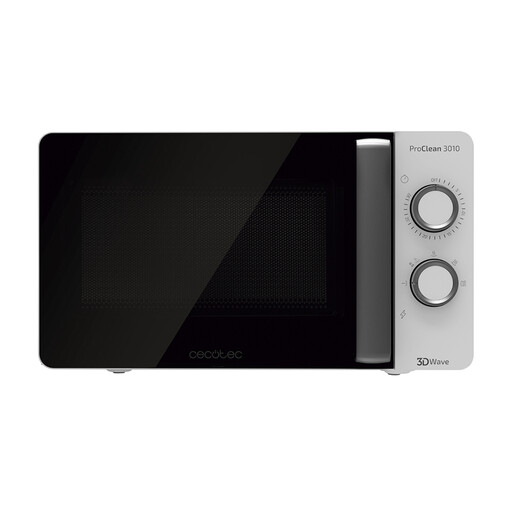 Image unavailable
Cecotec microwave, 20 litres, 700 W
Six power settings give you options to choose from. Check the butter as it warms, as the number of settings doesn’t tell you how soft it will become.
The product name lists a capacity of 20 litres and a power rating of 700 W.
View at Joybuy
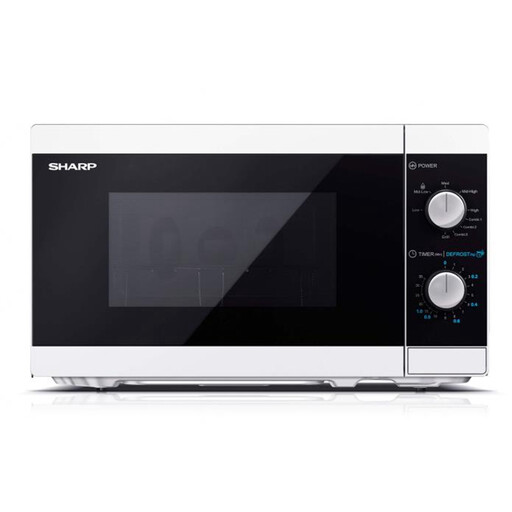 Image unavailable
SHARP YC-MG01E-W, 20 litres, 800 W
The product name lists a grill function. Check which features you need, as a grill alone doesn’t mean the appliance has an oven function.
The product name lists a capacity of 20 litres and a power rating of 800 W.
View at Joybuy
 Image unavailable
Siemens FF023LMB2 combination microwave, 20 litres
If you also want to bake in the same appliance, check the manual to see which baking settings suit your recipes.
The product name lists a capacity of 20 litres and grill and fan-assisted cooking functions.
View at Joybuy
Frequently asked questions
How can you tell when butter is soft enough?
According to King Arthur Baking, softened butter yields when pressed but still feels firm and not greasy. Heel Holland Bakt recommends cutting cold butter into pieces first, rather than putting it straight into the microwave.
Can a freestanding microwave be fitted snugly between kitchen cupboards?
Follow the manual for the specific model. The ETNA SMV720 manual specifies at least 20 cm of clearance above and 10 cm behind the appliance; don’t assume those distances apply to another model without checking.
Can I heat butter in its original packaging or in any container?
Don’t assume so: check the container or material is labelled as microwave-safe and follow the instructions. The Voedingscentrum warns that unsuitable dishes can melt or cause a fire.
Can I bake a cake in a solo microwave?
A solo microwave doesn’t have an oven function for baking. Milieu Centraal recommends an oven or combination microwave if you want to bake; if you choose a combination model, check which baking settings it offers.
Is CE marking required for a microwave sold in the Netherlands?
CE marking is required for electrical equipment covered by the EU Low Voltage Directive when it is placed on the EU market. According to the Netherlands Enterprise Agency, CE is a conformity marking, not an independent quality mark or a guarantee that a specific item is safe. Also check that the safety instructions are easy to understand.


