
If you usually reheat one portion
You mainly reheat a portion you’ve already cooked and want to be able to check the centre too. In that case, space for your dish and an adjustable microwave setting matter more than extra oven functions.


If you mainly want to reheat food, a solo microwave should do the job. Choose an oven or grill function only if you also want a browner surface. In a shared kitchen, consider the controls, whether your dish will fit and how easy the appliance is to clean. Heat bread pudding until steaming hot all the way through, and check the centre too: a turntable or high power setting is no substitute for checking, as the Netherlands Nutrition Centre advises.
You mainly reheat a portion you’ve already cooked and want to be able to check the centre too. In that case, space for your dish and an adjustable microwave setting matter more than extra oven functions.
Several people use and clean the same appliance. Clear controls, a suitable spot on the worktop and an oven cavity that’s easy to clean are all worth considering.
Would you sometimes like more than just reheating, such as a browner surface? Then it’s worth weighing up a solo microwave against one with an oven or grill function.
In a shared kitchen, even heating, ease of use and cleaning all matter. An oven or grill function is mainly worth considering if you want a browner surface as well as reheated food.
A good fit if: you mainly want to reheat individual portions and a microwave function is all you need.
Bear in mind: there’s no oven function for browning the top, and the turntable and guide ring need to be cleaned separately.
A good fit if: you prefer a flat base that’s easy to wipe down in a shared kitchen and don’t need an oven or grill function.
Bear in mind: a flatbed alone doesn’t prove that bread pudding will heat evenly; check the food while it’s heating and afterwards.
A good fit if: you regularly want a browner or crispier surface as well as microwave reheating. The Consumers’ Association describes the oven setting as the way to get a crispy crust.
Bear in mind: extra functions mean extra steps, and they don’t guarantee a particular result for bread pudding.
The Netherlands Nutrition Centre advises heating leftovers thoroughly in the microwave until steaming hot. Stir or check them partway through; even with a turntable, it’s important to check for any cold spots.
| What to consider | What to look for | Who does this matter most to? |
|---|---|---|
| Heating through | Choose an adjustable microwave setting and make sure you can reach the food to check it partway through. | When I reheat a portion I’ve already cooked, I want to check the centre too and make sure it gets steaming hot throughout. Around 36% of consumers prioritise thorough heating. |
| Controls | Check how you set the time and power level; don’t judge it solely by the number of automatic programmes. | In our kitchen, I want different people to be able to set the time and power level easily. Around 29% of consumers give ease of use top priority. |
| Cleaning | Compare a flatbed with a turntable, and check the cleaning instructions for the model. | When several people use the same appliance, I want to be able to wipe up spills easily. Around 21% of consumers prioritise cleaning. |
| Browning the surface | Check whether the exact model has an oven or grill function, and what the manual says about using it. | If I want a browner top as well as reheating, I look for oven or grill functions. Around 14% of consumers make this their main buying priority. |
Colder spots can remain even after microwaving. That’s why the Netherlands Nutrition Centre advises heating leftovers thoroughly and stirring them partway through.
Compare the controls and space for your dish, but check the portion itself while it’s heating and afterwards too.
The shape of the oven cavity alone doesn’t prove that bread pudding will heat evenly throughout.
Choose the cleaning method that works for your shared kitchen, and check the food for cold spots.
An additional warranty doesn’t replace your rights if a product is faulty. The Dutch Government advises checking whether the extra warranty genuinely offers anything more.
Read the terms and conditions, and contact the retailer if the product is faulty.
The SMV820 is a freestanding solo microwave worth comparing for its controls and space for your dish.
The MN207S is a freestanding solo microwave for reheating and defrosting.
The MS23K3513AS/EN is a solo option with a 23-litre capacity and a ceramic interior.
Sharp sells microwaves with both turntables and flatbeds, so you can compare different cleaning options.
The NN-DF38PBEPG is an example of a combination microwave for anyone weighing up oven and grill functions alongside microwave reheating.
The models below include a freestanding solo microwave and microwaves with grill or combination functions, for anyone mainly looking to reheat food but who sometimes wants a browner surface too.
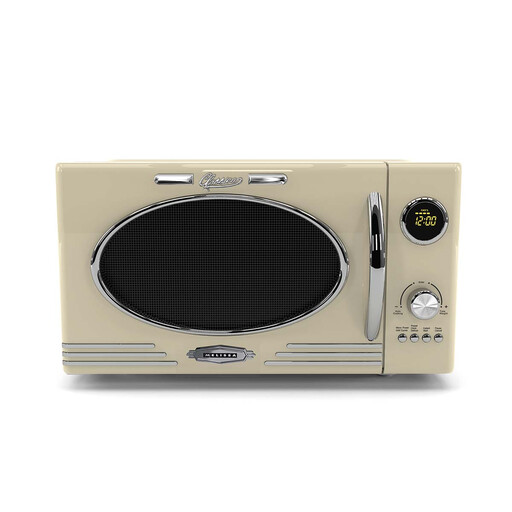 Image unavailable
A grill function is useful if you sometimes want a browner surface as well as microwave reheating.
The product name lists five microwave power levels, defrosting and a 60-minute timer.
 Image unavailable
A combination microwave is worth considering if you’re weighing up grill or convection functions as well as reheating.
The product name lists a grill function, convection cooking and a silver finish.
 Image unavailable
This model is worth comparing if you want grill or convection functions as well as reheating.
The product name lists grill and convection functions and a black finish.
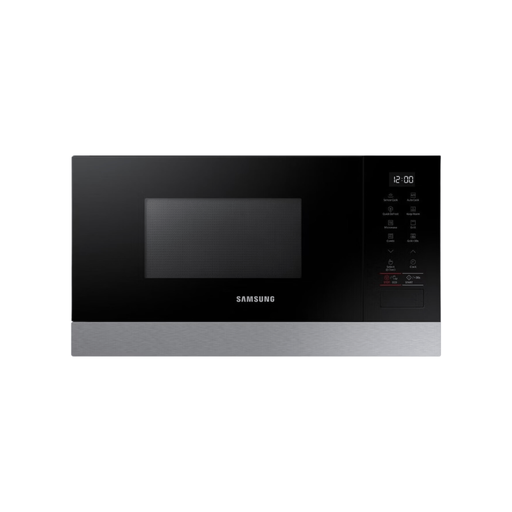 Image unavailable
A combination microwave is worth considering if you want to include combination functions alongside microwave reheating.
The product name lists 900 W, a ceramic interior and Slim Fry Technology.
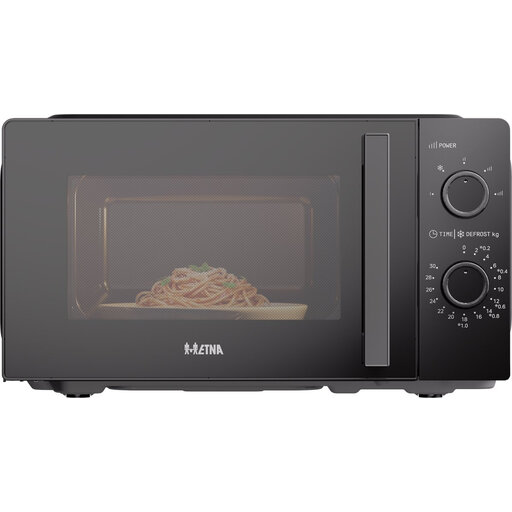 Image unavailable
A solo microwave suits anyone who wants to reheat food without an oven or grill function.
The product name lists five power levels.
Heat the portion all the way through until steaming hot, and check the centre too. The Netherlands Nutrition Centre advises cooling homemade leftovers within two hours, storing them covered in the fridge at 4 °C and eating them within two days. Use a suitable dish, don’t make the portion too thick, and don’t reheat leftovers a second time.
No. Only use a dish labelled as microwave-safe. Being suitable for storing food doesn’t automatically mean a dish is safe for heating food.
Follow the manual for the model you choose, as the required clearance can vary between appliances. For the SMV820, ETNA specifies at least 20 cm of space above the appliance and 10 cm behind it; check the rest of the guidance in the full manual too.
Electrical appliances covered by the relevant rules must carry the required CE marking. The Netherlands Food and Consumer Product Safety Authority outlines the applicable directive for electrical equipment with a rated AC voltage between 50 and 1,000 V. This requirement doesn’t confirm that an individual appliance has been checked.