Choose a microphone based on how your recording space sounds and how far you can stand from the microphone during your monologue. Recording close to the microphone can make your voice sound clearer in relation to the room, while a quiet, controlled space gives you more scope to use a condenser microphone. Then check the connection, how you’ll record louder passages, and what equipment or accessories you still need.
Which approach suits you?
Performer in a reverberant room
If you can stay fairly close to the microphone, focus on clarity and test it where you’ll be recording. Shure explains how the distance from the microphone affects the balance between your direct voice and reflected sound.
Performer with a wide vocal range
If your monologue shifts between whispers and powerful passages, test the loudest section too and check which recording features are available with your chosen connection. RØDE distinguishes between USB and XLR for the NT1 5th Generation.
Beginner without an audio interface
If you want to get started on a computer and may switch to XLR later, compare the microphone’s connection with the equipment you already have. RØDE describes USB and XLR for the NT1 5th Generation; Shure says the SM7B needs an audio interface for computer recording.
What should you look for when choosing?
Condenser microphone in a quiet space
A good fit if: you have a quiet recording space and want to capture subtle details in your voice.
Bear in mind: a cardioid pickup pattern won’t eliminate room reflections; with an XLR model, the power supply and interface need to be compatible.
Dynamic microphone for close-up speech
A good fit if: your room doesn’t sound ideal and you can stay close to the microphone while speaking.
Bear in mind: recording close to the microphone won’t make background noise or reverberation disappear; the Shure MV7+ has USB-C and XLR, while the SM7B needs an interface for computer use.
Performing with plenty of freedom to move
A good fit if: you can’t stay in the same place throughout your monologue.
Bear in mind: the room may sound more prominent when you’re further away; test your performance distance and microphone placement before choosing a model.
| What to consider |
What should you check? |
Who is this important for? |
| Reverberation and clarity |
Make a test recording from the distance you’ll actually be speaking. Shure explains that a microphone won’t automatically separate your direct voice from reflections. |
If I’m performing in a reverberant room, I want my words to stay clear without having to deliver the whole monologue right up against the microphone. Around 28% of consumers say clarity in the room is their top priority. |
| Vocal volume and peaks |
Record the loudest passage too. According to RØDE, the NT1 5th Generation’s 32-bit float output works via USB only with compatible software; exceeding the maximum sound pressure level can still cause distortion. |
If my performance moves from whispers to powerful passages, I want to be able to test the loudest moments in advance. Around 22% of consumers are particularly concerned about wide variations in vocal volume. |
| Freedom of movement |
Perform a full passage in the intended position and check how the sound changes as you move further from the microphone. Shure explains how distance affects your direct voice and room reflections. |
If I move around during my monologue, I want to know how much variation in distance the recording can handle. Around 22% of consumers put freedom of movement first. |
| Connection and monitoring |
Check the exact version and make sure it’s compatible with your computer connection and interface. RØDE lists USB and XLR for the NT1 5th Generation; the Shure MV7+ has USB-C and XLR, while the Audio-Technica AT2020 has an XLR connection. |
If I want to get started without an interface or keep using my existing equipment, I want to know how the microphone connects before I buy. Around 17% of consumers say compatibility with their available equipment is their top priority. |
| Complete recording setup |
Check what’s included with the exact version and which items you already own. RØDE lists cables, a shock mount and a pop filter with the NT1 5th Generation; the Shure SM7B needs an audio interface for computer recording. |
If I want to put together a working setup, I want to know what else I’ll need alongside the microphone. Around 11% of consumers are particularly focused on having a complete setup. |
Common buying mistakes
-
Expecting a microphone to remove room reverberation
A microphone won’t automatically separate your direct voice from reflected sound afterwards. A reverberant room can therefore still affect how clearly you’re heard.
Make a test recording in the space where you’ll actually perform and compare the sound at the distance you can maintain during the monologue.
You may need to spend extra time preparing a different recording space or microphone position.
-
Assuming 32-bit float prevents every kind of distortion
On the RØDE NT1 5th Generation, the 32-bit float feature works via USB, not through the analogue XLR output. Exceeding the maximum sound pressure level can still cause distortion that can’t be fixed digitally.
Check the connection and software settings, and record a loud test passage.
-
Focusing only on the microphone when putting together an XLR setup
A standalone microphone isn’t always enough for computer recording. Depending on the model, you may also need an interface, a compatible power supply, a cable, a stand or a pop filter.
Check what’s in the box for the exact version and make a list of the equipment you already have.
Without compatible accessories, your recording setup may be incomplete.
-
Confusing the Audio-Technica AT2020 with a USB version
The Audio-Technica AT2020 discussed here has an XLR connection, not USB. A USB version therefore has a different type of connection.
Before buying, check the full model number and the connection on the version you’ve chosen.
Brands to compare
RØDE
The NT1 5th Generation is a cardioid studio condenser microphone with USB and XLR, designed for applications including voice recording.
- RØDE says a shock mount, pop filter and cables are included. The 32-bit float feature is available via USB with compatible software settings.
- The feature isn’t available through the analogue XLR output. RØDE also warns that exceeding the maximum sound pressure level can cause distortion that can’t be corrected.
Shure
The MV7+ is a dynamic microphone with USB-C and XLR; the SM7B is a separate dynamic XLR model for speech and vocals.
- According to Shure, the MV7+ has adjustable features and a headphone connection.
- The SM7B needs an audio interface for computer recording and may require extra pre-amplification. The manufacturer’s noise-reduction claims for the MV7+ don’t prove that room reflections will disappear.
Audio-Technica
The AT2020 is a cardioid XLR condenser microphone for applications including home recording and voice-overs.
- A historical review of the AT2020 specifically by Sound On Sound rated the model positively for vocals.
- The review notes that an external pop filter is useful. Also check the power supply and equipment required, and don’t confuse the XLR version with a USB variant.
LEWITT
The LCT 440 PURE is a cardioid XLR studio condenser microphone for voice recording.
- LEWITT lists an included shock mount and magnetic pop filter. For this model, the manufacturer specifies a self-noise level of 7 dB(A) and a maximum sound pressure level of 140 dB SPL.
- These are the stated specifications for the model, not independent measurements in a Dutch home; they don’t remove the need for good positioning or room treatment.
Joybuy products
This selection includes wireless microphone systems, a lavalier microphone and a USB microphone for a fixed recording position. The right option for you depends on how much room you need to move and the connections on your recording equipment.
 No image available
DJI Mic Mini 2S (2 TX + 1 RX + Charging Case)
The stated clip or magnetic attachment makes this system worth considering if you want to move while speaking; check that the receiver connects to your recording equipment.
The product name lists 2 TX, 1 RX and a Charging Case.
View at Joybuy
 No image available
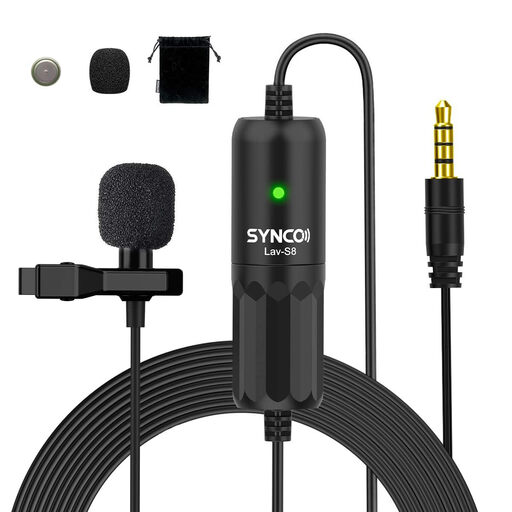
SYNCO S8 lavalier microphone for smartphone, PC, laptop and camera
A lavalier setup may suit you if you want to move during your monologue; check that the connection is compatible with your computer, smartphone or camera.
View at Joybuy
 No image available
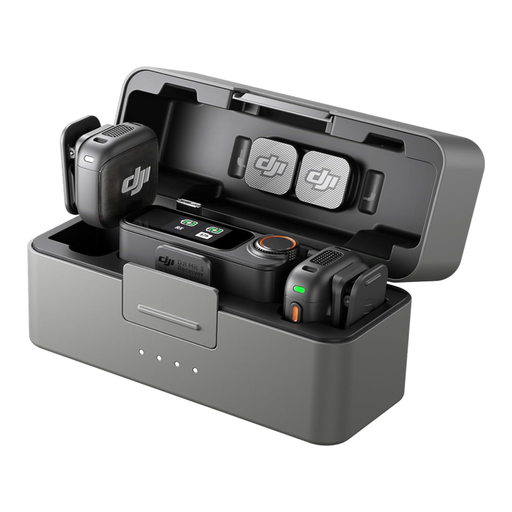
DJI Mic 3 (2 TX + 1 RX + Charging Case)
The two transmitters may be useful if you want to use two microphone sources; check that the receiver works with your computer or other recording equipment.
The product name lists 2 TX, 1 RX and a Charging Case.
View at Joybuy
 No image available
Razer SEIRÉN V3 MINI Quartz USB microphone
This USB microphone may suit a fixed recording position at a computer; compare your desk setup with the distance you need while performing.
The product name specifies the Quartz version and USB.
View at Joybuy
Frequently asked questions
Do I always need a condenser microphone for a theatre monologue?
No, you don’t always need a condenser microphone. In a quiet, controlled space, a condenser may be a good option for capturing vocal detail; for close-up speech in a less suitable room, a dynamic model may be a better fit. Neither type will automatically remove reverberation or background noise.
How should I position the microphone for a consistent recording?
Point the speaking side towards your voice and maintain the intended distance during a test recording. Use a pop filter and a stable mount where needed. RØDE marks the front of the NT1 5th Generation with a gold dot and describes the included shock mount and pop filter; follow the instructions for your exact model when maintaining it.
Can I connect the Shure SM7B directly to my computer?
No, the Shure SM7B is an analogue XLR microphone, not a USB microphone. You’ll need an audio interface for computer recording; also check that your setup provides enough pre-amplification.
What warranty and cooling-off period apply to online purchases in the Netherlands?
When you buy as a consumer, you’re entitled to a product that meets the required standards, and the seller is your point of contact if something is wrong. According to the Dutch government, the Netherlands has no fixed statutory warranty period. For distance sales, a 14-day cooling-off period applies in many cases, with some exceptions; check the terms that apply to your purchase.
Can I publish a recorded monologue using someone else’s play text online?
Not without permission. According to the Dutch government, you may copy a copyright-protected text for personal use, but you can’t distribute or publish it without permission. Check the rights to the text before publishing your recording.


