If you’re recording the script in one place, choose a microphone you can keep consistently close to your mouth. RØDE recommends speaking at close range, as a microphone positioned further away can pick up more room noise and echo. For recording on a computer, USB is the simpler connection option, while XLR requires a suitable interface and cable, as Elgato explains. If you’ll actually be walking while recording, a portable wireless set is better suited to that movement. Check the connection and listen back to a test recording in the room.
Which set-up is right for you?
Recording voice-over in an echoey rehearsal room
You’re recording the script in one place and want your speech to be clear. Keeping a short, consistent distance from the microphone and making a test recording in the room are important considerations.
Recording without an audio interface
You want to record on a computer without first putting together an XLR set-up. Check the USB connection and whether you can monitor the recording signal.
Walking while recording
You’re practising the route or movement while recording. In that case, choose a portable microphone with a connection that suits your recording device.
What should you look for?
Recording in one fixed position
When: if you can keep the microphone close and at roughly the same distance throughout the recording.
Trade-off: USB can connect directly to a compatible computer; recording to a computer via XLR requires an interface and cable.
Moving while recording
When: if the route or movement is part of the recording and you want to carry the microphone with you.
Trade-off: check the receiver connection and whether you need an adapter for your recording device; a wireless microphone won’t change the room’s acoustics.
First decide whether you’ll be recording standing still or walking. Then check the connection and how you’ll keep the microphone at the right distance throughout the recording.
| What to consider |
What should you check? |
Who is this most relevant to? |
| Clear speech in an echoey room |
Check whether you can keep the microphone close, and make a test recording in the intended location. |
If I’m recording the script in one place, I want my voice to sound clear without relying on the microphone type alone. Around 36% of consumers put clear speech first. |
| Easy connection to a computer |
Check the USB port, the cable you need and whether you can monitor the signal. |
If I want to record on my computer without a separate XLR interface, I’ll check the connection and monitoring options first. Around 29% of consumers give ease of connection top priority. |
| Freedom of movement |
Decide whether you’ll actually be walking while recording; then check what’s included in the set and how it connects to your device. |
If I’m walking around the room while recording, I want the microphone to move with me and work with my recording device. Around 21% of consumers put freedom of movement first. |
| Connecting to XLR equipment |
Check which interface and cables you need, and the difference between the USB and XLR functions on the exact model. |
If I already have XLR equipment or want to expand my recording set-up, I’ll check the connection and how many inputs I need. Around 14% of consumers say expandability is their top priority. |
Common buying mistakes
-
Expecting a polar pattern to eliminate all echo
A microphone positioned further away from you may pick up more room noise. A polar pattern won’t change the room’s acoustics.
Make a test recording with the microphone close to your mouth before choosing a different model.
You may need to re-record the audio or change where you record.
-
Buying an XLR microphone as a complete computer set-up
To connect an analogue XLR set-up to a computer, you’ll also need a suitable audio interface and XLR cable.
Before buying, check which connections and components you already have.
If you don’t already have these components, you’ll need to add them to your recording set-up.
-
Choosing a wireless set without checking the connections
Different versions of a set may vary in their transmitters, receiver and phone connection. Freedom of movement doesn’t automatically mean the set will connect to your recording device.
Compare the exact contents of the set with the input on your recording device, and check whether you need a suitable adapter.
You may need a different set configuration or a suitable adapter for your device.
Brands to consider
Shure
The MV7+ is designed for close-range voice recording, with USB-C and XLR connections. The SM58 is an XLR handheld microphone for use with a suitable recording set-up.
- Shure specifies USB-C and XLR for the MV7+, and a cardioid polar pattern for the SM58.
- The SM58 isn’t a USB computer microphone you can connect directly. These model specifications aren’t an independent comparison of sound quality in your room.
Audio-Technica
The ATR2100x-USB is a handheld microphone with USB and XLR connections, for digital computer recording or an analogue XLR set-up.
- Audio-Technica specifies USB, XLR and a headphone output for this model.
- Check which connection and other equipment are right for your recording; the specifications don’t tell you how echo will sound in your room.
RØDE
The NT-USB Mini suits a fixed desk or computer set-up, while the Wireless ME is designed for portable recording.
- RØDE lists a desk stand and headphone output for the NT-USB Mini, and compatibility with various recording devices for the Wireless ME.
- For a wireless set, check the connection you need. For a desk microphone, make sure its position suits your recording.
Sennheiser
The e 835 is a dynamic cardioid handheld microphone for use with suitable XLR recording equipment.
- Sennheiser lists the e 835 and the switch-equipped e 835-S as separate models.
- Check the model version and the recording equipment you’ll need; these specifications aren’t an independent comparison with other brands.
DJI
The Mic Mini set with two transmitters and a receiver may suit portable recording or a recording with two speakers.
- DJI describes the clip and magnetic attachments, and says the receiver can pair with two transmitters.
- DJI specifies omnidirectional recording for the set. Check which adapter you need; wireless recording won’t eliminate echo in the room.
Microphones for stationary or mobile recording
This selection includes USB microphones for a fixed recording position and portable wireless sets for recording while on the move.
 No image available
DJI Mic Mini 2S (2 TX + 1 RX + charging case)
Suited to recording while moving as you speak.
Set includes: 2 TX, 1 RX and charging case.
View at Joybuy
 No image available
SYNCO P2XT USB-C wireless microphone
Suited to anyone who wants to move while recording and uses a USB-C recording device.
USB-C connection; check that it’s compatible with your recording device.
View at Joybuy
 No image available
USB condenser microphone with cardioid pattern
Suited to a fixed USB recording set-up where you can position the microphone close to you.
USB connection; cardioid pattern.
View at Joybuy
 No image available
HyperX SoloCast 2 USB microphone
Suited to a fixed computer set-up for recording your voice.
USB; cardioid pattern; black.
View at Joybuy
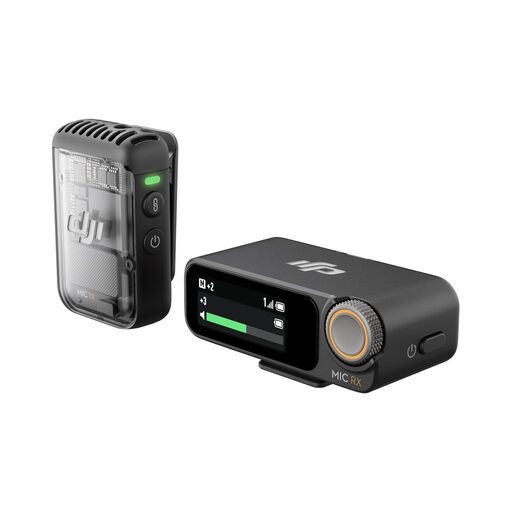 No image available
DJI Mic 2 (1 TX + 1 RX)
Suited to mobile recording when the microphone needs to move with the speaker.
Wireless set includes: 1 TX and 1 RX.
View at Joybuy
Frequently asked questions
Will a directional microphone help in an echoey rehearsal room?
A suitable polar pattern and, above all, keeping the microphone close to your mouth at a consistent distance can help your speech come through more clearly. They won’t eliminate the room’s echo, so listen back to a test recording made from the spot where you’ll be recording.
Can I connect an XLR microphone straight to my computer to record?
To connect an analogue XLR set-up to a computer, you’ll need a suitable audio interface and XLR cable. Check whether you already have these before buying just the microphone.
How can I avoid plosive sounds and changes in voice volume?
Keep your speaking distance as consistent as possible and try positioning the microphone slightly off to one side of your mouth. Test a pop filter and listen back to a short passage with strong consonants; the right distance depends on your microphone and set-up.
What are my rights when buying a microphone online in the Netherlands if it isn’t suitable?
For distance purchases, you usually have a 14-day cooling-off period, with some exceptions, according to the Dutch government. If a product doesn’t meet what you could reasonably expect under normal use, the seller must resolve the problem under ACM ConsuWijzer guidance, for example by repairing or replacing it, or refunding you. Check the terms that apply to your purchase.
Can I record and publish recognisable voices from the rehearsal room without permission?
First, consider which privacy rules apply. The Dutch Data Protection Authority considers audio recordings in which someone is identifiable to be personal data; collecting and using them requires a lawful basis under the GDPR. According to the regulator, publishing other people’s personal data online generally requires their consent. If in doubt, avoid recording others in a recognisable way or make sure you have an appropriate lawful basis before using the recording.


