If you’re mainly recording speech, choose a microphone you can position close to your mouth: distance and echo matter more than promises of noise reduction. Then choose one to suit where you’ll record: USB for a fixed computer setup, a compatible clip-on receiver for phone recordings, or a recorder for standalone use and capturing the sound of the room. Before buying, check the connections, monitoring and any storage or power requirements.
Who is this choice for?
Stationary storyteller
You’re recording a travel story at a table and want your voice to remain clear in a reverberant rehearsal room. Consider how far you’ll be from the microphone, its directionality and whether you can monitor the recording as you go. Audio-Technica and Shure outline these considerations for specific microphone models.
Storyteller using a phone
You move around as you tell your story and want to use your phone as a recorder. A clip-on setup is handy when the receiver is compatible with your phone’s port and your recording app uses the external microphone. RØDE outlines the clip-on transmitters and connection options for its Wireless Micro.
Capturing the atmosphere of the room
As well as your spoken words, you want to deliberately record the sound of the rehearsal room, possibly without a phone or laptop. A handheld recorder gives you a different setup from a microphone positioned close to your mouth. Zoom describes the built-in X/Y microphones on the H1essential.
What should you consider when choosing?
First decide what you want to capture: mainly your voice, a story told on the move, or the sound of the room as well. Then choose the connection and check whether you need monitoring, storage or power.
Dynamic USB/XLR speech microphone
Suitable if: you usually sit still and can position the microphone close to your mouth. Audio-Technica says the ATR2100x-USB has USB, XLR and a cardioid pickup pattern.
Trade-off: you’ll need a compatible microphone input for XLR; directionality won’t completely eliminate echo or other voices.
Compact USB desktop microphone
Suitable if: you record in a fixed location using a computer or compatible tablet. RØDE lists a desktop stand and headphone output for the NT-USB Mini.
Trade-off: check that the supplied USB-C to USB-A cable is compatible with your device; a desktop microphone won’t change the room’s acoustics.
Wireless clip-on microphone for your phone
Suitable if: you move around as you tell your story and record on your phone. The RØDE Wireless Micro has two clip-on transmitters.
Trade-off: the receiver must be compatible with your phone’s connection; a thick phone case may block the port.
Standalone handheld recorder
Suitable if: you want to record without a computer or phone, or deliberately capture the sound of the room. The Zoom H1essential has built-in X/Y microphones and can also be used as a USB microphone.
Trade-off: check the storage and power requirements; a recorder positioned further from your mouth may pick up more reflections from the room.
| Consideration |
What should you check? |
Who is this important for? |
| Clear speech |
Check the pickup pattern, mounting and headphone monitoring. Make a test recording in your usual location. |
If I’m recording in a reverberant rehearsal room, I want to keep my voice close and clear. Around 36% of consumers prioritise speech clarity. |
| Recording on the move |
Check that the receiver fits your phone’s port, that your case leaves enough room and that your recording app uses the microphone. |
People who move around with a phone as they tell their story want the freedom to record without a fixed setup. Around 29% of consumers prioritise freedom of movement. |
| Fixed setup |
Compare the supplied cable with the port on your computer or tablet, and check whether you can monitor with headphones. |
If I’m recording in a fixed location, I want to start recording without unnecessary connection steps. Around 21% of consumers prioritise a simple fixed setup. |
| Room ambience and standalone recording |
Decide whether you mainly want to capture speech or ambient sound; if you’re using a recorder, also check the required memory card and power supply. |
Those who want to capture the sound of the rehearsal room in their travel diary may choose a different microphone position from those recording close-up speech alone. Around 14% of consumers prioritise room ambience. |
Common buying mistakes
-
Assuming noise processing blocks out everything
A directional microphone can still pick up sound from its recording area. Shure also says that the MV7+’s switchable denoiser does not remove background voices.
Speak close to the microphone, point it away from unwanted sound sources and assess a test recording in the conditions you plan to use it in.
-
Not checking your phone’s port and case
The RØDE Wireless Micro is available with different receiver versions, and a thick case may get in the way of the receiver.
Before buying, check the connection, the space around the port and whether your recording app uses the external microphone.
If the version isn’t compatible, you may need a different receiver or an adapted recording setup.
-
Focusing only on 32-bit float when buying a handheld recorder
The recording format won’t remove echo or solve the problem of being too far from the storyteller. Zoom also outlines the storage and power requirements for standalone use.
Check the complete setup and decide whether you want to record a close-up voice or capture more of the sound in the room.
Standalone use may require a compatible microSD card and power supply.
-
Assuming the manufacturer’s warranty is the limit of your rights
In the Netherlands, your statutory guarantee isn’t simply limited to any manufacturer’s warranty period. ACM ConsuWijzer says that, under the applicable conditions, the seller must put a faulty product right at no cost to you.
Keep your proof of purchase and contact the seller if a product doesn’t meet reasonable expectations.
Brands to consider
Audio-Technica
The ATR2100x-USB is an option for recording travel diaries close to the microphone at a computer, or for anyone who also wants to use a compatible XLR input.
- Audio-Technica lists USB and XLR, a cardioid pattern, headphone monitoring, cables and a folding desktop tripod for this model.
- XLR can only be used with compatible equipment; a directional pickup pattern won’t automatically eliminate echo.
RØDE
The NT-USB Mini suits a compact, fixed USB setup; the Wireless Micro is designed for mobile recording with a phone.
- RØDE lists a desktop stand and headphone output for the NT-USB Mini. The Wireless Micro has two clip-on transmitters.
- The NT-USB Mini comes with a USB-C to USB-A cable. For the Wireless Micro, check you have the right receiver version and that it’s compatible with your phone’s connection.
Zoom
The H1essential suits standalone recording and deliberately capturing the sound of the rehearsal room.
- Zoom specifies built-in X/Y microphones, 32-bit float recording and use as a USB microphone.
- For standalone use, you’ll need to arrange storage and power. The recording format and built-in microphones won’t automatically eliminate echo.
Shure
The MV7+ is a USB-C/XLR option for anyone who wants to record close to the microphone and values software controls.
- Shure lists a headphone output and adjustable processing for this model.
- Shure clarifies that Voice Isolation relies on directionality and that the switchable denoiser doesn’t remove background voices. This doesn’t guarantee a quiet recording in a rehearsal room.
Razer
The Seiren V3 Mini is a compact USB option for a fixed computer setup.
- Razer specifies a supercardioid condenser microphone, a tap-to-mute function and a desktop stand for this model.
- The specifications alone don’t tell you how a travel diary will sound in your rehearsal room; assess the microphone position and make a test recording.
Product picks at Joybuy
These product picks focus on fixed USB recording and clip-on microphones for recording on a phone. Check each model’s connection and compatibility with your recording device.
 No image available
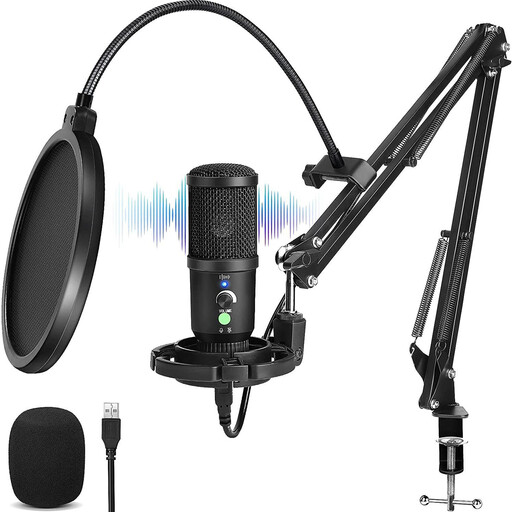
USB condenser microphone with cardioid pattern
An option for speech recording at a fixed computer setup, with headphone monitoring as you record.
The product description lists a cardioid pattern, gain dial, mute button and headphone monitoring.
View at Joybuy
 No image available
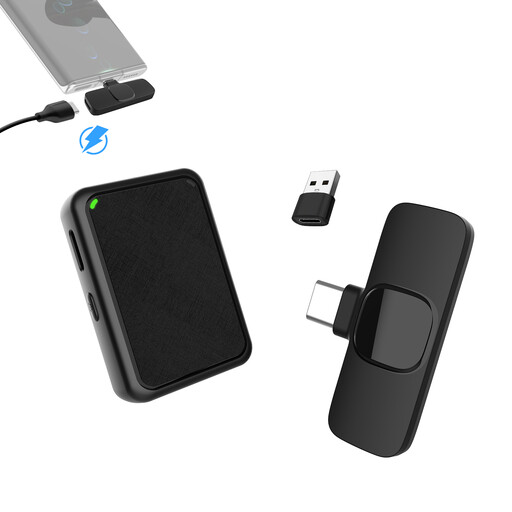
Moman MB1C clip-on microphone, 1TX+1RX, USB-C
An option for recording a travel diary on the move with a phone, provided the receiver is compatible with your device.
The title lists one transmitter and one receiver, USB-C and iPhone 18/17/16. Check your device’s connection and make sure your case leaves room for the receiver.
View at Joybuy
 No image available
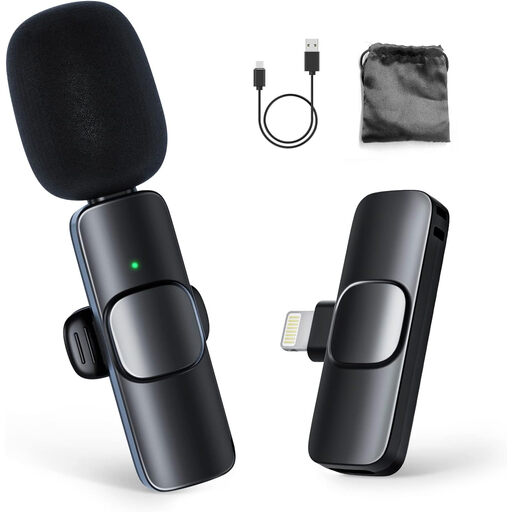
Moman CP1A wireless lavalier microphone, 1TX+1RX
An option for hands-free recording with an iPhone or iPad; check that the receiver connects to your device.
The product information lists one transmitter and one receiver, plus a clip-on microphone for video recordings and interviews.
View at Joybuy
 No image available
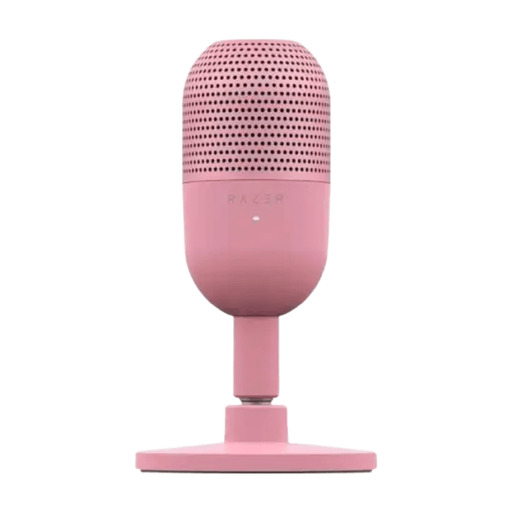
Razer Seiren V3 Mini Quartz USB microphone
A compact option for speech recording at a fixed desktop setup.
The product information lists a supercardioid pattern and a tap-to-mute function.
View at Joybuy
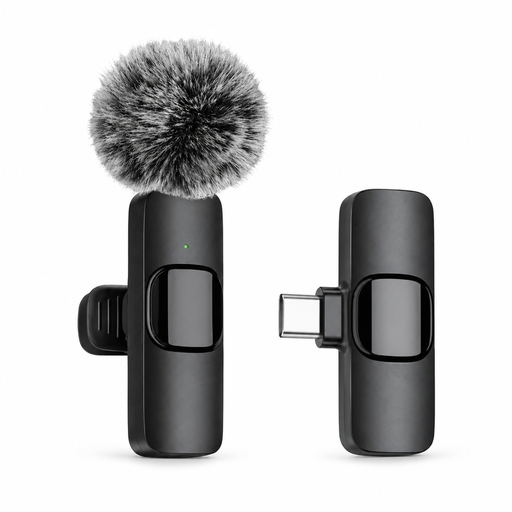 No image available
Verbex K9-Black wireless mini lavalier microphone, Type-C
An option for recording on the go with a Type-C setup; check that the connection is compatible with your device.
The product information lists a built-in battery and use for recordings and interviews.
View at Joybuy
Frequently asked questions
Will a directional microphone help if people are rehearsing in the room at the same time?
A microphone close to your mouth can capture your voice at a relatively higher level, but it won’t reliably remove other voices, instruments or echo. Shure also says that the MV7+’s denoiser doesn’t remove background voices.
What do you need to record with the Zoom H1essential without a phone or laptop?
Check that you have a supported microSD card and a power source. Zoom specifies microSDHC cards from 4–32 GB, microSDXC cards from 64 GB–1 TB and power via batteries or USB-C; test the card and listen back to a test recording in your chosen location.
What extra accessories and guarantee rights should you bear in mind?
Check which accessories your setup needs, such as a compatible cable, memory card or power supply. In the Netherlands, the statutory guarantee is separate from any manufacturer’s warranty: ACM ConsuWijzer says that, under the applicable conditions, the seller must put right at no cost a product that doesn’t meet reasonable expectations.
Can you share a travel diary featuring identifiable people publicly?
Not necessarily. The Dutch Data Protection Authority says that, in most cases, you need permission to publish other people’s personal data online, and outlines a limited exception for purely personal or household use. Whether that exception applies depends, among other things, on the audience, purpose and visibility.


