
Solo speaker in a reverberant room
Wants to record travel notes as a clear, intelligible voice and can speak close to a microphone. Shure points out that positioning still matters, even with microphones that use noise processing.


If you mainly record your own voice in an untreated room, start with a microphone you can position close to your mouth. Shure points out that a microphone cannot distinguish between wanted and unwanted sounds by itself. A portable recorder is a better fit if you want to record without a computer or deliberately capture ambient sound. Check the connections, power requirements and accessories needed for each setup.
Wants to record travel notes as a clear, intelligible voice and can speak close to a microphone. Shure points out that positioning still matters, even with microphones that use noise processing.
Wants to record without a computer and sometimes captures conversations or sounds while out and about. Zoom describes the H1essential as a recorder that can record independently.
Wants to choose between an intimate voice recording and audible details from the surroundings. The built-in microphones on the Zoom H1essential capture the environment, while Audio-Technica also offers USB condenser microphones for a different recording setup.
Choose this if: you mainly speak at a desk or in a fixed spot, where you can position the microphone close to you.
Consider: you’ll need a suitable interface or recorder for XLR, and positioning still matters.
Choose this if: you want to record on the go without a connected computer or capture the atmosphere of a place.
Consider: built-in microphones also pick up ambient sound, so check storage, power and positioning.
Choose this if: you want a USB setup and plan to record other sources as well as speech.
Consider: a cardioid pickup pattern won’t automatically stop the room’s reverberation from being picked up.
Choose this if: you already use a suitable interface or recorder with a microphone input.
Consider: recording to a computer requires an XLR cable and an audio interface; this isn’t a direct USB connection.
First decide whether you mainly need clear monologue recording, standalone mobile recording, flexible connections or an audible sense of the space.
| What to consider | What to look for when buying | Who it’s most relevant to |
|---|---|---|
| Clear speech | Check whether you can position the microphone close to you and point it away from sources of interference; make a test recording. | If I mainly want to record my own voice in a reverberant room, I’ll consider distance and direction. Around 36% of consumers prioritise speech intelligibility. |
| Standalone recording | Check whether the recorder works without a computer and what storage and power the setup requires. | If I don’t want to use a computer while travelling, I need a recording device that works independently. Around 29% of consumers prioritise mobile recording. |
| Connections | Check the input on your equipment and whether you need a cable or audio interface. | If I want to switch between USB and XLR now or later, I’ll check which connections my setup uses. Around 21% of consumers prioritise connection flexibility. |
| Atmosphere of the space | Decide whether you want to capture ambient sound and test the microphone in the intended location. | If I want my travel story to convey a sense of the place too, I’ll deliberately choose a recording setup that captures ambient sound. Around 14% of consumers prioritise atmosphere and detail. |
Constant noise, background voices and reverberation are different problems. Shure warns that a microphone can’t distinguish between wanted and unwanted sounds by itself.
Before relying on processing, test the distance from the microphone, its direction and the recording location.
The standard PodMic uses XLR; according to RØDE, the PodMic USB also has a digital USB connection.
Check the full model name, connections and what’s included in the box. To record to a computer with the standard PodMic, you’ll need an XLR cable and an audio interface.
Those extra components mean you’ll need more equipment than you would with a microphone that connects directly via USB.
The Zoom H1essential is designed to capture ambient sound as well, using its built-in XY microphones. That may be less suitable for an intimate monologue in a reverberant room.
In the same location, compare a short recording with a speech microphone positioned close to you.
Audio-Technica offers both a dynamic USB/XLR microphone and a USB condenser microphone.
RØDE offers the PodMic USB, with USB and XLR, as well as the separate PodMic, which uses XLR.
The MV7+ is a dynamic USB/XLR microphone designed for close-miked speech.
The H1essential is a portable recorder with built-in XY microphones and a USB microphone function.
These product picks include portable voice recorders for notes on the go and a USB microphone for a computer setup.
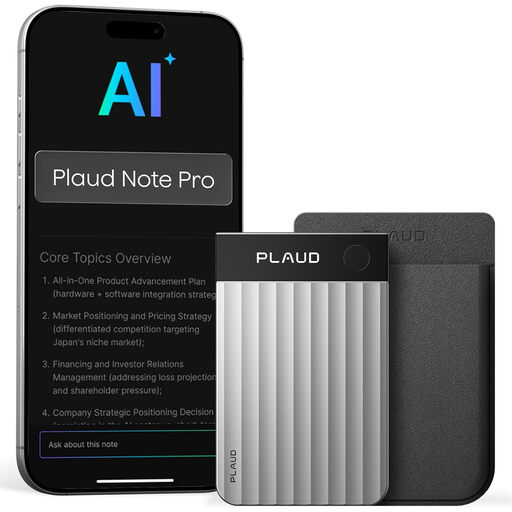 No image available
A good fit for travel notes if you also want to use transcripts and summaries.
32 GB of built-in storage.
 No image available
A good fit for spoken notes or interviews if you also want to use the advertised transcription function.
64 GB of storage; the product name mentions a transcription function.
 No image available
A good fit for spoken travel notes if you’re looking for a portable recorder with one-touch recording.
128 GB of storage; the description mentions MP3 and WAV recording.
 No image available
A good fit for everyday spoken notes if you’re looking for a compact recorder with one-touch recording.
64 GB of storage and WAV recording. The description gives a weight of 18 g and battery life of up to 22 hours.
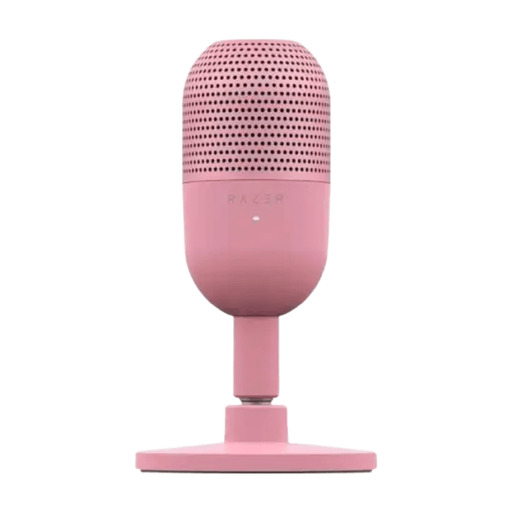 No image available
A good fit for spoken notes in a computer setup if you’re looking for a USB microphone.
The product information lists a supercardioid pickup pattern and a tap-to-mute function.
Not reliably. Shure recommends speaking close to the microphone and pointing it away from sources of interference. According to Shure, the MV7+ noise processing is designed to address constant noise, not background voices or sudden sounds.
For recording to a computer with the standard RØDE PodMic, RØDE lists an XLR cable and audio interface. If you’re using a different recorder or interface, check which input it has.
Make a short test recording in the intended location and listen for your voice, reverberation and interfering noise. The manufacturers say the Audio-Technica ATR2100x-USB and AT2020USB-X have headphone outputs for monitoring.
Report the fault to the seller. According to the Dutch government, statutory consumer rights for a product that meets expectations apply alongside any manufacturer’s guarantee; there is no set general statutory guarantee period in the Netherlands.
That depends on how and where you publish them. The Dutch Data Protection Authority says that, in most cases, you need permission under the GDPR to publish other people’s personal data online; permission is one possible legal basis. An exception applies to personal or household use only, subject to the conditions set out by the regulator. So assess any publication beyond that limited circle separately.