If you’re recording on your own, start by thinking about your room and how close you’re comfortable speaking to the microphone. A dynamic microphone placed close to you is a practical starting point if room sound is noticeable, while a condenser microphone is worth comparing in a quiet space. USB means less equipment to get started; XLR is most useful with a suitable audio interface or if you want to record multiple voices separately. Make a test recording at your usual speaking distance first: a microphone won’t remove room echo on its own.
Which setup is right for you?
Solo storyteller in a room with noticeable noise
You mainly record one voice and notice echo or background noise in test recordings. A microphone you can consistently position close to you can be a practical starting point, but it won’t make the room quiet. Shure emphasises that microphone placement affects speech recordings.
Solo storyteller with a quiet workspace
You want to get started without a separate interface and be able to monitor quieter passages as you record. Compare USB condenser microphones for monitoring, controls and how they sound in your own room. Audio-Technica describes direct headphone monitoring and a mix control for the AT2020USB-X.
Creator recording multiple storytellers
You’re recording conversations or roles at the same time and want to adjust each voice separately afterwards. The number of usable microphone inputs and the risk of audio bleed are important considerations. Shure explains the benefits of separate tracks; RØDE also highlights microphone placement when recording multiple people.
What should you look for when choosing?
Dynamic USB microphone, optionally with XLR
Choose this option if: you’re recording on your own, can stay close to the microphone and want a simple USB connection.
Bear in mind: placement and a quiet room still matter; recording via XLR on a computer requires extra equipment.
USB condenser microphone
Choose this option if: you’re recording on your own in a quiet space and want to get started without a separate interface.
Bear in mind: assess room noise with a test recording and check that the stand, cable and any pop filter suit your workspace.
XLR microphones with a multi-channel interface
Choose this option if: you need to record several storytellers at the same time, each on a separate track.
Bear in mind: count the inputs you’ll need and factor in cables, monitoring and possible audio bleed between microphones.
| What to consider |
What to check before buying |
Who should consider this? |
| Room noise and speaking distance |
Compare test recordings at your usual speaking distance and check that the microphone can be positioned securely. |
If I want to stay close to the microphone during long passages and assess echo or background noise, a test recording in my own room is important; around 33% of consumers prioritise room noise. |
| Connection and monitoring |
Check your computer’s connection, direct headphone monitoring, controls and the cables included. |
If I want to hear my voice back straight away during a solo recording without using a separate interface, I look for USB and monitoring; around 27% of consumers prioritise simple connections and monitoring. |
| Quiet and loud passages |
Record both and listen back for unwanted room noise, plosive sounds and distortion. |
In a quiet workspace, I want to hear how soft sentences and emphatic passages sound in the same recording; around 20% of consumers prioritise vocal nuance. |
| Multiple voices |
Count the number of people speaking at the same time and check how many usable inputs and recording tracks your software supports. |
If several people are speaking at once, I want to be able to adjust their voices separately afterwards; around 20% of consumers prioritise separate tracks. |
Common buying mistakes
-
Expecting a new microphone to remove room echo automatically
Microphone distance and reflective surfaces still affect what gets recorded. A different microphone model won’t automatically fix the room’s acoustics.
First, make a test recording close to the microphone in the room where you plan to record, then listen back through headphones.
-
Comparing an XLR microphone with a complete USB setup
To record via XLR on a computer, you’ll need a suitable audio interface and an XLR cable; simply connecting the microphone isn’t enough.
Compare the complete connection setup and check which components are included with the version you’ve chosen.
-
Assuming one microphone will record multiple voices separately
One microphone won’t automatically give you separate tracks for storytellers who are speaking at the same time.
Count the voices speaking at once and check that the interface has enough inputs. Also make a test recording with everyone together to hear how much each microphone picks up the others’ voices.
Brands to compare
RØDE
The range for voice recording includes both dynamic and condenser microphones with USB and XLR connections.
- According to RØDE, the PodMic USB has headphone monitoring and an internal pop filter.
- RØDE lists the NT1 5th Generation’s self-noise at 4 dBA. This is a model specification, not a guarantee against room echo or an assessment of how your voice will sound.
Audio-Technica
The AT2020USB-X is a USB condenser microphone worth comparing if you want to record on your own without a separate interface.
- Audio-Technica lists direct headphone monitoring, a mix control and a desktop stand for this model.
- These features apply to the AT2020USB-X; check for yourself whether the placement and room noise suit your storytelling session.
Shure
The MV7+ is a dynamic USB-C/XLR microphone for speech; the SM58 is a separate dynamic XLR option.
- Shure lists both USB-C and XLR connections for the MV7+.
- Shure presents the MV7+ as suitable for less-than-ideal recording environments, but that doesn’t mean it eliminates room noise. Check the features and accessories available for each connection.
Samson
The Q2U is a dynamic USB/XLR microphone worth comparing if you want to start with a simple connection while keeping the option of using XLR.
- Samson lists a microphone clip, desktop tripod, windscreen and the required cables for the Q2U.
- Check which accessories are included with the specific version you’re buying; the listed contents aren’t an assessment of sound quality.
Elgato
The Wave:3 is a USB microphone with digital mixing features for anyone who wants to control computer audio as well as their storytelling voice.
- Elgato describes the Wave:3 as combining a microphone with digital mixing.
- A USB setup doesn’t automatically offer the same scope for expansion as an interface with multiple XLR inputs.
Joybuy products for voice recording
This selection includes USB microphones and wireless lavalier microphones for voice recording, including options for one or two speakers. Before buying, check that the connection suits your recording device and setup.
 No image available
Moman M1CXT wireless lavalier microphone, USB-C, 2TX+1RX
An option to consider if you’re recording two speakers and want a wireless lavalier setup.
The product description lists a 2TX+1RX setup, USB-C-compatible devices and a monitoring port. The product name states a range of 150 m.
Joybuy
 No image available
USB condenser microphone with cardioid pattern
An option to compare for USB voice recording if you want to monitor the audio as you record.
The product title mentions a cardioid pattern and zero-latency monitoring. The description lists a headphone socket, gain control and mute button.
Joybuy
 No image available
Razer Seirēn V3 Mini Quartz USB microphone
A compact USB microphone to consider if you want a USB connection and a quick mute function.
The product description lists a supercardioid pickup pattern and compatibility with PC and Mac. The product title mentions tap-to-mute.
Joybuy
 No image available
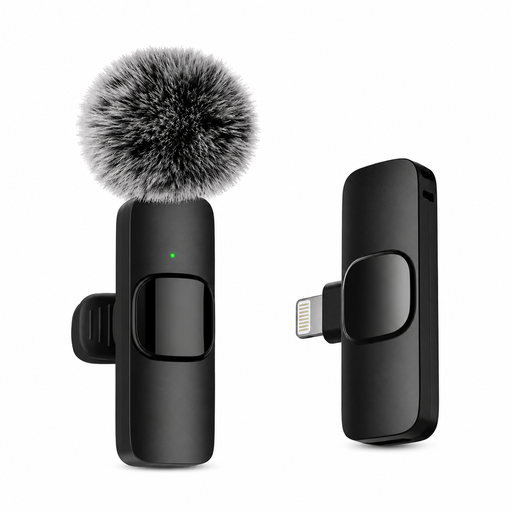
Verbex K9-Black wireless lavalier microphone
A clip-on option to compare if you’re recording with a device that works with the stated iOS interface.
The product title lists a single microphone and an iOS interface. Check that the connection is suitable for your recording device.
Joybuy
 No image available
Verbex ST5 wireless lavalier microphone, dual-mic, Type-C
An option to consider if you need a two-microphone clip-on setup with a Type-C connection.
The product title lists two microphones and a Type-C interface. The description states a battery life of 3–6 hours.
Joybuy
Frequently asked questions
Do I need an audio interface for one storyteller?
Not if you connect a suitable USB microphone directly to your computer. To record with an XLR microphone on a computer, you’ll need a suitable interface and cable; check the connections on the model you choose.
How can I check my setup before a long storytelling session?
Make a short test recording at your usual speaking distance, switching between quiet and loud passages. Listen through headphones for room noise, plosive sounds and other voices. If needed, adjust the microphone position or recording space before recording the whole session.
What if a microphone I bought online isn’t suitable or is faulty?
For online consumer purchases in the Netherlands, you often have 14 days from delivery to change your mind; ACM ConsuWijzer notes that exceptions may apply. Separately, the seller is responsible for the statutory guarantee if the product doesn’t meet what you’re entitled to expect.
Can I publish a recording of myself reading a copyright-protected book online?
Not simply because you own the book or made the recording at home. The Dutch government distinguishes between a private copy for personal use and distributing or making it available to the public. You need the author’s permission to use a copyright-protected book unless a legal exception applies.
Can I publish a recording of an identifiable guest’s voice without asking?
Don’t assume that you can. The Dutch Data Protection Authority says that, in principle, you may only publish other people’s personal data online with their permission. Before publishing, consider who can be identified and what legal basis applies to the publication.


