If you’re speaking on your own while colleagues work nearby, start with a directional USB microphone that you can position close to you. A dynamic model can be a practical choice, but it won’t make other people inaudible. Choose a compact USB setup if quick connection and pack-away are your priorities, or USB/XLR if you might want to use an audio interface later. Check the stand, connection and whether you can listen back to your recording.
Who is this for?
Recording on your own among colleagues
If you’re recording your own introduction while others are working nearby, look for a microphone you can position close to you and consider the direction it picks up sound from. RØDE, Audio-Technica and Samson describe these features for specific models.
Using a hot desk
If you want to connect and set up the microphone quickly, then put it away after use, check the USB connection, stand and supplied cables. Samson and Sennheiser describe accessories for specific versions, so check what’s included in the pack you choose.
Monitoring your recording as you go
If you want to listen to the audio straight away and spot mistakes quickly, look for headphone monitoring, gain control and a mute button. Shure, Audio-Technica and Sennheiser list these features for specific models.
What should you look for in a microphone for a shared desk?
Directional dynamic USB microphone
A good fit if: you mainly want to record your own voice from close by.
Bear in mind: you’ll need a suitable stand or arm and a consistent speaking position; a directional pickup pattern doesn’t guarantee a quiet recording.
Compact cardioid USB condenser microphone
A good fit if: you want a USB setup with a desk stand and controls on the microphone.
Bear in mind: the recording also depends on the microphone’s position and the sound in your workspace.
USB/XLR microphone
A good fit if: you want to record via USB now and might use a mixer or audio interface later.
Bear in mind: XLR requires additional recording equipment, and some features only work over USB.
USB microphone with multiple pickup patterns
A good fit if: you sometimes want to deliberately record several people around the same desk.
Bear in mind: a pattern that picks up sound from more directions may also capture more noise from the shared workspace.
Choose according to your top priority: background noise, quick set-up, available desk space or monitoring while you record.
| What to consider |
What should you check? |
Who is this important for? |
| Your voice and background noise |
Check the pickup pattern and whether you can position the microphone close to you; make a test recording at your workspace. |
If I want to record my voice clearly while colleagues are working nearby, I’ll focus on direction and speaking distance. For around 36% of consumers, background noise is their main concern. |
| Quick connection |
Check that USB connects directly to your device and that the required cable and any software suit the way you plan to use it. |
If I want to get started quickly at a hot desk and pack everything away afterwards, I’ll keep the connection and accessories simple. Around 29% of consumers put this first. |
| Space and positioning |
Check whether a desk stand will fit, or whether you have a suitable place to attach an arm. |
If I share a desk with others, I want to position the microphone securely without taking up unnecessary workspace. Around 21% of consumers put limited space and positioning first. |
| Monitoring your recording |
Check that monitoring, gain control and the mute button work with the model and connection mode you’re using. |
If I want to hear straight away whether the level is right and check that mute is working during a short recording, these features matter. Around 14% of consumers put monitoring their recording first. |
Common mistakes when choosing
-
Assuming a directional pattern will block out colleagues’ voices
A directional pickup pattern and noise processing won’t automatically block out other voices or desk noise. The result also depends on speaking distance, positioning and the sound in your workspace.
Make a test recording where you plan to record and listen back before recording several introductions.
If the recording isn’t usable, you may have to record the introduction again.
-
Assuming every version comes ready to sit on your desk
The Samson Q2U is described as including a desktop tripod, while the FIFINE K688 is also available in a version without a stand.
Check exactly what’s included in the pack and whether any arm or mount will work in your shared workspace.
Depending on the version you choose, you may need a suitable stand, arm or mounting point.
-
Treating USB and XLR controls as interchangeable
According to FIFINE, the AM8T’s function buttons and RGB lighting don’t work in XLR mode.
Choose how you’ll connect the microphone first, then check which monitoring and controls are available in that mode.
Brands to consider
The features mentioned apply to the product ranges and models described, not automatically to every product from each brand.
RØDE
The PodMic USB is a dynamic USB/XLR option; the NT-USB+ is a USB condenser microphone supplied with a desk stand.
- RØDE lists headphone monitoring and a directional pickup pattern for the PodMic USB. The NT-USB+ comes with a desk stand.
- The PodMic USB needs a suitable stand or arm and a close speaking position. These features don’t make the two models a direct comparison for use at a shared desk.
Shure
The MV7+ combines USB-C and XLR for anyone who wants a direct connection now and the option of an XLR setup later.
- Shure lists monitoring, mute and adjustable audio processing.
- The isolation and noise processing described by Shure don’t guarantee that colleagues’ voices will be removed from a recording. Also check the requirements for the MOTIV Mix app.
Audio-Technica
The AT2040USB is a directional dynamic USB microphone for one speaker.
- Audio-Technica lists a hypercardioid pickup pattern, internal shock mounting and headphone monitoring.
- An additional shock mount is available separately. The stated sound isolation isn’t a measurement taken at your shared desk.
Samson
The Q2U is a dynamic USB/XLR option; Samson describes a desk bundle that includes a stand and cables.
- According to Samson, the Q2U bundle described includes a desktop tripod, windscreen, and USB and XLR cables.
- Check with the retailer that the version you choose includes the complete bundle. The manufacturer’s statements about sound quality aren’t an independent comparison.
Sennheiser
The Profile USB is a USB-C condenser microphone with on-device controls.
- Sennheiser lists a desk stand, gain and mix controls, mute and a headphone output.
- The desk stand takes up workspace. These product details don’t tell you how much background noise will be picked up at your shared desk.
Joybuy products for spoken recordings
This selection includes USB microphones for desk setups, as well as portable clip-on or wireless microphones for spoken recordings. Check that the connection and positioning suit your recording device and workspace.
 No image available
DJI Mic Mini 2S (2 TX + 1 RX + Charging Case)
Worth considering if you’re looking for a set with two transmitters and one receiver for spoken recordings.
The product name lists 2 TX, 1 RX and a Charging Case.
Joybuy
 No image available
HyperX SoloCast 2 USB Gaming Microphone
A USB microphone to consider if a cardioid model suits the way you plan to record.
The product name lists USB and cardioid.
Joybuy
 No image available
Razer SEIRÉN V3 MINI Quartz USB Microphone with Tap-to-Mute
A compact USB option to consider if tap-to-mute controls are important to you.
The product name lists USB, Ultra-Compact and Tap-to-Mute.
Joybuy
 No image available
Verbex K9-Black Wireless Mini Microphone, Type-C
A portable microphone to consider if you’re looking for a wireless mini model for spoken recordings.
The product name lists a Type-C interface.
Joybuy
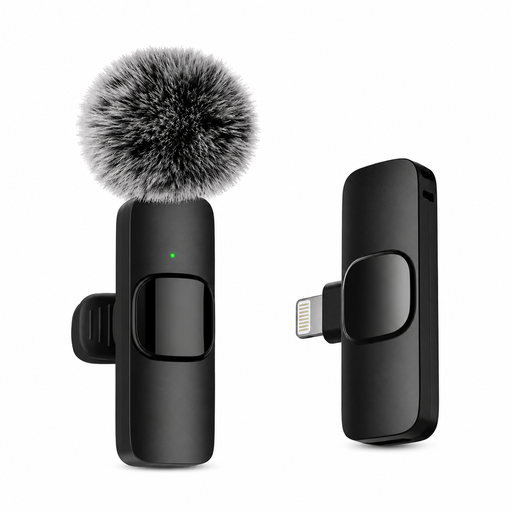 No image available
Verbex K9-Black Single-Mic iOS Interface Wireless Mini Microphone
A wireless mini model to consider if the listed iOS interface is compatible with your recording device.
The product name lists a single-mic iOS interface.
Joybuy
Frequently asked questions
How should you position a microphone for a short spoken introduction?
Point the speaking side towards your mouth and make a test recording in your actual workspace. For the dynamic PodMic USB, RØDE recommends a distance of around 5–10 cm; this distance doesn’t automatically apply to other models.
Do you need an audio interface straight away for a USB/XLR microphone?
Not if you connect a suitable model directly to your recording device via USB. To use the XLR output, you’ll need a suitable mixer or audio interface. Also check which controls remain available in that mode.
What can you do if a microphone you bought online isn’t suitable?
For an eligible distance purchase from a business, you’ll generally have 14 days to change your mind. You also have statutory rights in the Netherlands if a product doesn’t conform to the contract; contact the seller if there’s a fault. There’s no single statutory guarantee period that applies to all products.
Can you record identifiable conversations between colleagues without asking?
Don’t assume that you can. If an organisation processes personal data, the Dutch Data Protection Authority says it needs a lawful basis under the GDPR. Consent is one possible basis, but it isn’t automatically the only one or always a valid choice for employees. The assessment depends on who is being recorded, the purpose and the working situation. This is different from recording only your own introduction.


