Who are these setups suitable for?

Speaker in a reverberant room

If you’re recording a single speaking voice and your main priority is keeping the words clear, consider the distance between the speaker and the microphone. The recording format alone won’t solve the problem of reflections. Shure and RØDE explain that sound reflections can become more noticeable as the distance increases.

Presenter on the move

If you’re standing or walking during a demonstration, a wearable microphone can stay close to your voice. Tascam describes the DR-10L Pro as a portable recorder with a lapel microphone.

Creator without a computer

If you want to record your explanation directly onto a recorder, check how your chosen model stores files and gets its power. Zoom lists microSD storage for the H1essential, while Philips VoiceTracer specifies internal memory and a rechargeable battery for the DVT4115.

What should you look for?

Standalone recorder with built-in microphones

Suitable if: you want to record without a computer and can position the recorder close by.

Bear in mind: greater distance can make the echo more noticeable. Check the model’s storage and power requirements too.

Standalone recorder with a lapel microphone

Suitable if: you move around while presenting and want to keep the microphone close to your voice.

Bear in mind: the microphone won’t change the room’s acoustics. Check how it attaches and listen for possible rustling from your clothes.

Dynamic USB microphone in a fixed position

Suitable if: you can stay in one place and are using a compatible recording device.

Bear in mind: this isn’t a standalone recorder. Claims about voice processing don’t mean that room echo will disappear.

Consideration What to look for when buying Who should give this extra thought?
Clear speech Compare a short recording made at your intended distance with one made with the microphone closer. If I need a clear speaking voice in a reverberant room, I want to assess the microphone distance for myself; around 42% of consumers put clear speech first.
Moving during the explanation Test the microphone during the actual demonstration and check how it attaches and whether it picks up clothing noise. If I walk around or gesture, I don’t want to keep moving further away from a fixed microphone; around 25% of consumers prioritise freedom of movement.
Recording without a computer Check whether the device can record on its own, what storage medium it uses and how files are transferred. If I don’t want to connect a computer while recording, I’m looking for a device that can record on its own; around 17% of consumers put this at the top of their wish list.
Complete recording setup Check the storage, power supply and box contents, and make sure you can play back a test recording. If I want to avoid storage, power or a missing component interrupting a recording, I check the whole setup in advance; around 16% of consumers name this as their top priority.

Pitfalls to avoid

  • Mistaking 32-bit float recording or digital processing for an echo-reduction solution

    A microphone won’t automatically separate direct speech from reflected speech effectively. So a recording feature or processing claim doesn’t prove that you’ll get an echo-free explanation in your room.

    Make short test recordings at different distances and listen to how clearly you can hear a complete sentence.

  • Buying a USB microphone when you want to record without a computer

    A connected USB microphone and a standalone recorder don’t save audio in the same way. Before you buy, check where the file will be stored and what’s included in the box.

    You’ll need a compatible recording device for a USB microphone, and your setup may also require a stand or other accessories.

    Check which device will record the audio and whether the connections suit the way you work.

  • Forgetting about storage and power

    The Zoom H1essential uses microSD storage; according to Philips, the Philips VoiceTracer DVT4115 has internal memory and a rechargeable battery. Storage and power requirements therefore vary by model.

    Depending on the model you choose, you may need a suitable memory card, batteries or a power supply.

    Check the exact model variant, card compatibility, power method and box contents, then test that you can play back your recording.

Brands to consider

Zoom

The H1essential is a standalone handheld recorder for anyone who wants to record without a computer. In a reverberant room, the position of its built-in microphones still matters.

  • Zoom lists 32-bit float recording and supported microSD cards for this model.
  • The recording format won’t remove room echo, so pay attention to microphone distance and storage.

Tascam

The DR-10L Pro is a standalone recorder with a lapel microphone; the DR-05XP is a handheld recorder with built-in stereo microphones.

  • Tascam says the lapel microphone is included with the DR-10L Pro and that both models have a 32-bit float mode.
  • The DR-05XP uses built-in omnidirectional microphones. Positioning needs care in a reverberant room, and 32-bit float won’t remove reflections.

Philips VoiceTracer

The DVT4115 is a standalone voice recorder for anyone who values internal memory and a rechargeable battery.

  • Philips lists 8 GB of internal memory, MP3 and PCM recording, and a rechargeable battery for the DVT4115.
  • The manufacturer says it can record speakers at a distance, but that alone doesn’t tell you how clearly your explanation will come through in a reverberant room.

RØDE

The PodMic USB is a dynamic microphone for a fixed recording position with a compatible computer or other connected recording device.

  • RØDE lists USB-C, XLR and a headphone output for the PodMic USB.
  • Keeping the microphone close is still important. RØDE warns that room echo can be more noticeable when the microphone is further away.

Shure

The MV7+ is a dynamic USB-C/XLR microphone for close-up voice recording with a connected recording device.

  • Shure lists a headphone socket and digital voice processing for the MV7+.
  • The features Shure describes for voice isolation or noise processing don’t prove that echo will disappear in your room. Shure explains that a microphone can’t effectively separate direct speech from reflected speech.

Joybuy products for voice recording

This selection includes portable microphone kits, a USB desktop microphone and standalone voice recorders. Whatever setup you choose, it’s important to position the microphone close enough to the speaker and listen to a test recording in the room you plan to use.
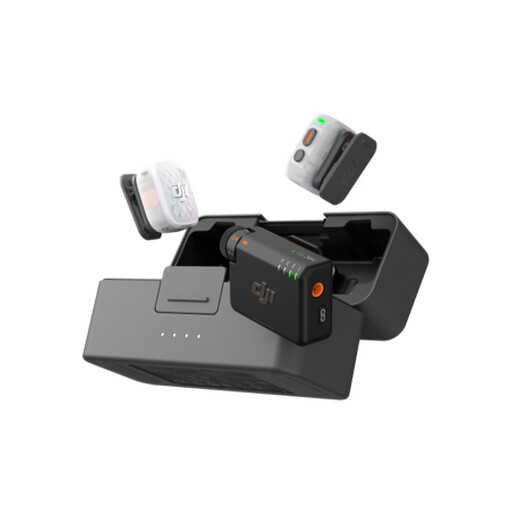
DJI Mic Mini 2S set with transmitters, receiver and charging case

DJI Mic Mini 2S (2 TX + 1 RX + Charging Case)

A portable set to consider if you move around during a demonstration; the product information mentions clip or magnetic attachment. Check how the receiver connects to your recording device.

The product name lists 2 TX, 1 RX and a Charging Case.

View at Joybuy
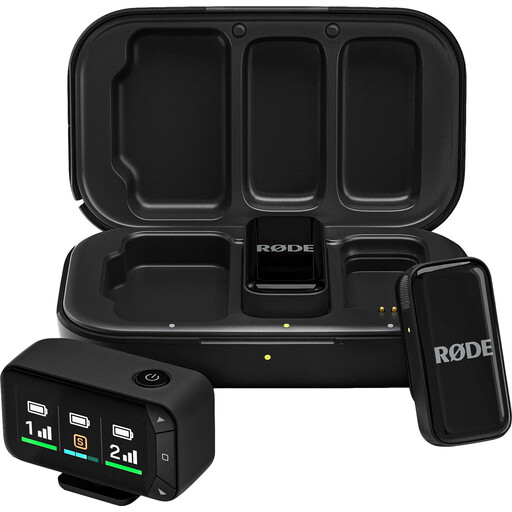
RØDE Wireless Micro Camera Kit with two microphones and receivers

RØDE Wireless Micro Camera Kit, Two Microphones, USB-C

The product information mentions attachments for the transmitters, which could be useful if you move around while presenting. Check that the receiver is compatible with the device you want to record on.

The product name lists two microphones, a camera receiver, a smartphone receiver and a charging case.

View at Joybuy
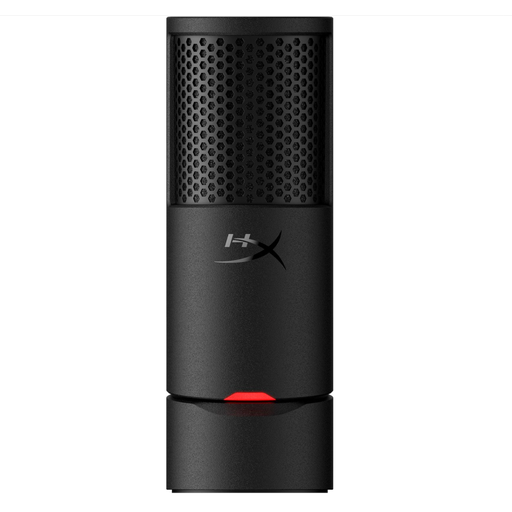
HyperX SoloCast 2 USB microphone in black

HyperX SoloCast 2 USB Gaming Microphone, Black

A USB desktop microphone to consider if you record in a fixed position. Check that the recording device you use works with the USB connection.

The product name lists a USB microphone.

View at Joybuy

Rexsun 128GB portable digital voice recorder with LCD screen

Rexsun 128GB Portable Digital Voice Recorder, L357

A portable digital voice recorder to consider if you want to record an explanation without a connected computer. Before buying, check how to transfer files and make a test recording that you can play back.

The product name lists 128 GB and an LCD screen.

View at Joybuy
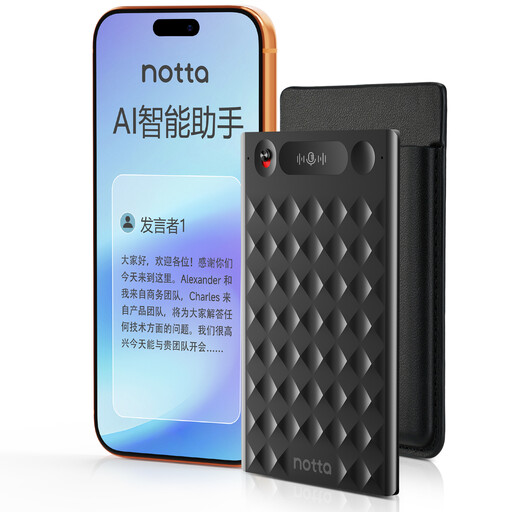
Notta 32GB AI Voice Recorder with case

Notta 32GB AI Voice Recorder with Case

A standalone recorder to consider if you want to save files locally. Check how clear your voice sounds in your room with a test recording, and make sure the recording method suits your workflow.

The product name lists 32 GB and a case.

View at Joybuy

Frequently asked questions

Will 32-bit float recording remove echo from my explanation?

No. 32-bit float recording doesn’t change the reflections in the room. Record closer to the speaker and assess a test recording in the room where you plan to record.

What should I have ready before recording with a Zoom H1essential?

Check the storage card and power supply, and test that you can play back a short recording. Zoom lists 4–32 GB microSDHC cards and 64 GB–1 TB microSDXC cards as supported storage types; also check that the card you choose is compatible.

Do I need a separate recorder for a USB microphone?

Not if a compatible connected device can record the audio. RØDE says the PodMic USB can connect via USB to devices including a computer; the microphone isn’t a standalone handheld recorder that stores the recording itself.

What are my rights if a recorder I bought online turns out to be faulty?

If you buy as a consumer in the Netherlands, a product must do what you could reasonably expect it to do. If it’s faulty, the seller must offer a solution under the applicable terms. According to the Dutch government, many distance purchases from a business also come with a 14-day cooling-off period. This is separate from any manufacturer’s warranty, so check the terms for your purchase.

Can I publish recognisable recordings of other people’s voices in my explanation?

First, consider which privacy rules apply. The Dutch Data Protection Authority says that publishing other people’s personal data online usually requires their consent, and notes an exception for use that is exclusively personal or domestic. Whether that exception applies to a particular voice recording and publication depends on the circumstances.
