What should you look for when choosing?
Start with the room’s acoustics and how far you’ll be from the microphone. Then decide whether a direct USB connection will do, or whether you’d prefer an XLR set-up with an audio interface.
| What to consider |
What should you look for? |
Who is this important for? |
| Clarity in the room |
Make a test recording from your usual speaking distance and listen for reflections. Consider the microphone’s polar pattern and pop protection. |
If your room is reverberant, you’ll want clear speech without expecting the microphone to fix the acoustics. This is the top priority for around 36% of consumers. |
| Quiet and loud passages |
Check whether you can monitor your voice through headphones and whether any digital features suit your recording settings and software. |
If you want to assess quiet lines and powerful passages carefully, listen back to test recordings. This is the main consideration for around 29% of consumers. |
| Connection and monitoring |
Check the USB connection, included cable, headphone socket and compatibility with your recording device. |
Do you want to record on a computer without a separate interface and hear your voice as you speak? A simple connection and monitoring set-up is the top priority for around 21% of consumers. |
| Complete set-up |
For computer recording with XLR, you’ll need a suitable audio interface and cable. If you’re choosing a condenser microphone, also check what power supply it requires. |
If you already have equipment or plan to put together an XLR set-up later, consider the available connections and any extra components you’ll need. Around 14% of consumers give this the highest priority. |
Microphones for voice recording
This Joybuy selection includes USB microphones and microphone sets with multiple transmitters or receivers. Check each model’s connections and how you can record its signal on your computer.
 No image available
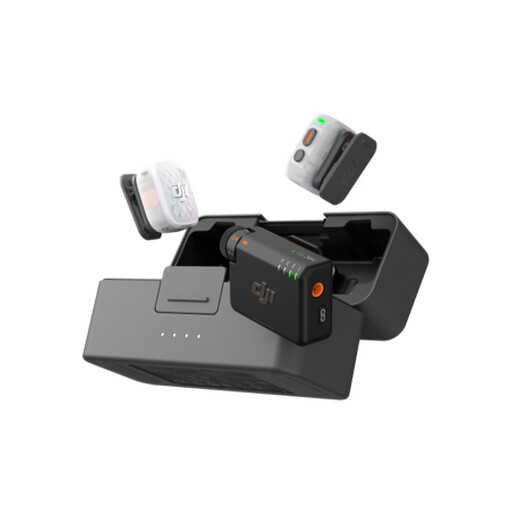
DJI Mic Mini 2S (2 TX + 1 RX + Charging Case)
This set is for anyone looking for two transmitters, one receiver and a charging case.
View at Joybuy
 No image available
USB Condenser Microphone with Cardioid Pattern
A USB condenser microphone may suit a computer set-up. Check that its listed features and connections work with your recording device.
The product title specifies a cardioid polar pattern.
View at Joybuy
 No image available
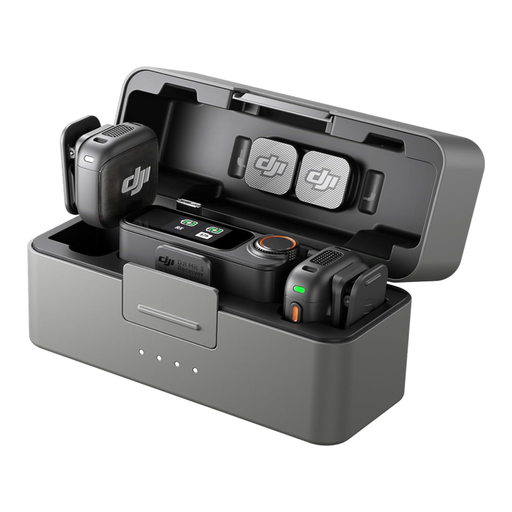
DJI Mic 3 (2 TX + 1 RX + Charging Case)
This set is for anyone looking for two transmitters, one receiver and a charging case.
View at Joybuy
 No image available
Razer Seiren V3 Mini Quartz
This USB microphone may suit a desktop set-up. Check that its connection and controls work with the way you record.
The product title mentions a tap-to-mute feature.
View at Joybuy
 No image available
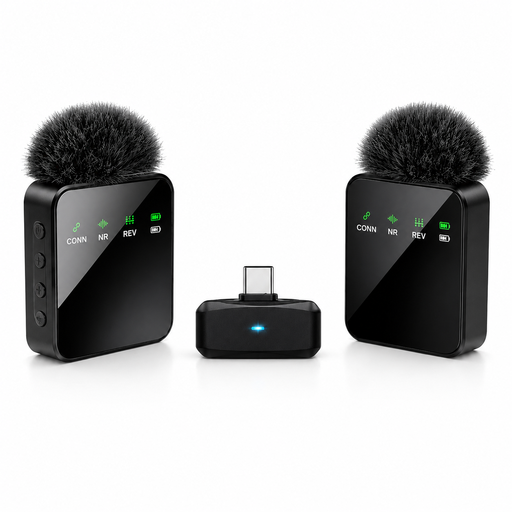
Verbex ST5 dual-mic Type-C lavalier microphone
This set may suit you if you’re looking for two lavalier microphones. Check that the Type-C connection works with your recording device.
The product title specifies a dual-mic version with a Type-C connection.
View at Joybuy
Frequently asked questions
Do I need an audio interface to record on a computer with an XLR microphone?
Yes. The analogue microphone signal needs to be converted into digital audio for your computer; a standard passive XLR-to-USB cable won’t do that. A microphone with its own USB output gives you a direct connection instead.
How can I reduce plosive sounds and handling noise when reading aloud?
Use a pop filter if needed and place the microphone on a stable stand. Listen back to a test recording containing words with P and B sounds. A shock mount can help reduce handling noise, such as vibrations from a desk.
Does every condenser microphone need a separate 48 V power supply?
No, it depends on the microphone and how it’s connected. If you’re using an XLR condenser microphone, check what power it needs; many interfaces provide 48 V phantom power. The USB condenser microphones mentioned here connect directly via USB.
What can I do if a microphone I bought online doesn’t work properly?
If a product is faulty despite normal use, Dutch law provides a legal guarantee and the seller is responsible for offering a suitable free solution, such as a repair, replacement or refund. When you buy from a business online, you’ll also often have a 14-day cooling-off period. Check which terms and exceptions apply to your purchase. ACM ConsuWijzer explains the legal guarantee, while the Dutch government provides information about the cooling-off period for distance purchases.
Can I publish a recording of someone else’s poem?
Don’t assume that recording a poem at home also gives you permission to publish it. The Dutch government distinguishes between making a copy for personal use and distributing or making copyright-protected texts available to the public. Check the rights to the specific poem and ask the rights holder for permission if needed.
Is a CE mark an independent quality mark for sound quality?
No. According to Business.gov.nl, CE is not a quality mark; it is the manufacturer’s declaration that the product complies with the relevant EU product rules. Assess sound quality and suitability separately.


