Who is this buying guide for?

Home reciter looking to reduce room noise

You read from a fixed spot and want your voice to stand out without having to treat the whole room first. Staying close to the microphone can help; RØDE and Samson describe microphone placement and accessories for close-up speech recording.

Reciter looking for a simple way to record digitally

You want to record directly onto a computer and listen back to a test recording to assess quiet lines, breathing and plosive sounds. Samson, RØDE and Shure describe models with digital connections and monitoring options.

Reciter weighing up how much freedom of movement they need

You don’t want to maintain exactly the same distance throughout your reading, and want to hear first how this affects vocal detail and reflections in the room. RØDE offers advice on reflections; Audio-Technica describes the AT2020 as a cardioid condenser microphone.

What should you look for when buying?

What to consider What should you check? Who is this important for?
Room sound and background noise Find a quiet spot and make a test recording from the distance you intend to use. Also check where the speaking side of the model is. I want to recite from a fixed spot at home without my voice being lost in the room. Around 36% of consumers prioritise reducing room noise.
Connection and monitoring Check the exact model, the connection on your computer or interface, and whether you can listen through headphones while recording. I want to get started without an unnecessarily complicated recording setup and hear straight away how quiet and loud lines sound. Around 29% of consumers prioritise direct recording and monitoring.
Vocal detail and freedom of movement Record the same lines from the distances and positions you’d actually use, then listen for clarity and audible reflections. I want to recite naturally without constantly worrying about keeping to one distance, but I also want to know what the room picks up. Around 21% of consumers prioritise freedom of movement while reciting.
Complete recording setup Check what’s included with each version and whether you’ll need an additional cable, stand, interface or suitable power supply. I want to know in advance which parts I’ll need to get my recording setup working. Around 14% of consumers prioritise having a complete setup.

Common buying mistakes

  • Assuming noise processing will solve all room reverberation

    A noise-processing feature doesn’t prove that reflections in your room will disappear. The sound of the room in your recording also depends on where you record and how far you are from the microphone.

    First, make a test recording with the microphone in the position you intend to use. Reduce reflections where practical, for example with soft materials.

    Finding and setting up a quieter recording space may take extra time.

  • Confusing the XLR version of the AT2020 with a USB microphone

    The Audio-Technica AT2020 described on the European product page has an XLR output. The product family may include other versions, but they aren’t automatically the same model.

    Before buying, check the full model number and compare the connection and box contents with your existing equipment.

    According to Audio-Technica, the cable for this XLR version is sold separately. Also check that your recording setup is compatible with the connection.

  • Using every microphone at the same distance or from the same side

    The speaking side and recommended placement vary by model. RØDE describes the PodMic USB as a microphone you speak into from the end, and recommends placing this model close to you.

    Check the instructions for the exact version and make a short recording in your usual reading position.

Brands to compare

Samson

The Q2U is a dynamic microphone with USB and XLR connections. The version described is designed for a compact speech-recording setup.

  • Samson lists a cardioid pickup pattern, direct headphone monitoring, a windscreen, a desktop stand and USB and XLR cables for the Q2U.
  • A brand’s claim about recording in untreated rooms isn’t an independent measurement. Placement still matters.

RØDE

The PodMic USB combines USB-C and XLR for close-up speech recording.

  • The instructions describe a cardioid pattern and a headphone output. For the PodMic USB, RØDE recommends starting at a distance of around 5–10 cm.
  • This close placement means you’ll need to maintain a consistent position while reciting; claims about sound quality are not an independent comparison.

Shure

The MV7+ is a USB-C/XLR model for anyone also considering digital features.

  • Shure Netherlands lists a 3.5mm headphone socket, Auto Level and noise processing, along with the associated app requirements.
  • The manufacturer’s Voice Isolation claim doesn’t prove that room reverberation will disappear during every recitation.

Audio-Technica

The AT2020 is a cardioid XLR condenser microphone to compare with dynamic models for close-up speech.

  • Audio-Technica Europe describes the AT2020 as a side-address microphone, which you speak into from the side.
  • According to the European product page, the XLR cable is sold separately. Check that your recording setup and power supply are suitable for this version; capturing more detail doesn’t guarantee a better result in an untreated room.

Joybuy product picks

The Joybuy picks shown include USB desktop microphones, wireless microphone sets and clip-on microphones. Check that each model’s connection and wearing style suit the way you recite.

DJI Mic Mini 2S with two transmitters, one receiver and charging case

DJI Mic Mini 2S (2 TX + 1 RX + Charging Case)

An option to consider if you want to record with two transmitters; the product description also mentions compatibility with computers.

The title lists two transmitters, one receiver and a charging case. The product description mentions internal recording.

View at Joybuy

DJI Mic 3 with two transmitters, one receiver and charging case

DJI Mic 3 (2 TX + 1 RX + Charging Case)

An option to consider if you want to record with two transmitters; the product description mentions use with computers.

The title lists two transmitters, one receiver and a charging case. Check that this set suits the way you want to record a recitation.

View at Joybuy

Razer SEIRÉN V3 MINI Quartz USB microphone

Razer SEIRÉN V3 MINI Quartz USB microphone

A USB desktop microphone to consider if you use a fixed recording spot; the product description mentions compatibility with PC and Mac.

The product description lists a supercardioid pickup pattern. The title mentions tap-to-mute controls.

View at Joybuy

Verbex K9-Black wireless clip-on microphone with Type-C interface

Verbex K9-Black Wireless Mini Microphone, Type-C

A clip-on version to consider if you want to wear the microphone on your clothing; the product description mentions a portable design.

The title lists a Type-C interface. Check that it connects to the device you want to record with.

View at Joybuy
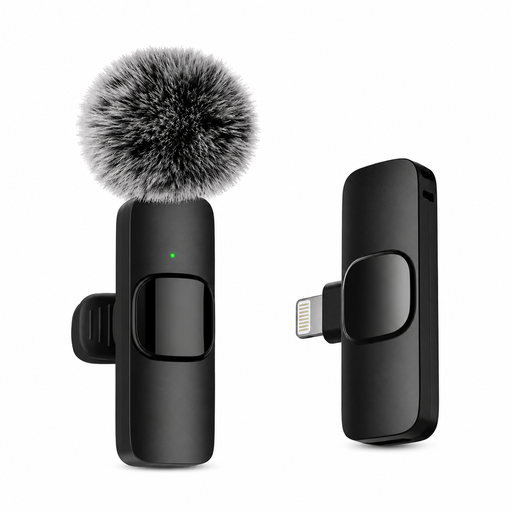
Verbex K9-Black wireless clip-on microphone with iOS interface

Verbex K9-Black Wireless Mini Microphone, iOS interface

A clip-on version to consider if you want to wear the microphone on your clothing; the product description mentions a portable design.

The title lists an iOS interface. Check that it connects to the device you want to record with.

View at Joybuy

Frequently asked questions

Will buying a dynamic microphone get rid of reverberation?

No, don’t assume it will. Record close to the correct speaking side, choose a quiet spot and try to reduce reflections with soft materials. Then listen to a test recording; this isn’t a guaranteed result from any one model.

Can I connect an XLR microphone directly to my computer to record?

To record through XLR on a computer, you’ll need a suitable interface or mixer. If your chosen model also has USB, check separately that this connection is compatible with your computer.

How should I position a microphone for a recitation?

Point the speaking side towards your mouth and make a test recording in your usual position, including your quietest and loudest lines. For the PodMic USB, RØDE recommends around 5–10 cm; don’t automatically use this distance with other models.

What can I do if a microphone I bought online doesn’t work properly?

When you buy as a consumer in the Netherlands, you’re entitled to a product that is of satisfactory quality; report any fault to the seller. The Dutch government says there is no fixed statutory warranty period that applies to all products. In many cases, you also have 14 days to change your mind when buying from a business at a distance, although exceptions apply.

Can I publish a recording of someone else’s poem online?

Don’t assume you can share a copyright-protected poem publicly just because you recited it yourself or recorded it for personal use. The Dutch government distinguishes between making a copy for personal use and distributing or publishing it. Before publishing, check whether you need permission for the specific poem.
