What should you look for when buying?
Start with a quiet spot and a consistent speaking distance. RØDE notes that placing the microphone too far away can make your voice sound more distant and reverberant. Then choose a connection that suits your recording equipment, and check whether you can monitor the audio while recording.
| What to consider |
What to look for |
Who this matters to |
| A clear voice in a reverberant room |
Check the polar pattern and whether you can position the microphone at a consistent, short speaking distance. |
I want my voice to come through clearly despite the echo. Around 36% of consumers considering this option prioritise tackling room echo first. |
| Easy connection |
Check the USB type, compatibility with your computer and which cables are included with the model. |
When recording solo, I want to get started easily without a separate audio interface. Around 29% of consumers are mainly looking for a simple connection. |
| Monitoring your recording |
Check whether direct headphone monitoring and a pop filter are included or need to be purchased separately. |
When recording a soft, continuous meditation, I want to listen for breathing and plosive sounds as I record. Around 21% of consumers prioritise monitoring their recordings. |
| Connecting to existing XLR equipment |
Check that the microphone output matches the input on your recorder or interface. For a condenser microphone, also check the power requirements. |
If I already have an XLR setup, I want to keep using it without buying something with an incompatible connection. Around 14% of consumers mainly want to make use of their existing XLR equipment. |
Joybuy products for this recording setup
These Joybuy product picks are suitable for recording voice with a USB microphone or wireless microphone system. Before buying, check that the connections and components suit your recording setup and that you need them for a solo meditation.
 Image unavailable
DJI Mic Mini 2S (2 TX + 1 RX + Charging Case)
This could suit you if you’re looking for a wireless setup for voice recording. Check that the receiver connects to your recording device and whether you need the second transmitter.
The product name lists 2 TX, 1 RX and a Charging Case.
Joybuy
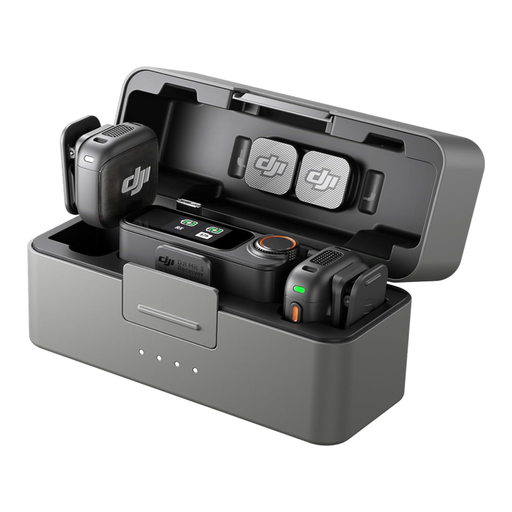 Image unavailable
DJI Mic 3 - 2 TX + 1 RX + Charging Case
This wireless set could suit you if you’re considering a system with multiple transmitters. For a solo meditation, it’s worth deciding in advance which components you really need.
The product name lists 2 TX, 1 RX and a Charging Case. Check that the receiver is compatible with your recording device.
Joybuy
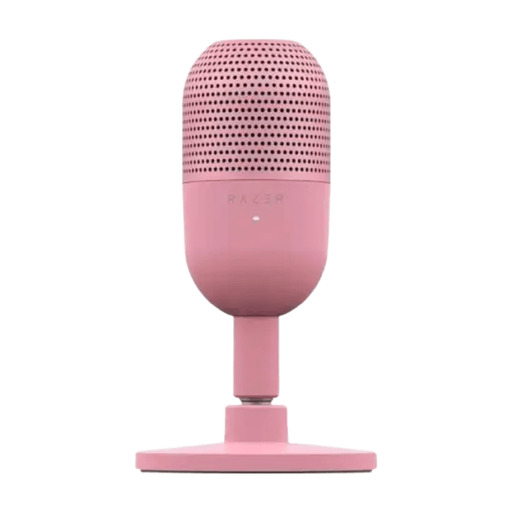 Image unavailable
Razer SEIRĒN V3 MINI Quartz
This could suit you if you’re looking for a USB microphone for desk-based voice recording. Check that it’s compatible with your computer and that you can consistently position it close to you.
The product name lists a USB Microphone in the Quartz finish.
Joybuy
Frequently asked questions
Will a dynamic microphone get rid of the echo in my room?
No. Keeping a short, consistent speaking distance can make your voice stand out more against the sound of the room, but it’s no substitute for a quiet recording spot with as few distracting reflections as possible. Make a test recording and listen back.
How do I make a test recording of a softly spoken meditation?
Position the microphone close to your mouth and keep it as still as possible while speaking. Set the input level, then listen back for breathing and plosive sounds. RØDE recommends around 5–10 cm for the PodMic USB; don’t automatically use that distance with other models.
Do I need an audio interface for every microphone?
No. According to Audio-Technica and RØDE, the ATR2100x-USB and PodMic USB can connect to a compatible device via USB. If you choose XLR, check that your recorder or interface has a suitable microphone input. For a condenser microphone, also check the power requirements.
What cooling-off period and warranty apply when buying online in the Netherlands?
According to ACM ConsuWijzer, ordinary online consumer purchases are generally covered by a statutory 14-day cooling-off period from the day of delivery. Check the exceptions that apply to your specific purchase. The seller must also resolve, free of charge, any issue where a product used normally fails to meet what you could reasonably expect of it. This could mean a repair, replacement or refund. There is not automatically a fixed statutory warranty period of two years.


