For a stationary performance in an untreated room, a dynamic microphone positioned close to your mouth is a sensible place to start. Its distance and direction help determine how much of your voice and the room sound is picked up, but they won’t remove room echo by themselves. Choose USB if you want to record straight to a compatible computer, or XLR if you have a suitable interface or recorder. If you move around a lot, test a lavalier microphone for clothing noise. A condenser microphone such as the Audio-Technica AT2020 requires a powered XLR setup and a test recording in your own space.
Who is this guide for?
Home performer dealing with audible room echo
You’re recording in an ordinary room and can stay close to a directional microphone. The balance between your direct voice and the room sound is the first thing to consider. Shure and RØDE explain why microphone distance and positioning matter.
Performer who wants to record easily on a computer
You want a fixed recording spot without first having to choose a separate XLR interface, but still want to listen back and check your setup. RØDE and Samson describe microphones with USB connectivity.
Performer who moves around
You use movement or gestures during your performance and need to weigh freedom of movement against maintaining a consistent distance, as well as the possibility of contact or clothing noise. The handheld and lavalier setups described each require a different way of holding or attaching the microphone.
What should you consider when choosing?
Start by considering how close you can stay to the microphone while performing. Then choose a connection and mounting option that suits the way you want to record. In their microphone technique guidance, Shure and RØDE highlight how positioning affects your voice and the room sound picked up.
| What to consider |
What should you look for? |
Who is this most important for? |
| Clarity in an echoey room |
Check the polar pattern and how the microphone is mounted. Test the intended speaking distance and listen back in the same room. |
If I record in an untreated room, I want my voice to stay clear without the room overpowering my performance. Around 40% of consumers give top priority to limiting the effect of room reflections. |
| Connectivity and monitoring |
Check whether the model has USB, XLR or both, and whether it’s compatible with your computer or recording equipment. Also check whether headphone monitoring is available. |
I want to record my performance easily on a computer and check what I’m capturing. Around 30% of consumers prioritise a direct, monitorable computer connection. |
| Freedom of movement |
Do a test performance using your usual gestures. Check the distance, cable routing and any clothing or contact noise. |
If I move or gesture, I want to keep my hands free or hold the microphone close to my mouth. Around 20% of consumers give freedom of movement top priority. |
| Vocal detail and room sound |
Compare test recordings in the place where you plan to record. For an AT2020, check the XLR connection and the power it requires. |
I want a detailed vocal recording, but I first want to hear how my room sounds in the recording. Around 10% of consumers prioritise vocal reproduction after assessing the room in a test recording. |
Common buying mistakes
-
Assuming a highly directional microphone can replace good positioning
Even with a suitable microphone, your recording can sound echoey if the microphone is too far from your mouth. Positioning affects how much of your voice is picked up compared with the room sound.
First, make a test recording in the place where you’ll actually perform. Then choose a microphone setup you can use consistently throughout your piece.
-
Comparing the microphones alone
An XLR setup requires a suitable interface, mixer or recorder; the accessories included vary by model.
Check the connection and the contents of the exact package, then compare what you already own with what your chosen setup requires.
Depending on the setup you choose, you may also need an audio interface or recorder, a cable, a mount or a stand.
-
Confusing the Audio-Technica AT2020 with a USB model
The AT2020 is an XLR condenser microphone and doesn’t record directly via USB.
Before buying, check the full model name, the XLR connection and the power it requires.
Brands to consider
Samson
The Q2U is a dynamic USB/XLR handheld microphone for speech, offering a flexible computer or XLR setup.
- Samson says the Q2U package includes a desktop stand, windscreen and cables, among other items.
- Samson describes the model as suitable for untreated rooms. This is a manufacturer claim, not a guarantee that it will eliminate room echo.
RØDE
The PodMic USB is a dynamic speech microphone for a fixed position, with USB-C and XLR connections.
- RØDE specifies headphone monitoring, an integrated mount and pop filters.
- Check that the mount suits your speaking position. The features listed don’t show that digital processing removes room reflections.
Shure
The SM58 is a dynamic cardioid XLR microphone for speech and live performance.
- Shure specifies a built-in pop filter, handling noise reduction and a stand adaptor.
- For computer recording via XLR, you’ll need a suitable interface, mixer or recorder. Room sound also depends partly on microphone positioning.
Audio-Technica
The AT2020 is a cardioid XLR condenser microphone option for a fixed recording spot.
- Audio-Technica describes the AT2020 as a condenser microphone with an XLR connection.
- The microphone requires power via XLR and isn’t a USB model. Make a test recording to see whether the room and positioning work for your performance.
Joybuy product picks
These picks include USB microphones for a fixed computer setup and wireless clip-on or lavalier microphones for performances that call for greater freedom of movement.
 No image available
DJI Mic Mini 2S (2 TX + 1 RX + Charging Case)
This set suits performances where you don’t want to hold the microphone. The product title lists two transmitters, one receiver and a charging case.
View at Joybuy
 No image available
DJI Mic 3 (2 TX + 1 RX + Charging Case)
This wireless set is an option for recording a performance with greater freedom of movement than you’d get with a microphone in a fixed position. The product title lists two transmitters, one receiver and a charging case.
View at Joybuy
 No image available
Razer Seiren V3 Mini Quartz
This microphone suits a fixed computer setup; check that it works with the way you perform. The product title lists USB and tap-to-mute, while the product description mentions a supercardioid pickup pattern and compatibility with PC and Mac.
View at Joybuy
 No image available
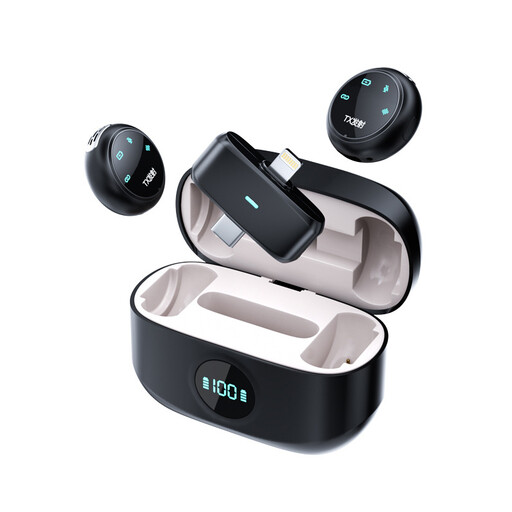
Verbex K31Pro-Black Dual Microphone
This set may suit a performance where you want to keep your hands free. Test the attachment and listen for clothing noise when you move. The product title lists two wireless clip-on microphones with magnetic attachments and compatibility with iOS and Type-C interfaces.
View at Joybuy
 No image available
Verbex K9-Black Wireless Mini Microphone
This wireless mini lavalier microphone is an option for a performance where you want a wearable mic; check that its connection suits your recording device. The product title lists a Type-C interface, and the product description gives a stated operating time of 3–6 hours.
View at Joybuy
Frequently asked questions
How do you position the microphone without disrupting your performance?
Position a fixed microphone so you can maintain roughly the same distance while performing, and point it towards your voice. Make a test recording using your usual delivery, then adjust the position while listening back to your voice and the sound of the room.
Can you plug an XLR microphone straight into a standard USB port?
No. To record on a computer, connect an XLR microphone through a suitable interface, mixer or recorder. If you want to record directly to a compatible computer, check whether the exact model also has a USB output.
What should you check if the microphone doesn’t work properly after purchase?
For consumer purchases in the Netherlands, the product must meet reasonable expectations; a commercial guarantee doesn’t replace your statutory rights. Business.gov.nl explains the difference. If there’s a problem, check your purchase information and contact the seller.
Can you upload a recording of someone else’s poem online?
Not necessarily. The Dutch Government distinguishes between making a copy for personal use and distributing or making protected work available to the public. Check what rights and permissions you need for the text. If the recording includes recognisable voices of other people, privacy rules may also apply; the Dutch Data Protection Authority considers recognisable audio recordings to be personal data.


