Who is this choice relevant to?

Reader recording in an echoey booth

Your main priority is keeping your words clear when sound is noticeably bouncing around the booth. Compare a consistent, close speaking position with some simple acoustic adjustments before choosing a model. Shure recommends adapting microphone placement to the sound of the room.

Reader performing soft, expressive passages

You want to assess your breathing, dynamics and vocal tone in a sufficiently quiet, acoustically damped space. So listen to a test recording of your own voice rather than relying on the model specifications alone.

Reader recording on their own

You want to record without a complicated set-up and monitor your voice during a long reading. The connection type and whether the microphone has a headphone output can make a difference.

What should you look for when choosing?

What to consider What should you check? Who is this most important for?
Clarity in a reflective space Make a test recording and compare a consistent, close position with the audible sound of the room. If words sound less clear in my small, reflective booth, I want to know whether positioning will help before choosing a microphone. Around 33% of consumers say clarity in a reflective space is their main concern.
Vocal nuance Record both soft and powerful passages, then listen back in your own space. If I want to assess quiet lines and vocal tone accurately, I want to hear how my voice sounds in the booth. Around 25% of consumers prioritise vocal nuance.
Connection and set-up Check whether USB or XLR is compatible with your recording device, and what the specific model requires. If I want to record on my own, I need to know whether my equipment connects directly or whether I need a suitable interface. Around 25% of consumers prioritise compatibility with their existing equipment.
Plosives and monitoring Test words with plosive sounds and check how you can hear yourself while recording. During a long reading, I want to be able to assess plosives and monitor my voice without any surprises when I listen back afterwards. Around 17% of consumers prioritise monitoring and control of plosive sounds.

Common buying mistakes

  • Expecting a more expensive microphone to fix echo

    A microphone won’t improve the acoustics of the room. Audible reflections can remain, even if you choose a different model.

    Make a recording in the booth where you plan to read, and compare different positions before replacing your microphone.

  • Assuming an XLR microphone works directly with every computer

    An XLR microphone needs a suitable recording input. For voice-over with the Shure SM7B, Shure recommends at least 60 dB of preamp gain; this model-specific requirement doesn’t automatically apply to other microphones.

    Check your entire signal chain and the requirements of your chosen model before deciding whether your existing equipment is sufficient.

    An XLR set-up may require a suitable interface. With the SM7B, you should also check that the preamp gain meets Shure’s model-specific recommendation.

  • Assuming USB, XLR and monitoring work the same way on every model

    Features can vary between connections. For example, the RØDE NT1 5th Generation doesn’t have a built-in headphone output; according to RØDE, its 32-bit float function is only available via USB.

    Check the features available with each connection and test how you’ll monitor your voice while reading.

    Without a built-in headphone output, you’ll need another way to monitor your voice, such as through a computer or external interface.

Brands to compare

RØDE

RØDE offers models for different set-ups, from a dynamic microphone for close-up speech to condenser microphones with USB and XLR.

  • According to RØDE, the PodMic USB has a headphone output and built-in filters. The NT1 5th Generation has USB and XLR, and a specified self-noise of 4 dBA.
  • The NT1 5th Generation doesn’t have a built-in headphone output. According to RØDE, its 32-bit float function is only available via USB. These features alone don’t tell you how the model will sound in your booth.

Shure

The Shure MV7+ combines USB-C and XLR for speech recording; the SM7B is a separate dynamic XLR microphone.

  • Shure lists headphone monitoring as a feature of the MV7+.
  • For voice-over with the SM7B, Shure recommends at least 60 dB of preamp gain. Check that your own recording chain meets this requirement; it doesn’t automatically apply to the MV7+.

Audio-Technica

The AT2020USB-X is a cardioid USB condenser microphone for recording on a computer without a separate XLR interface.

  • According to Audio-Technica, this model has a headphone output with mix control and comes with a desktop stand.
  • The AT2020USB-X is a different model from the AT2020USB+ and the XLR-connected AT2020. Assess reflections by recording in your own booth.

Microphones and sets for voice recording

This Joybuy selection includes microphones and wireless sets for voice recording. Check that each model’s connection is compatible with your recording equipment and that the microphone set-up works in your booth.
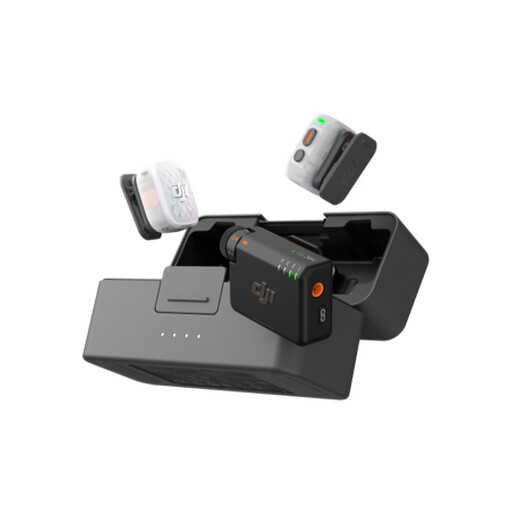
DJI Mic Mini 2S with two transmitters, one receiver and charging case

DJI Mic Mini 2S (2 TX + 1 RX + Charging Case)

If you’re considering a wireless set for voice recording, this version includes two transmitters, one receiver and a charging case.

The set supports voice recording and internal 32-bit float recording.

Joybuy
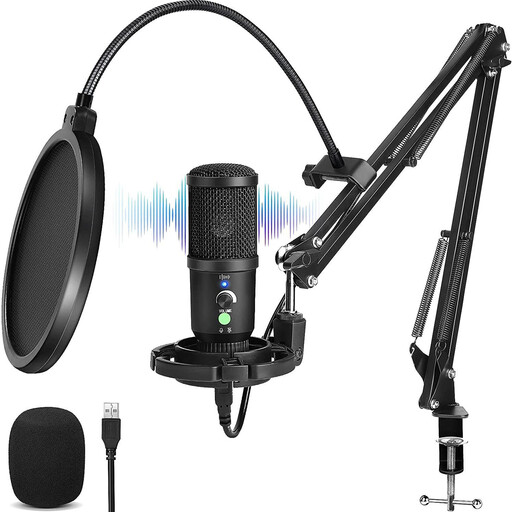
USB condenser microphone with cardioid pattern and headphone monitoring

USB condenser microphone with cardioid pattern

For USB voice recording when you want to monitor your voice as you record.

This microphone has a cardioid pattern, headphone monitoring and a pop filter; a scissor-arm stand is also listed.

Joybuy
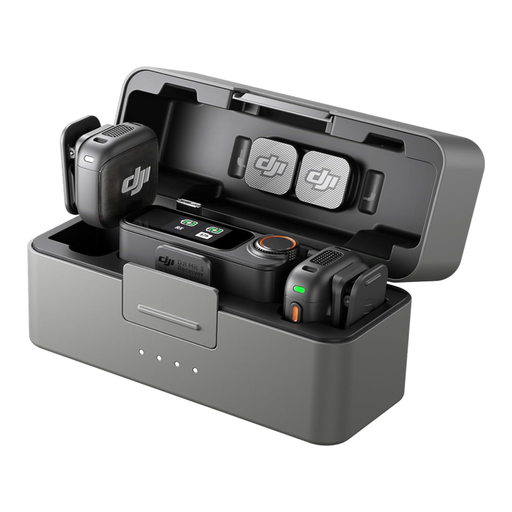
DJI Mic 3 with two transmitters, one receiver and charging case

DJI Mic 3 (2 TX + 1 RX + Charging Case)

If you’re considering a set for recording in multiple positions, this version includes two transmitters and one receiver.

The product information lists recording uses including interviews and recordings with two people.

Joybuy
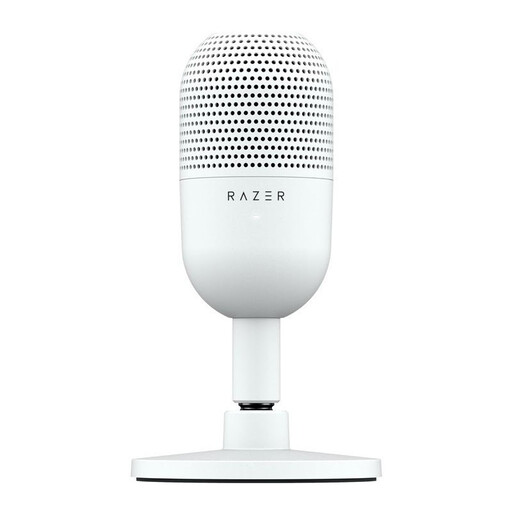
Razer SEIRÉN V3 MINI White USB microphone

Razer SEIRÉN V3 MINI White

For a compact USB set-up for recording voice at your desk.

This model has a supercardioid pickup pattern and tap-to-mute control.

Joybuy
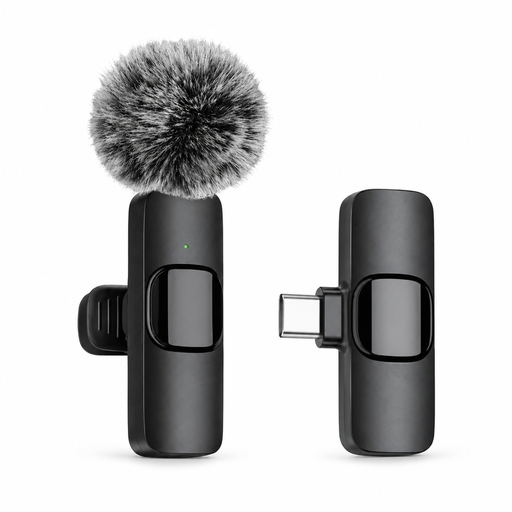
Verbex K9-Black wireless lavalier microphone with Type-C connection

Verbex K9-Black wireless lavalier microphone

For anyone looking for a wireless lavalier microphone for voice recording or interviews.

This version has a Type-C connection. Check that it’s compatible with the device you want to record on.

Joybuy

Frequently asked questions

Should I choose a dynamic or a condenser microphone?

Start by comparing test recordings made in your booth. If reflections make your words less clear, try a close position and a directional microphone. If the room is quiet and acoustically damped, you can use a condenser microphone to assess vocal nuance. The microphone type alone won’t fix the acoustics.

How should I position a microphone for a poetry reading?

Keep your speaking position as consistent as possible and listen to a test recording with soft lines and words that are prone to plosives. Specifically for the PodMic USB, RØDE recommends a distance of around 5–10 cm, with the top of the microphone facing your mouth; don’t automatically use this distance with other models.

Can I hear myself directly through headphones while recording?

That depends on the model. RØDE, Shure and Audio-Technica list a headphone output on the PodMic USB, MV7+ and AT2020USB-X respectively. The NT1 5th Generation doesn’t have a built-in output; RØDE describes monitoring through a computer or external interface.

What extra equipment and purchase rights should I consider?

An XLR set-up may require a suitable interface; also check the model-specific requirements and what you already own. When you buy online from a business, you usually have a 14-day cooling-off period, according to the Dutch government. The Dutch government says there is no fixed statutory guarantee period in the Netherlands, but products must be of satisfactory quality.

Does a microphone need a CE mark in the Netherlands?

That depends on the rules that apply to the specific product. According to the European Commission, CE marking is only compulsory for products covered by specific EU rules that require it. So check the applicable rules and conformity information for the model and the version being offered.
