What should you look for when choosing?
The comparison below is for consumers who want to record a poetry reading at a shared desk. The percentages show the top purchasing priority for consumers in each row.
| Consideration |
What to look for |
Who is this most important to? |
| Clarity amid background noise |
Try the microphone close to your mouth at a fixed distance, then listen back in the room where you plan to record. |
If I want my words to remain audible while others talk or type, close placement matters to me. Around 36% of consumers prioritise clarity amid voices, typing and room echo. |
| Expression across different volume levels |
Test a quiet and a loud passage, and check whether you can monitor the recording through headphones. |
When I whisper, pause or add emphasis, I want to capture those differences deliberately. Around 29% of consumers give the dynamics of a spoken performance top priority. |
| Space on the shared desk |
Check whether a stand will fit on the desk or whether an arm can be attached securely. Also check which accessories are included. |
If I need to clear the workspace after recording, I want to know how much room the set-up takes up. For around 21% of consumers, space and placement come first. |
| Connection and complete set-up |
Check that USB is compatible with your device and that you have the recording equipment needed for XLR, if you plan to use it. |
If I want to get started without unexpected extra components, I want to know in advance what comes with the microphone and which connection I need. Around 14% of consumers make ease of connection their top purchasing priority. |
Joybuy products for a desk set-up
This Joybuy selection includes USB microphones for use on a desk. Check that their placement and listed features suit the acoustics and available space in your shared workspace.
 No image available
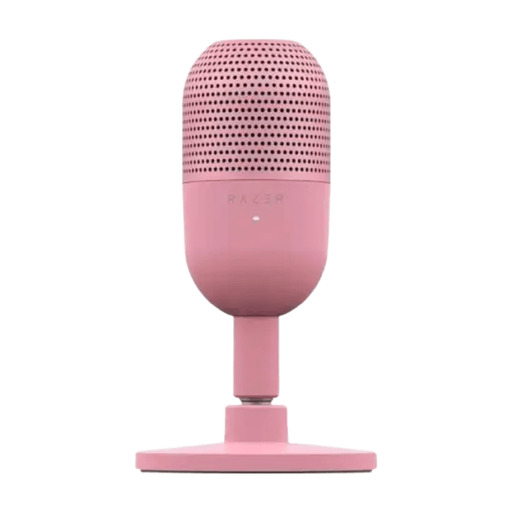
Razer SEIRÉN V3 MINI Quartz
This compact USB model may suit you if you’re looking for a small desktop set-up. Make a test recording to see how it sounds in your shared space.
The product name specifies USB and tap-to-mute.
View at Joybuy
 No image available
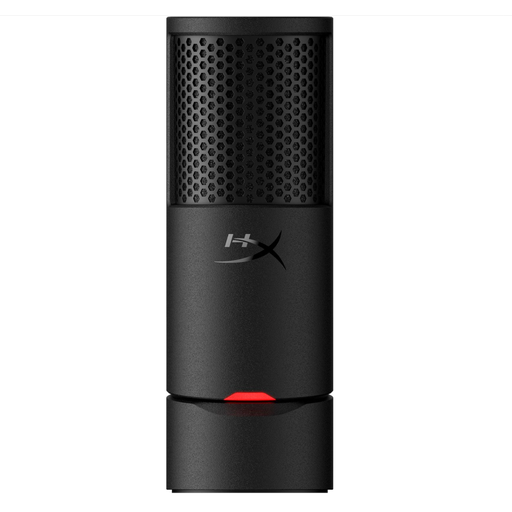
HyperX SoloCast 2
The USB connection and desktop set-up may suit you if you want to record directly. Check that the placement will work on your shared desk.
The product name specifies a cardioid pickup pattern and a black finish. This is a condenser microphone; RØDE lists a dynamic microphone as a possible choice for a noisier environment.
View at Joybuy
Frequently asked questions
Should I choose USB or XLR for recording poetry?
USB is a good fit if you want to record directly to a compatible computer or other supported device. XLR may suit you if you already have suitable recording equipment or want to build a set-up; check which accessories are included with the model. The Audio-Technica ATR2100x-USB and RØDE PodMic USB both offer these connections.
How should I position a microphone on a shared desk?
For a test recording, place it close to your mouth and keep your speaking distance as consistent as possible. Listen back while the room is being used as usual; a microphone can’t fix poor room acoustics on its own. Put away a portable set-up when others need the desk.
How can I avoid unexpected extra components with my microphone?
Compare what’s included with the microphone, such as a stand, arm and cables, with the equipment you’ll need for your chosen connection. XLR requires suitable recording equipment. Also check that any included stand or arm will fit your shared desk.
What should I know about buying online in the Netherlands or dealing with a product problem?
According to the Government of the Netherlands, many distance purchases come with a 14-day cooling-off period, although there are exceptions. If there’s a problem with a product, the seller is your point of contact for the statutory guarantee; any additional guarantee is separate.
Can I publish recordings of other people’s voices or a poem?
A recording in which someone can be identified may contain personal data. The Dutch Data Protection Authority says that publishing other people’s personal data is generally only permitted with their consent. For public use of a copyright-protected text, the Government of the Netherlands says you need the creator’s permission. Whether an exception applies depends on the circumstances; permission to record does not automatically mean permission to publish.


