In a reverberant or noisy rehearsal room, a dynamic microphone positioned close to the speaker is a sensible starting point, provided it connects to your recording equipment. A condenser microphone may suit a quieter, fixed recording position, while a portable recorder lets you capture both the reading and the room. Shure recommends placing the microphone as close to the sound source as is practical, so distance and positioning matter whatever type you choose.
Who is this guide for?
Reader in a reverberant room
You want to capture the words clearly and can speak close to the microphone. Shure and Samson describe dynamic cardioid models as options for focusing on the speaker; positioning alone won’t automatically eliminate reverberation.
Home recorder focused on voice
You record in a fixed position and balance vocal detail against audible room sound and microphone placement. RØDE and Audio-Technica product information describes cardioid USB condenser microphones; the NT1 5th Generation also has XLR.
Mobile rehearsal recorder
You want to record a reading or rehearsal without a fixed computer setup, and take into account how the distance between the speaker and recorder affects the sound. Zoom describes the H1essential as a standalone recorder with built-in X/Y microphones.
What should you consider when choosing?
Dynamic microphone positioned close
A good fit when: you want the words to stand out and the reader can stay close to the microphone.
Bear in mind: a directional pickup pattern won’t completely eliminate reverberation or background noise. Also check whether USB, XLR or both will work with your setup.
Condenser microphone in a fixed position
A good fit when: the room is quiet enough and the reader stays in roughly the same position.
Bear in mind: listen for reflections and plosives in a test recording. USB-only and USB/XLR models require different connection setups.
Portable recorder
A good fit when: you want to record at the rehearsal venue without a computer, or deliberately capture the atmosphere of the room as well.
Bear in mind: the further the recorder is from the speaker, the more important it is to test the balance between voice and room sound in advance.
| What to consider |
What should you check? |
Who is this important for? |
| Clarity and room sound |
Try your intended speaking distance and microphone direction in the rehearsal room. |
If I want the words to take priority over the room, I want to hear what a close microphone can do. Around 36% of consumers prioritise clarity over reverberation and background noise. |
| Vocal detail and reflections |
Listen to quiet and loud lines, plosives and reverberation in a test recording. |
If I want to preserve the nuances of my reading, I also want to know which ambient sounds will be picked up. Around 29% of consumers give vocal detail priority over audible room sound. |
| Connections and recording chain |
Check the USB connection and monitoring, or, for XLR, the interface or mixer and cables you’ll need. |
If I want to record without complicated extra equipment, I want to know in advance what my computer or mixer requires. Around 21% of consumers start by considering the connections and complete recording chain. |
| Freedom of movement and setup |
Test whether a fixed recorder, microphone stand or handheld microphone suits your reading. |
If I want to move around while reading, I want to adapt the recording setup accordingly. Around 14% of consumers prioritise freedom of movement and a flexible setup. |
Common buying mistakes
-
Assuming a cardioid microphone will automatically solve reverberation
A directional pickup pattern and short speaking distance can help the voice stand out, but they won’t change the acoustics of the rehearsal room.
Make test recordings at the distance you’ll actually use when reading, then compare clarity and room sound.
-
Choosing the microphone but forgetting the XLR recording chain
An analogue XLR output alone won’t let you make a digital recording on a computer. You’ll need a suitable interface or mixer.
Set up the complete recording chain first and check which connections and cables you already have.
Allow for suitable cables in your setup and, if your equipment requires one, an interface or mixer.
-
Confusing 32-bit float with a guarantee of a good recording
According to RØDE, the NT1 5th Generation’s 32-bit-float output is available via USB only; its XLR output is analogue. This doesn’t tell you how much reverberation the microphone will pick up.
Check which connection you’re using, then listen to a test recording for room sound and microphone placement.
Brands and suitable microphone options
Samson
The Q2U is a dynamic cardioid microphone with USB and XLR, suited to anyone speaking close to the microphone who wants the option of recording via a computer or mixer.
- Samson lists a desktop stand, windscreen, and USB and XLR cables as included.
- Samson’s claim that it is less sensitive to ambient noise is a manufacturer’s claim, and doesn’t mean that reverberation will disappear.
Shure
The SM58 is a dynamic cardioid XLR microphone for close-range readings, used on a stand or handheld, for example.
- Shure describes a built-in pop filter and provides guidance on speaking distance.
- For computer recording, you’ll need a suitable interface or mixer as well as the analogue microphone.
RØDE
The NT1 5th Generation is a cardioid condenser microphone with USB and XLR connections, suited to a fixed recording position.
- RØDE lists a pop filter and shock mount as included.
- According to RØDE, 32-bit-float output is available via USB only; the XLR output is analogue.
Audio-Technica
The AT2020USB-X is a cardioid USB condenser microphone for computer recording and direct headphone monitoring.
- Audio-Technica lists a desktop stand and headphone socket as included.
- This model has no XLR connection; the shock mount mentioned is optional.
Zoom
The H1essential is a standalone recorder with built-in X/Y microphones, suited to anyone who wants to record on location without a computer.
- Zoom describes features including tripod use and a microphone or line input.
- When recording with the built-in microphones, distance from the speaker still matters. Also check the memory card and power requirements for your setup.
Products for recording voices
This selection includes wireless microphone systems, a portable voice recorder and a USB desktop microphone. For each model, check that the connection and setup suit your recording space and reading style.
 No image available
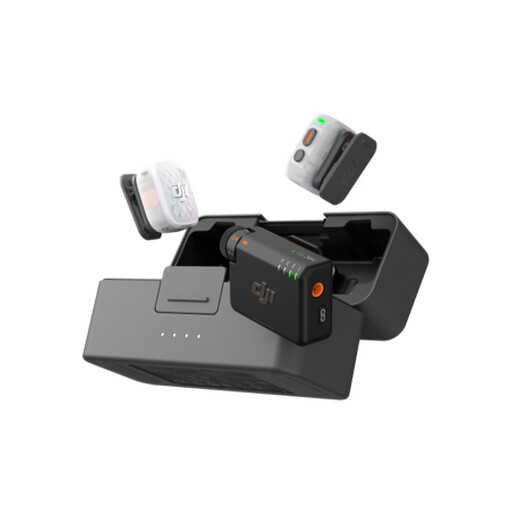
DJI Mic Mini 2S (2 TX + 1 RX + Charging Case)
May suit you if you want to record a reading with two transmitters; check that the receiver connects to your recording device.
The set includes two transmitters, one receiver and a charging case. The product description mentions built-in microphones and internal recording.
Joybuy
 No image available
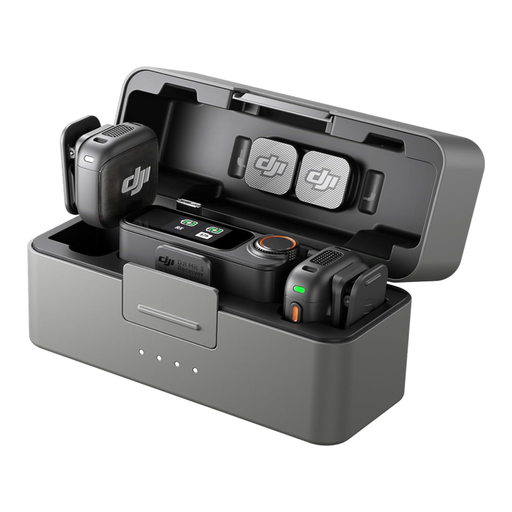
DJI Mic 3 (2 TX + 1 RX + Charging Case)
May suit you if you want to record wirelessly; before use, check that the included receiver and connection adapters work with your recording device.
The product name lists two transmitters, one receiver and a charging case. The product description mentions adapters for smartphones, cameras and laptops, as well as internal recording.
Joybuy
 No image available
Rexsun 128GB Portable Digital Voice Recorder, L357
May suit you if you want to save a spoken reading on location without having a computer where you’re recording.
The product name lists 128GB and model L357. The description mentions WAV and MP3 recordings and one-button recording.
Joybuy
 No image available
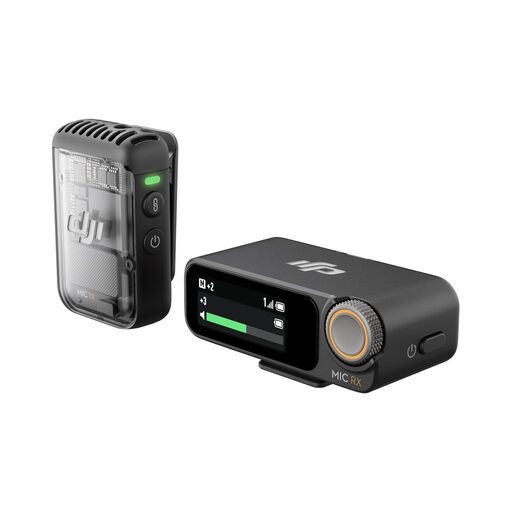
DJI Mic 2 (1 TX + 1 RX)
May suit you if you want to record a reading wirelessly; check that the adapters work with your recording device.
The product name mentions internal 32-bit-float recording. The product description lists adapters for USB-C, Lightning and 3.5 mm.
Joybuy
 No image available
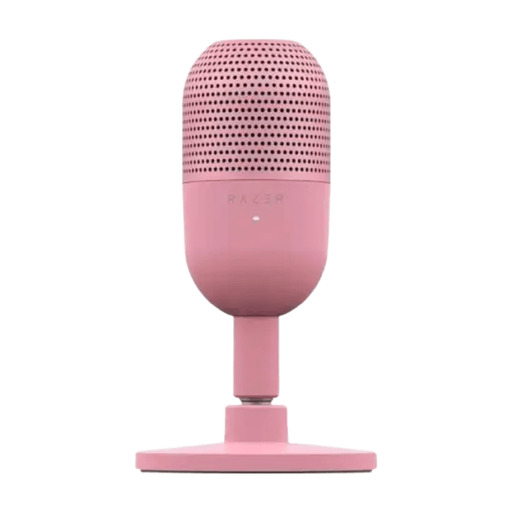
Razer Seiren V3 Mini Quartz USB Microphone
May suit a compact computer setup for voice recording; check that a desktop microphone will work with the reader’s position.
The product name mentions USB and tap-to-mute. The product description lists a supercardioid pickup pattern.
Joybuy
Frequently asked questions
Can I connect an XLR microphone directly to my computer?
Not with the analogue XLR output alone: you’ll need a suitable interface or mixer for digital computer recording. A microphone with its own USB output, such as the Samson Q2U, also gives you a digital connection option.
How can I check the microphone position before the reading?
Make a test recording with quiet and loud lines, then listen through headphones for plosives and room sound. Point the microphone towards the speaker. Shure recommends placing it as close to the sound source as is practical and keeping it away from reflective surfaces.
Am I always entitled to exactly two years’ statutory warranty in the Netherlands?
No. According to the Rijksoverheid, the Netherlands has no fixed statutory warranty period; what you could reasonably expect from the product is what matters. If a product is faulty, the seller must provide a solution.
Can I share a recording of someone else’s poem online?
Don’t assume that you can. The Rijksoverheid distinguishes between making a copy for personal use and distributing or making protected work available to the public; you may need the creator’s permission for the latter. If other people’s identifiable information appears online, the Dutch Data Protection Authority also sets out rules on personal data and a limited exception for strictly personal or household use. What you need to do depends on the work, the people involved and how you share it.


