What should you look for when choosing?
Start by considering where you’ll record and how close you can comfortably speak to the microphone. Then choose a connection that suits your current recording equipment and any plans to expand your setup.
Shure cautions that a microphone cannot effectively separate direct speech from speech that has already bounced off surfaces, or improve a room’s acoustics. A test recording in your intended location can help you assess how your voice and the room sound together.
| What to consider |
What should you look for? |
Who is this important for? |
| Keeping your voice clear |
Check the microphone’s polar pattern and whether you can position it close to you and keep it steady. A cardioid pattern won’t eliminate reflections. |
If I want my voice to come through clearly during a calming meditation, I’ll start with distance and positioning. Around 36% of consumers say reducing audible room reverberation is their top priority. |
| Monitoring quiet speech |
Compare headphone monitoring, any volume controls and protection against plosive sounds. Listen to a test recording made at your usual speaking volume. |
During long, quiet sessions, I want to hear whether my distance from the microphone or my level changes. Around 29% of consumers prioritise monitoring quiet speech. |
| Getting started easily via USB |
Check your computer’s connections, which cables are included and whether your recording software recognises the microphone as an input. |
If I want to record without a separate interface, a straightforward USB connection matters to me. Around 21% of consumers say recording directly via USB is their top priority. |
| Adding XLR later |
Check whether the model has both USB and XLR or XLR only. To record via XLR on a computer, you’ll need a suitable interface and cable. |
If you want an existing or expandable recording setup, look beyond the microphone itself. Around 14% of consumers prioritise an XLR setup. |
Joybuy products
These related Joybuy products range from USB microphones to a headset and a wireless microphone kit. Focus your comparison on the form factor and connection; no microphone can remove room reverberation from a recording.
 No image available
DJI Mic Mini 2S (2 TX + 1 RX + Charging Case)
The clip or magnetic attachment may suit hands-free voice recording; this kit has a different form factor from a fixed microphone on a boom arm.
The product description lists internal 32-bit float recording and storage. According to the description, up to four transmitters can connect to one receiver.
The description mentions AI noise reduction; this isn’t evidence that it reduces room reverberation.
View at Joybuy
 No image available
HyperX SoloCast 2
This cardioid USB condenser microphone is an option if you want to record directly via USB and are looking for a fixed desktop setup.
The product information lists a pop filter, integrated shock mount, stable stand and USB-C or USB-A connection.
View at Joybuy
 No image available
Razer SEIRÉN V3 MINI Quartz
This USB microphone is a compact option for a fixed setup and recording your voice directly on a computer.
The product information lists a supercardioid polar pattern, compatibility with PC and Mac, and tap-to-mute controls.
View at Joybuy
 No image available
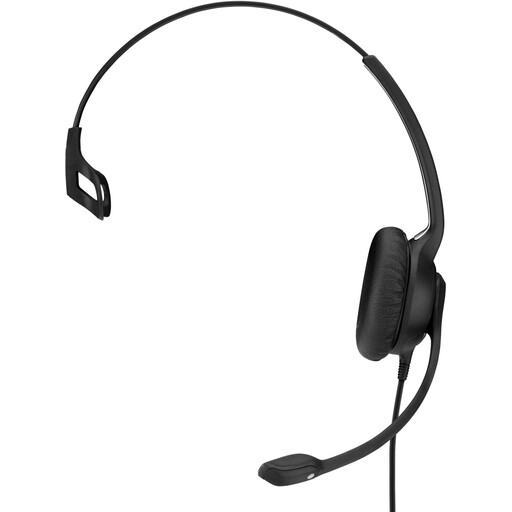
EPOS | SENNHEISER IMPACT SC 230 USB MS II
A headset with a boom microphone is an alternative to a separate microphone; consider it if you want to position the microphone close to your mouth.
The product description lists a wired USB connection, a flexible microphone boom and in-line controls.
The product description calls the microphone noise-cancelling; this doesn’t mean it removes room reverberation.
View at Joybuy
Frequently asked questions
Can a directional microphone remove the reverberation in my room?
No. Shure explains that a microphone can’t effectively separate direct speech from speech that has already bounced off surfaces, or improve the room’s acoustics. Position the microphone close to your mouth and make a test recording in the room where you plan to record.
How should I set up a RØDE PodMic USB for quiet recording?
RØDE recommends a distance of around 5–10 cm for the PodMic USB, with the top of the microphone facing your mouth. Check through your headphones and listen to the recording to make sure your quiet voice is still clear. Don’t automatically apply this model-specific advice to other microphones.
Do I need anything else for an XLR-only microphone?
For the Wave DX, Elgato lists an XLR audio interface, a three-pin XLR cable and a stand or boom arm. Check the connections and included accessories for any other model you’re considering.
What are my rights when buying a microphone online in the Netherlands?
For eligible distance purchases by consumers, the Dutch government says you’ll generally have a 14-day cooling-off period. In the Netherlands, statutory guarantees also apply, with no fixed general guarantee period; if a product is faulty, the seller is your point of contact. Check the terms that apply to your specific purchase.
Can I use someone else’s music under a meditation I publish?
Not without permission. The Dutch government says you can only use copyrighted music with the creator’s permission; music for personal use can’t simply be distributed or made available to the public. Check the usage rights before publishing your recording.


