
Interviewers in a reverberant room
To capture clear speech, keep the microphone close to whoever is speaking and adjust where you record. Shure and RØDE explain why microphone proximity matters.


Keep the microphone as close to the speaker as possible: in a reverberant room, the distance from the voice matters more than promises of noise cancellation. A handheld microphone is a good fit for a short introduction where speakers can pass it between them and a suitable XLR input is available. Choose two wireless clip-on transmitters if both speakers need to keep their hands free. Check that the receiver and connections are compatible with your phone, camera or recorder.
To capture clear speech, keep the microphone close to whoever is speaking and adjust where you record. Shure and RØDE explain why microphone proximity matters.
If you want to record both voices at once without passing a microphone between speakers, look for sets with two transmitters and check how the receiver outputs the channels. RØDE and DJI describe sets with two transmitters.
If you want a compact setup, make sure the connection and receiver are compatible with your recording device. RØDE and DJI describe wireless sets with different receiver and connection options.
Choose this when: speakers can hold or pass the microphone between them and you have a suitable XLR recording input.
Bear in mind: you’ll need a cable and recording device; the microphone itself doesn’t record a file. Shure and Sennheiser describe wired cardioid handheld microphones.
Choose this when: both people need to speak hands-free at the same time.
Bear in mind: check the exact version of the set, its connections and battery charge, and be aware of possible clothing rustle. You’ll still need a test recording to assess the sound in the room.
Choose this when: you want to record without a phone or camera and can place the recorder close to the speakers. Zoom describes the H1essential as having built-in X/Y microphones.
Bear in mind: a recorder placed further away will pick up more of the room’s reverberation. You may need an external microphone to record close-up.
| What to consider | What should you check? | Who is this important for? |
|---|---|---|
| Speech clarity in the room | Keep the microphone close to the speaker’s mouth and listen back to a short test recording in the room. | If I’m recording in a reverberant room, I want to keep the microphone close to the speaker and check how the recording sounds. Around 36% of consumers prioritise speech clarity in the room. |
| Two voices at once | Check that the set includes two transmitters and whether the channels are output separately or mixed together. | If the interviewer and guest need to speak at the same time, I don’t want to keep passing a microphone between them. Around 29% of consumers prioritise recording both voices. |
| Connection to your device | Note whether you’re using a phone, camera or recorder, and check the receiver and cables supplied. | If I want to use my existing phone or camera, the receiver needs to connect to it. Around 21% of consumers prioritise this connection. |
| Minimal extra equipment | Check whether you already have a suitable recorder or mixer; a standalone XLR microphone needs a recording chain. | If I want to work without an extra recording device, I’m looking for a setup that can record on its own. Around 14% of consumers prioritise simplicity and minimal extra equipment. |
A greater distance can make the voice sound more distant and pick up more background noise. Shure recommends placing the SM58 as close as possible to the sound source you want to capture.
Point the microphone towards the person speaking and make a test recording in the room beforehand.
With just one transmitter, two people can’t each wear their own microphone.
Check the contents of the exact pack and count the transmitters before you choose.
RØDE describes the Wireless Micro Camera Kit as including a camera receiver and a USB-C smartphone receiver. The standard Wireless Micro has a different receiver configuration.
Compare the receivers in the exact product variant with the input on your recording device.
The SM58 is a wired dynamic cardioid handheld microphone for speech and singing, designed for use with an XLR recording chain.
The Wireless Micro Camera Kit is a wireless set with two transmitters for recording with a camera or USB-C smartphone.
DJI Mic Mini is a wireless system whose receiver can connect to two transmitters at once, according to DJI.
The e 835 is a wired dynamic cardioid microphone for speech and singing, with a 3-pin XLR connection.
The H1essential is a standalone recorder with built-in microphones, not just a separate interview microphone.
This Joybuy selection includes wireless microphone sets and a USB condenser microphone. For each product, check how many transmitters are included and whether the connection is compatible with your recording device.
 No image available
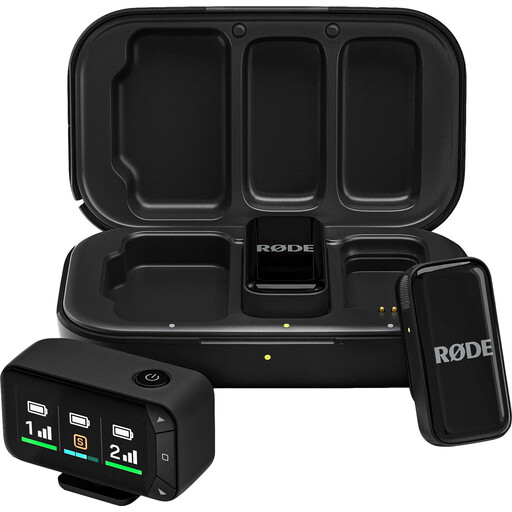
The two transmitters are useful if both people need to wear their own microphone at the same time.
The product information lists 2 TX + 1 RX and a charging case. It also mentions use with cameras, smartphones and PCs.
 No image available
This variant is designed for recording two speakers wirelessly at once with a camera or USB-C smartphone.
The product information lists two transmitters, a camera receiver and a USB-C smartphone receiver.
 No image available
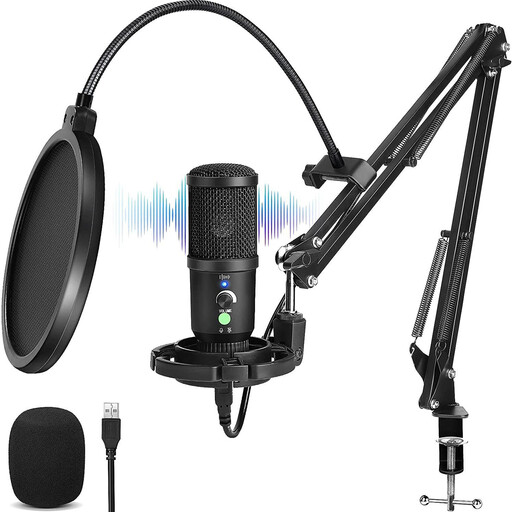
This USB microphone may suit a fixed voice-recording setup; check that the USB connection is compatible with your equipment.
The product information lists a cardioid pattern, headphone monitoring and a boom arm stand.
 No image available
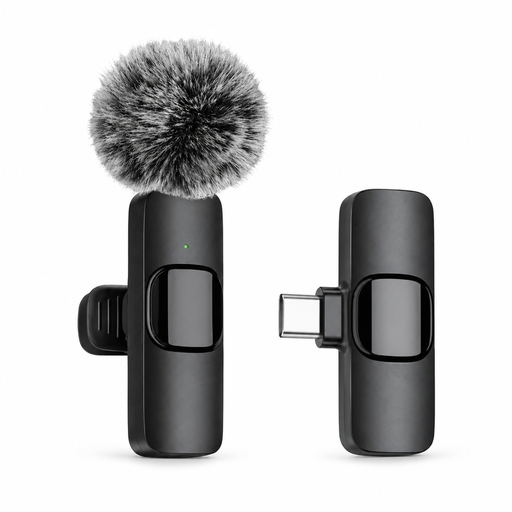
This clip-on model is designed for interviews; check that the Type-C interface is compatible with your recording device.
The description lists a battery life of 3–6 hours. The usage information advises against extreme temperatures and high humidity.
 No image available
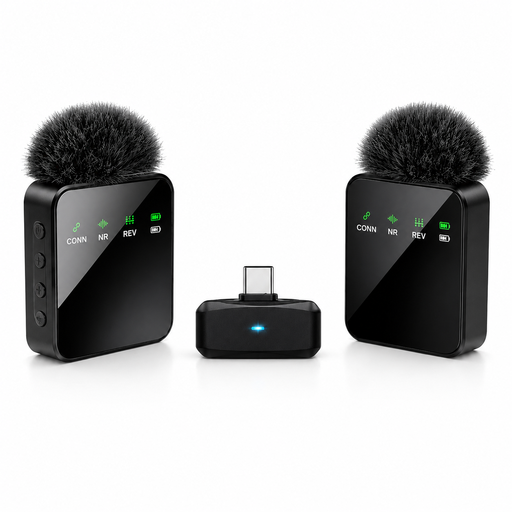
This clip-on microphone may suit an interview setup with a Type-C connection; check your device’s connection.
The variant information lists one microphone, so this isn’t a two-microphone set. The usage information advises against extreme temperatures and high humidity.
Ask both people to speak at their usual volume, keep the microphone close and listen back to a short test recording. Check for reverberation, clothing rustle and differences in volume. Shure recommends placing the SM58 as close as possible to the sound source you want to capture.
It depends on the set and the phone. According to RØDE, the Wireless Micro Camera Kit includes a USB-C smartphone receiver as well as a camera receiver. Check that your phone and recording app support USB audio, and test this beforehand.
According to ACM ConsuWijzer, statutory consumer rights may apply alongside any commercial guarantee. If the product develops a fault sooner than you could reasonably expect during normal use, the seller is responsible for providing an appropriate solution at no extra cost. What’s appropriate depends on the circumstances.
A sound recording in which someone can be identified may count as personal data. Processing it requires a lawful basis under the GDPR; consent is one possible basis. The Dutch Data Protection Authority says consent is the starting point in most cases for online publication, with exceptions, including certain journalistic or purely personal or household activities. Discuss how you plan to use the recording and any publication with the people involved beforehand.