
Teacher at a fixed workstation
You teach online lessons from your computer and mainly want your voice to come through clearly, without having to manage a wireless connection.


If you teach mainly from a seated position, choose a wired headset with an adjustable microphone boom and a connector that’s compatible with your computer. For long or noisy lessons, comfort and mute controls matter even more. A wireless headset is most practical if you move around while teaching and can manage charging and connectivity. A headset won’t change the lighting, so tackle backlighting from the window separately.
You teach online lessons from your computer and mainly want your voice to come through clearly, without having to manage a wireless connection.
You wear your headset for several lessons in a row and want to carefully weigh up comfort, controls and how well you can hear your students.
You want to be able to stand up while explaining something. If you use a wireless headset, checking the connection and battery level should be part of your preparation.
First decide whether you’ll teach from a fixed, wired workstation or need to move around while explaining. Then consider comfort, connectivity and microphone controls.
| What to consider | What to look for | Who should pay particular attention? |
|---|---|---|
| Clear speech | Check that the microphone boom is adjustable and that there are mute controls. Listen back to a test recording with the usual background noise in your teaching space. | If your students need to follow your explanations clearly despite noise in the room, speech clarity should be your top priority. Around 36% of consumers prioritise this. |
| Comfort | Check the wearing style and fit, and consider whether you can wear the headset comfortably for the length of your usual lessons. | If you teach several lessons in a row, look for a fit you can comfortably wear for long periods and a style that suits you. Around 29% of consumers prioritise comfort over extended wear. |
| Connectivity and controls | Compare your computer’s ports with the full product variant name, then check microphone selection, volume and mute settings in your teaching app. | If you want to avoid a headset that won’t connect or a microphone that’s awkward to control, this should be your main consideration. Around 21% of consumers prioritise connectivity and controls. |
| Freedom to move | Check that your computer supports the connection you’ve chosen, and test the headset while moving around your teaching space. | If you need to stand up during a demonstration, a cable may limit how freely you can move. A wireless headset, however, needs charging and connection management. Around 14% of consumers prioritise freedom of movement. |
A feature that reduces background noise for you doesn’t automatically tell you what your students will hear through your microphone.
Check which features are included with the exact model, then listen to a test recording from your students’ perspective.
A headset affects sound, not how your face is lit on camera.
Test your camera image in the daylight you expect during your lesson, and avoid sitting with a bright window directly behind you.
You may also need to adjust your position or the lighting near the window.
USB-A, USB-C, mono, stereo and platform variants differ between specific models.
Before buying, compare the full variant name, what’s included in the box and the ports on your computer.
If the connection isn’t compatible, you may need a different model or an adapter.
A product page stating a minimum two-year legal guarantee doesn’t necessarily reflect the general rule in the Netherlands. The Government of the Netherlands says there is no fixed statutory guarantee period in the country.
Keep any manufacturer’s warranty separate from your legal rights, and contact the seller if a fault develops.
The H340 and H390 are wired computer headsets for a fixed teaching setup. Check the connection on the exact model you’re considering.
The wired Evolve2 40 SE is designed for desk-based calls. The wireless Evolve2 55 is a separate option if you move around during lessons.
The Blackwire 3300 series includes wired mono and stereo models. The Blackwire 3320 model described here comes with USB-C and a USB-A adapter.
The IMPACT SC 30 USB ML is a wired, single-ear headset in the IMPACT 100 series, for anyone who wants to keep one ear free during lessons.
This selection includes wired headsets for a fixed teaching setup and wireless options for demonstrations where you’ll be moving around.
 No image available
A wired option for a fixed computer setup, with USB-A connectivity and controls for your microphone during lessons.
The product information lists USB-A, two integrated microphones, and volume and microphone mute controls.
The headband is adjustable and the ear cushions are made from memory foam.
 No image available
A wireless mono option if you want to move around during a lesson while keeping one ear free.
The product information lists Bluetooth, a USB-A adapter and three microphones.
Wireless use requires charging and connection management.
 No image available
A wired stereo option for a fixed computer setup, so you can hear both sides of an online conversation.
The product information lists a 3.5 mm connection and an included USB controller.
Check that the connections listed are compatible with your computer and teaching app.
 No image available
A wired USB option for a fixed teaching setup if you want to adjust the microphone position.
The product information lists stereo sound, an adjustable microphone boom and an adjustable, padded headband.
Compatibility with Windows, Mac and Chromebooks is listed.
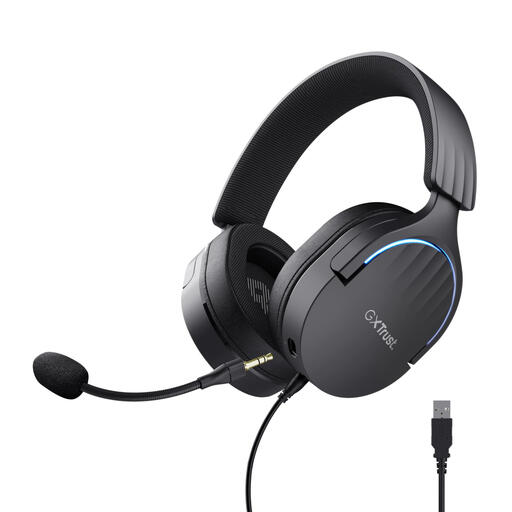 No image available
A wired USB headset for a fixed computer setup, with mute and volume controls on the ear cup.
The product information lists a detachable microphone and adjustable, rotating ear cups.
Check that the shape and fit are comfortable for the length of your lessons.
No. A headset affects sound, not the lighting on camera. Zoom advises avoiding backlighting and suggests blocking or diffusing daylight as ways to manage the lighting. Check how you look on camera in the lighting you expect during your lesson.
Check your computer’s port and the exact product variant, adjust the microphone boom and select the headset as the input and output device in your teaching app. Listen back to a test recording. If you use Teams and can hear distracting background noise, also check the noise cancellation setting.
When you buy from a business at a distance, you’ll often have 14 days to change your mind, although there are exceptions. The Government of the Netherlands says there is no fixed statutory guarantee period in the country. If there’s a fault, contact the seller.
Having a headset doesn’t in itself give you permission to record. If you teach on behalf of a school or university, follow its policy on online video calls and recordings. The Dutch Data Protection Authority recommends setting rules for making and storing recordings, and informing pupils or students.
Check the connection and mute setting before each lesson. Follow the instructions for your exact model when cleaning it or replacing the ear cushions, as the recommended steps can vary between models.