For documentary voice-over in an untreated, echoey room, a speech microphone that you can position close to your mouth is a practical starting point. However, changing microphones alone won’t get rid of room echo. Make a test recording from your intended speaking position and listen for reflections, plosives and mouth noises. Sound On Sound highlights acoustic treatment as a way to address the effect of the room. A condenser microphone is worth considering if you can also assess the room and the level of vocal detail. Check the connection, monitoring and any stand or interface you’ll need, too.
Who are these microphones for?
Narrators recording in an echoey room
You record your script from a fixed position and want to stop the room colouring your voice. That makes microphone placement and a test recording more important than a promise of automatic noise cancellation. Sound On Sound discusses how the recording environment affects voice recordings.
Creators with a simple computer setup
You want to record directly on a compatible computer and hear what’s being captured as you speak. Models from RØDE, Shure, Audio-Technica and Samson offer a range of USB and monitoring options.
Narrators looking to refine their vocal sound
You’re happy to spend time on your recording setup and want to weigh up how much vocal detail you’re after against audible room sound, breathing or mouth noises. RØDE describes the NT1 5th Generation as a condenser microphone with USB and XLR connections; the room will still be part of the recording.
What should you look for when choosing?
Start by choosing a microphone and setup that let you record close to the narrator. Then decide which connection, monitoring and accessories will work with your existing equipment.
Dynamic USB or USB/XLR speech microphone
A good fit if: you record while seated, close to the microphone, in a room with noticeable reflections. For the PodMic USB, RØDE recommends a speaking distance of around 5–10 cm.
Consider: positioning the microphone close to you is still important. Check whether a stand or boom arm is included with the specific version. Manufacturer claims about noise reduction don’t prove that room echo will disappear.
Directional USB speech microphone
A good fit if: you want to record directly to a computer and can position the microphone precisely for your speaking position. Audio-Technica describes the AT2040USB as hypercardioid and equipped with a headphone socket.
Consider: the AT2040USB is listed with USB, not XLR. Its narrower pickup pattern doesn’t replace a test recording in your room.
Cardioid studio condenser microphone
A good fit if: vocal detail matters and you can assess the effect of the room through placement and test recordings. RØDE lists the NT1 5th Generation with USB and XLR connections.
Consider: an untreated room may still be audible. If you use XLR, check that your recording chain supplies the required phantom power.
Shotgun microphone positioned out of shot
A good fit if: the microphone needs to stay out of shot but you can still position it close to the narrator.
Consider: RØDE warns that a shotgun microphone doesn’t bring sound closer. At greater distances, room echo may become more noticeable in comparison.
| What to consider |
What should you check? |
Who should prioritise this? |
| Room echo and intelligibility |
Make a test recording from your intended position and consider the pickup pattern, placement and mouth noises. |
If I record my narration from one fixed position, I want to hear whether my voice stays clear without the room overpowering it. Around 36% of consumers prioritise room echo and intelligibility. |
| Connection and monitoring |
Check that USB or XLR is compatible with your recording equipment and whether the microphone has a headphone socket. |
If I’m recording long passages, I want to be able to hear myself as I record and avoid discovering that the connection isn’t suitable. Around 29% of consumers prioritise easy connections and monitoring. |
| Vocal detail and room sound |
Compare test recordings made from the same position and check which connection and any required power supply you’ll need. |
If I want to refine the sound of my voice, I also want to assess how much room sound, breathing and mouth noise is picked up. Around 21% of consumers prioritise vocal detail over these considerations. |
| Equipment required |
Check what’s included with the exact version and work out whether you need an additional stand, cable or recording interface. |
If I still need to complete my setup, I want to know in advance which parts I already have and which I still need. Around 14% of consumers prioritise having the equipment needed for a working setup. |
Common pitfalls
-
Confusing a pickup pattern or noise reduction with echo treatment
An untreated room can still colour your voice. A feature on the microphone won’t automatically tell you how a recording will sound in your space.
Record the same passage from your planned position and listen for your voice, reflections and mouth noises before settling on your setup.
You may need to spend extra time finding or creating a more suitable recording space.
-
Assuming USB/XLR means your entire recording chain is included
An additional output doesn’t automatically provide all the equipment you need; what’s included varies by model and version.
Before buying, check the connections on your equipment and what comes with the exact version.
Depending on your existing setup, you may still need a suitable cable, stand or audio interface.
-
Positioning a shotgun microphone further away because it supposedly zooms in on sound
RØDE explains that a shotgun microphone doesn’t bring sound closer. The further away it is, the more noticeable room echo may become.
Choose this option only if you can position the microphone out of shot and close to the narrator. Otherwise, try a setup for close-miked speech.
Brands and relevant product ranges
Shure
The MV7+ is a USB-C/XLR speech microphone for anyone who wants the option of recording directly to a computer or using an XLR setup.
- Shure lists Auto Level, digital noise reduction and a 3.5mm headphone socket for the MV7+.
- Compare the version with a stand against the one without. These features don’t prove that echo will disappear in an untreated room.
RØDE
The PodMic USB is a dynamic USB-C/XLR option for close-miked speech, while the NT1 5th Generation is a separate condenser option.
- According to RØDE, the PodMic USB has a headphone output, internal pop filter and shock mount. RØDE recommends a speaking distance of around 5–10 cm for this model.
- RØDE lists a supplied pop filter and shock mount for the NT1. These accessories don’t show that an untreated room is being acoustically treated.
Audio-Technica
The AT2040USB is a USB speech microphone for anyone who can position the microphone towards a fixed speaking position.
- According to Audio-Technica, the model has a hypercardioid pickup pattern, internal pop filter, integrated shock mount and headphone socket.
- This version is listed with USB, not XLR. The additional AT8458a shock mount is sold separately.
Samson
The Q2U is a dynamic USB/XLR option for anyone looking for a microphone with basic accessories.
- Samson lists a desktop tripod, windscreen, USB and XLR cables, and a headphone output.
- Check what’s included with the version on offer. Samson’s claim about use in untreated rooms doesn’t prove how the microphone will sound in your room.
Joybuy products for voice recording
This selection includes wireless microphone systems for voice recording and a USB condenser microphone. When choosing, consider recording distance, connections and setup. A stated noise reduction feature is no substitute for a test recording in your room.
 No image available
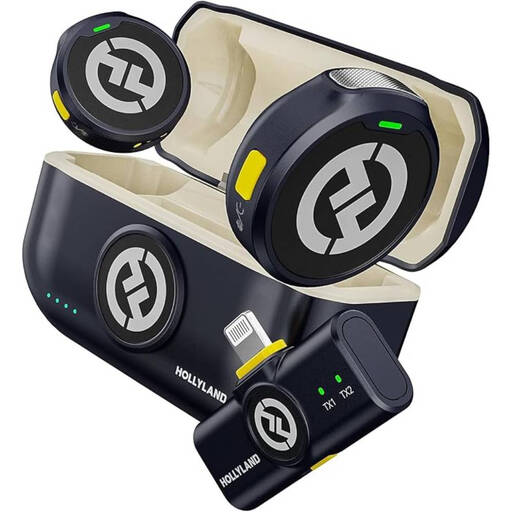
DJI Mic Mini 2S (2 TX + 1 RX + charging case)
This set with two transmitters is designed for wireless voice recording; the product description mentions interviews and internal recording.
The description lists 32-bit float internal recording and storage. Stated noise reduction doesn’t mean room echo will disappear.
View at Joybuy
 No image available
Lark M2 wireless lavalier microphone system
This wireless lavalier setup is designed for voice recording and interviews. Check that the receiver is compatible with the device you want to record on.
The product title lists 48 kHz/24-bit and a transmitter weight of 9 g. Stated noise reduction alone says nothing about room echo.
View at Joybuy
 No image available
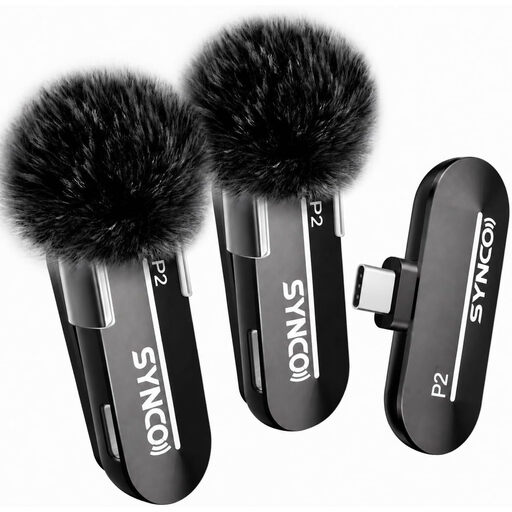
SYNCO P2XT USB-C wireless microphone
The USB-C connection is designed for compatible devices; the description mentions interviews and monitoring via the receiver.
OTG must be enabled when using it with an Android phone. A stated noise reduction feature doesn’t establish how a recording will sound in an echoey room.
View at Joybuy
 No image available
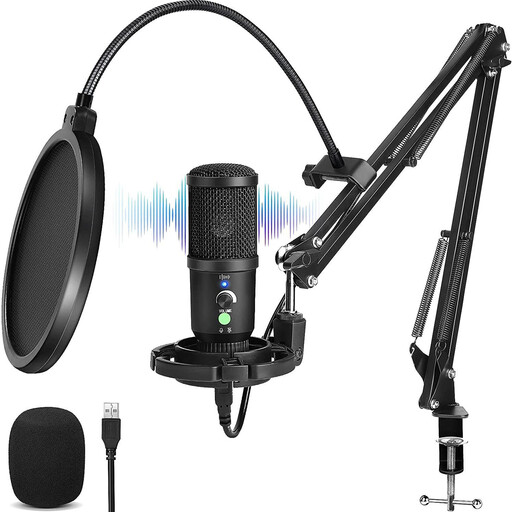
USB condenser microphone with cardioid pattern
This USB microphone is an option for recording directly to a computer; the description mentions voice recording and a headphone socket for monitoring.
The title lists a cardioid pickup pattern. The description mentions a gain control, mute button, boom arm stand and pop filter. Check that the supplied parts suit your setup.
View at Joybuy
 No image available
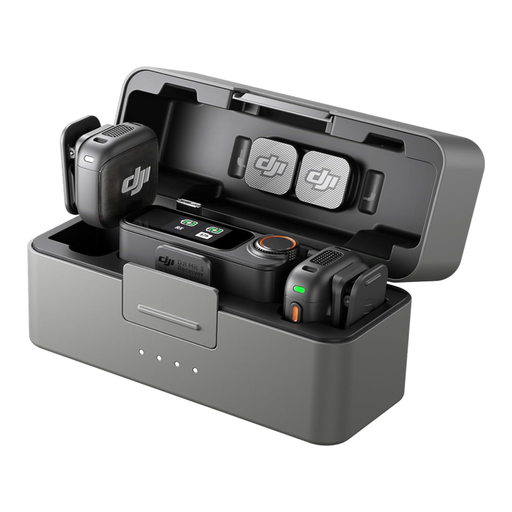
DJI Mic 3 (2 TX + 1 RX + charging case)
According to the product title, the set includes two transmitters and one receiver; the description mentions recording with two people.
The product description lists compatibility with cameras, smartphones and computers. Check that the connection suits your recording device; noise reduction won’t automatically remove room echo.
View at Joybuy
Frequently asked questions
Will the microphone alone help with echo in my room?
No, a microphone alone won’t acoustically treat the room. Make a test recording from your planned position and consider the distance from the speaker and any mouth noises. For the PodMic USB, RØDE recommends a speaking distance of around 5–10 cm.
Do I need extra equipment for XLR or USB?
A suitable USB model can be connected directly to a compatible computer; XLR requires a suitable recording chain. If you’re using a condenser microphone, also check that the XLR chain supplies phantom power.
What if my microphone breaks down sooner than expected during normal use?
According to ACM ConsuWijzer, in the Netherlands you have a statutory guarantee in addition to any seller’s or manufacturer’s warranty. If the product doesn’t meet what you could reasonably expect, the seller is responsible for an appropriate free remedy under the applicable terms. There isn’t one fixed statutory warranty period for every microphone.
Can I record other people’s recognisable voices and use them in a documentary?
Recognisable audio recordings may be personal data, according to the Dutch Data Protection Authority. If the GDPR applies to your processing, you need a valid legal basis; consent is one option, but it isn’t automatically the only one. Whether a particular recording and publication is permitted depends on its purpose and circumstances.


