
Storyteller in a fixed position
You want every sentence to be clear, and you can speak close to a microphone on a stand.


Start with the distance between the microphone and the speaker: for clear speech, a microphone close to the voice is usually a more sensible starting point than a recorder placed far away in a reverberant hall. Choose a microphone for a fixed speaking position, a portable microphone for performers who move around, or a stereo recorder if capturing the atmosphere of the hall is important. Also check what recording equipment and connections you’ll need.
You want every sentence to be clear, and you can speak close to a microphone on a stand.
You want to move freely without holding the microphone far from your voice.
You want to capture reactions and the sense of space as well as the words, and you can position the recorder carefully.
Suitable when: a storyteller or performer can speak close to a fixed microphone and clear speech is the priority.
Trade-off: the speaker needs to maintain the right distance, and an XLR microphone also needs a recorder, interface or mixer.
Suitable when: a performer can’t stay by a stand and the microphone needs to move with them.
Trade-off: check the number of transmitters, the receiver, the connection to the recording device and the power supply. RØDE states that Wireless ME transmitters do not record internally on their own.
Suitable when: the speaker stays in one place and you can position the microphone carefully.
Trade-off: check the connection and power requirements for the exact version. The Audio-Technica AT2020 requires 48 V phantom power via XLR.
Suitable when: reactions and a sense of space are intentionally part of the recording.
Trade-off: a greater distance can introduce more reverberation into the recording, so a stereo recorder isn’t necessarily the best choice if you only want clear speech.
| What to consider | What should you look for? | Who should pay particular attention? |
|---|---|---|
| Clear speech in a reverberant space | Test the microphone at the actual speaking distance and listen back to the recording. Check that the speaker can maintain that distance. | If my main priority is making the words clear, I want to be able to position the microphone close to the speaker. Around 36% of consumers put clear speech first. |
| Freedom of movement | Decide how many performers will speak at the same time, then check how many transmitters the set includes and what the receiver connects to. | When performers move around the hall, I want the microphone to stay close to their voice without relying on a fixed stand. Around 29% of consumers give freedom of movement top priority. |
| Capturing the atmosphere of the hall | Make a test recording from the intended position and listen to check that the words are still clear enough. | If I also want to capture reactions and a sense of space, I accept that the recording may include more sound from the hall. The atmosphere of the hall is the main consideration for around 21% of consumers. |
| A recording setup that works | Check the recorder, connections, cables, power supply, storage and whether you can play back the recording. | I want to know before the performance that the microphone can connect to my recording equipment. Around 14% of consumers prioritise a recording setup that’s easy to manage. |
A microphone can’t effectively separate direct speech from reflections in the room. Simply choosing a different microphone won’t automatically make the words clearer.
Start by considering the speaking distance, then make a test recording in the hall before choosing a microphone type.
RØDE states that Wireless ME transmitters do not record internally on their own, so you’ll need a suitable recording setup to create an audio file.
Check how the transmitter and receiver connect to the recording device, and where the recording will be saved.
The standard Audio-Technica AT2020 is an XLR model and requires 48 V phantom power. The RØDE NT1 5th Generation offers both USB-C and XLR.
Before buying, check the full model name, connection and power requirements for the entire recording setup.
A greater distance can add more reverberation to a voice recording. Zoom also warns that a recorder placed directly on a table can pick up reflections.
Test the speech and the hall atmosphere you want to capture from the actual recording position, and place the recorder somewhere stable, such as on a tripod.
The Shure SM58 is a dynamic cardioid XLR microphone for speech and vocals in a fixed speaking position.
The Sennheiser e 835 is a dynamic cardioid XLR microphone for a speaker or performer to hold, or to use in a fixed speaking position.
The NT1 5th Generation is a fixed condenser setup with USB-C and XLR connections. The Wireless ME Dual is designed for a different scenario, with portable transmitters.
The Zoom H1essential is a portable recorder with built-in X/Y stereo microphones for standalone recording or for deliberately capturing the atmosphere of a hall.
The Audio-Technica AT2020 is a cardioid XLR condenser microphone for a controlled, fixed speaking position.
These Joybuy products are aimed at speakers or performers who move around. For each model, check that the connections are compatible with your recording equipment and that the set is suitable for the number of performers.
 No image available
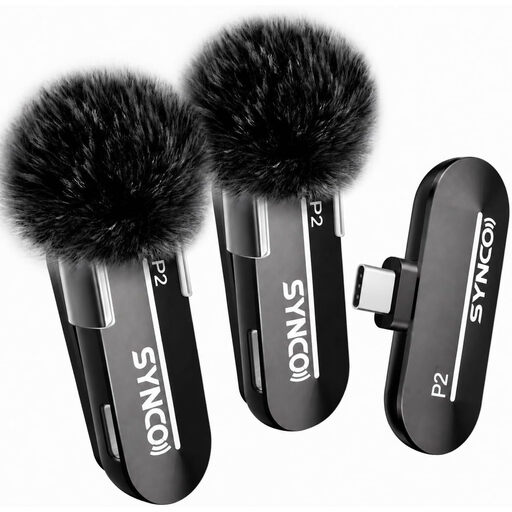
A set to consider if several performers will be moving around; the product name lists two transmitters and one receiver.
Check that the receiver connects to the recorder or other recording equipment you plan to use.
 No image available
An option to consider for a speaker on the move; USB-C is listed in the product name as the connection type.
Check that the connection is compatible with your recording device and how the recording will be saved.
 No image available
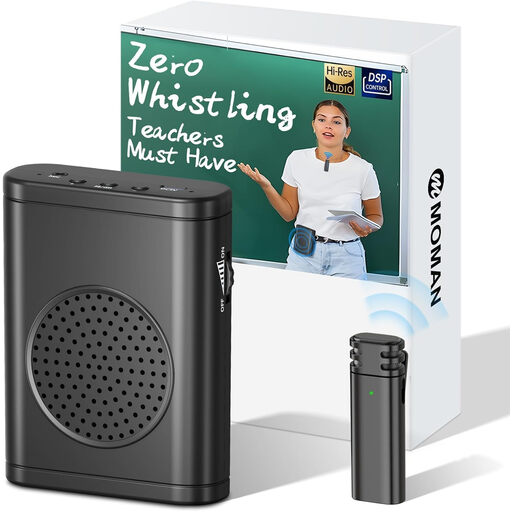
The product name describes a voice amplifier with a wireless lavalier microphone for a speaker on the move.
If you also want to record, check whether this setup can connect to your recording equipment.
 No image available
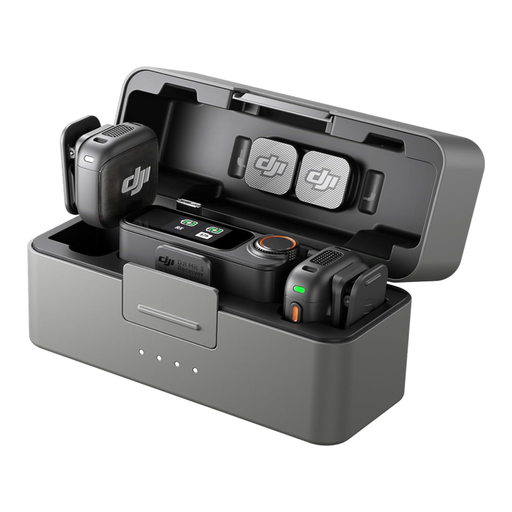
A set to consider if two performers will be moving around; the product name lists two transmitters and one receiver.
Check that the receiver is compatible with the input on your recording equipment.
 No image available
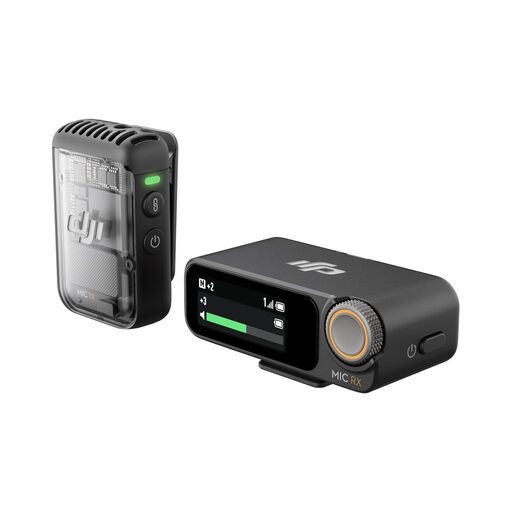
A set to consider for one performer on the move; the product name lists one transmitter and one receiver.
Check which connection your recording device needs and whether the included set is compatible.
Don’t count on it without making a test recording. Shure explains that a microphone can’t separate direct speech from reverberation. For clear speech, position the microphone closer to the speaker and listen back to the recording from the intended position.
Check that you have a suitable microSD card, a power supply and a stable place to position the recorder. Zoom recommends testing the card and placing the recorder on a tripod, for example, rather than directly on a table.
It depends on the exact model and connection you choose. Audio-Technica specifies 48 V phantom power for the XLR AT2020; the RØDE NT1 5th Generation offers a USB-C connection as well as XLR.
It depends on the text, the performers and how you intend to use the recording. The Dutch Government explains that rights may apply when using and distributing copyright-protected texts, and that performers may have related rights. Recordings in which people can be identified may contain personal data; according to the Dutch Data Protection Authority, an organisation needs a legal basis under the GDPR to process it. Before recording or publishing, consider who and what can be identified and how the recording will be used.
When you buy as a consumer, you’re entitled to a product that is of satisfactory quality. According to the Dutch Government, there is no fixed statutory warranty period in the Netherlands. If a product is faulty, the seller is your point of contact for a solution.