Start with positioning: point the microphone at the vocals or instrument, keep it close where practical, and make a test recording while the desk is being used as usual. A USB microphone offers a straightforward way to record to a computer, while a dynamic XLR microphone lets you focus on a nearby sound source, and a stereo recorder can capture more of the room. None of these options will, on its own, eliminate distracting noise.
Who is this choice relevant to?
Creator at a noisy desk
You want to isolate vocals or an instrument from nearby activity as effectively as possible. Shure recommends pointing the microphone at the sound source you want to capture and placing it close by where practical. This does not guarantee that desk or background noise will disappear.
Singer-songwriter with one recording spot
You want to use test recordings and different positions to find the right balance between your voice and acoustic instrument. Shure and RØDE highlight positioning and the type of connection as relevant considerations; don’t assume that one microphone will adjust the two sound sources separately.
Creator who wants a quick set-up
You want to put your set-up away after using the shared desk, so you’re comparing a USB microphone with a portable recorder. Audio-Technica describes one USB model as suitable for recording directly to a computer; Zoom says the H1essential can also be used as a USB microphone.
What should you look for when buying?
| Consideration |
What should you check? |
Who is this important for? |
| Noise in your workspace |
Check the polar pattern and positioning options, then make a test recording in your actual workspace. |
If I don’t want conversations or keyboard tapping to dominate my demo, I want to hear what difference positioning makes first. Around 36% of consumers prioritise reducing workplace noise. |
| Balance between vocals and instrument |
Decide whether you’ll record both sound sources at the same time, and test different distances and positions. |
When I record vocals and guitar together, I want to assess the balance at my recording spot. Around 29% of consumers prioritise this sound balance. |
| Connecting and putting it away |
Check your computer’s connections and which cables, stand and monitoring options you’ll need. |
If I want to clear the desk after use, I’m looking for a set-up that’s easy to connect and put away. Around 21% of consumers prioritise a quick set-up. |
| Recording the space or recording on the go |
Check where the recorder can be placed and which headphone, storage and power options you’ll need. |
When I want to capture a full performance on the go or in stereo, I want to know in advance how much of the room’s sound will be picked up. Around 14% of consumers prioritise this type of recording. |
Common pitfalls
-
Assuming a cardioid microphone guarantees silence
A microphone’s polar pattern and positioning affect the balance between the sound source you want and the sound of the room, but they won’t automatically eliminate background noise.
Test the microphone at the intended distance while the shared desk is being used as usual, then listen back before settling on your recording spot.
You may need to set aside time for re-recording or find another spot.
-
Considering only the XLR microphone
An XLR microphone needs a compatible input and cable to connect to your computer set-up. Some condenser microphones also need power.
Check the requirements for the exact model and make sure your equipment has the right input and power supply.
-
Confusing a desk stand with protection from desk noise
A stand and a shock mount are different accessories; movement of the desk can still affect your recording.
Check what comes with the model and test how desk movement sounds in your recording before choosing a different mount.
Brands to compare
Shure
The SM57 is a dynamic cardioid XLR microphone for focused recording of an instrument or nearby vocals. Shure says the MV7+ is designed for close-miked vocal recording, so it’s a different type of microphone from an instrument mic.
- Shure recommends pointing the SM57 at the sound source you want to capture and away from unwanted sources.
- Recording to a computer with the SM57 requires a suitable XLR set-up; positioning doesn’t guarantee a noise-free recording.
RØDE
According to RØDE, the NT1 5th Generation offers USB and XLR connections for vocals and instruments. The NT-USB Mini is a separate USB model, suitable for uses including recording guitar at a desk.
- RØDE lists a shock mount and pop filter as included with the NT1 5th Generation, and a detachable desk stand and headphone monitoring with the NT-USB Mini.
- These accessories and features won’t automatically make a noisy shared space suitable for every recording.
Audio-Technica
Audio-Technica describes the AT2020USB-X as a USB condenser microphone with cardioid recording and an included desk stand.
- Audio-Technica lists a headphone output and mix control for this model.
- An optional shock mount isn’t the same as an included accessory; consider whether the stand suits your workspace.
Zoom
The H1essential is a portable recorder with built-in X/Y microphones, suitable for capturing a full rehearsal or demo. It isn’t necessarily a replacement for every close-miked vocal microphone.
- Zoom lists a USB microphone function and a headphone socket.
- A recording that captures more of the performance and room may also pick up background noise in a shared workspace. Check this with a test recording.
Products at Joybuy
This selection includes USB microphones for desk recording and wireless clip-on or lavalier microphones. For each model, check that the connection is compatible with your recording device, and test the positioning in the shared space.
 No image available
HyperX SoloCast 2 USB microphone, Black
A USB set-up for anyone who wants to connect a microphone at a desk; check it’s compatible with your computer and test how it sounds in your chosen spot.
The product name specifies USB and a cardioid polar pattern.
View at Joybuy
 No image available
Razer Seiren V3 Mini Quartz USB microphone
A compact USB microphone to compare if you’re looking for a small desk set-up; make a test recording to hear how much of the shared workspace it picks up.
The product name specifies USB and tap-to-mute controls.
View at Joybuy
 No image available
Verbex K9-Black wireless mini microphone, Type-C
A wireless mini microphone to consider if you’re looking for a portable recording set-up; check that the Type-C connection is compatible with your device.
The product name specifies wireless operation and a Type-C connection.
View at Joybuy
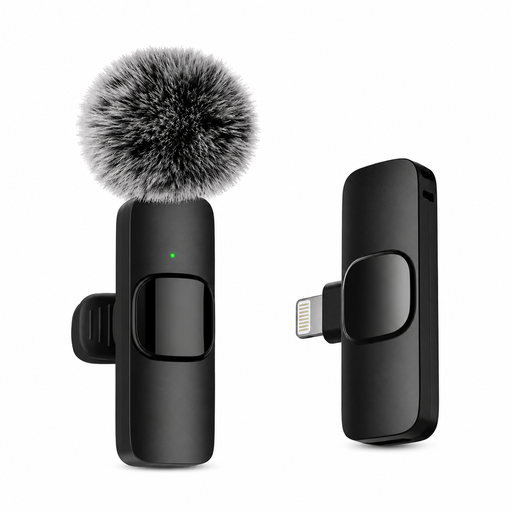 No image available
Verbex K9-Black wireless mini microphone with iOS interface
A clip-on set-up to compare if you’re looking for a portable microphone; check that the stated iOS interface is compatible with your recording device.
The product name specifies a wireless microphone and an iOS interface.
View at Joybuy
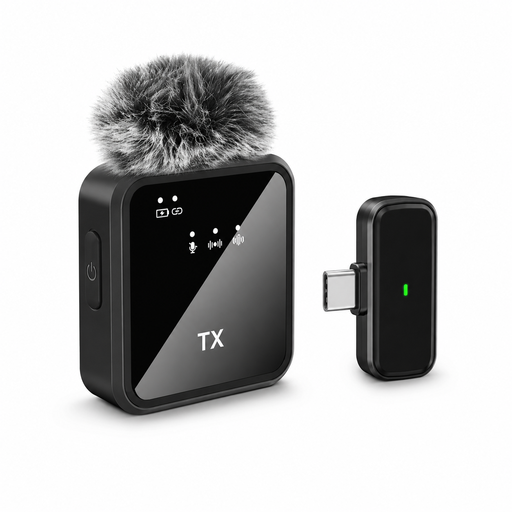 No image available
Verbex ST5 wireless mini lavalier microphone
A clip-on model to compare if you’re looking for a wireless recording set-up; check which connection the model uses and whether it works with your recording device.
The product name specifies a wireless mini lavalier microphone with a universal interface.
View at Joybuy
Frequently asked questions
Can I record vocals and guitar at the same time with one microphone?
Yes, if a single combined recording is enough for your demo. Make test recordings at different distances and angles: positioning affects the balance between the sound sources and how much of the room you hear.
Do I need phantom power for an XLR condenser microphone?
Check the requirements for the exact model: only condenser microphones that require phantom power need it. Focusrite lists switchable 48 V phantom power via the Scarlett Solo 4th Gen’s XLR microphone input; this doesn’t mean that every microphone needs power.
How can I reduce keyboard tapping and desk movement in my recording?
Try a different microphone position and listen back to a test recording while the desk is being used as usual. Check whether you need a shock mount or boom arm, and what comes with your chosen model: RØDE lists a shock mount with the NT1 5th Generation, while Audio-Technica describes one for the AT2020USB-X as optional.
What are my rights if I buy a microphone online or it turns out to be faulty?
According to ACM ConsuWijzer, online purchases generally come with a statutory 14-day cooling-off period after delivery, although there are exceptions you should check before buying. You also have statutory rights if a product is faulty; the Dutch government says there is no fixed statutory guarantee period and that you can contact the retailer if there’s a problem.
Can I record other people at a shared desk or publish my demo?
It depends on who can be identified in the recording, its purpose and who you share it with. The Dutch Data Protection Authority says that a suitable legal basis is needed for personal data covered by the GDPR. Don’t record others without their knowledge, and agree how the space will be used. The Dutch government also distinguishes between making a copy of copyright-protected music for personal use and distributing or publishing it.


