
Vandaag of morgen in huis

Kwaliteit gegarandeerd

Welkomstaanbiedingen ontgrendelen: GRATIS bezorging | Tot 80% korting | Gratis 30 dagen JoyPlus-proefperiode
Download de app
Microfibre cloths are handy for everyday cleaning, but not every cloth is suitable for every surface. A thin cloth can work well for dust, whereas for glass, the kitchen or the car, you’ll be better off with a cloth that has a different texture and a suitable size.
The number of cloths doesn’t tell you everything either. A large microfibre cloths set might seem like good value, but it can be impractical if all the cloths are the same colour or quickly lose their shape. So pay particular attention to the material, dimensions, care instructions and the purpose for which you’ll be using the cloth.
A set with ten or more cloths might look appealing, but do check the size and the material composition. A cloth measuring 30 x 30 cm is compact and suitable for everyday tasks. For larger surfaces, such as a car or a table, a cloth of 40 x 60 cm can be more efficient.
Many product descriptions claim a streak-free result. In practice, this also depends on the surface, the amount of water, any leftover cleaning product and the way you wash the cloth. According to the product description of some microfibre cloths, they are suitable for glass, mirrors and screens, but always try a new cloth on a small, inconspicuous area first.
Washable microfibre cloths can last longer if you care for them according to the wash label. Fabric softener can affect the fibre structure. For the 5five set of 40 x 30 cm, for example, it states that washing at 40 °C is possible and that fabric softener and bleach should be avoided. Always follow the instructions on the packaging.
Microfibre is often made from a combination of polyester and polyamide. Polyester contributes to the structure, while polyamide can absorb moisture. The exact ratio varies from product to product and is not stated on every set.
For the Microfibre Cloths 30x30cm Set of 1, a density of 260 g/m² is stated. This is a verifiable specification that helps you compare cloths with one another. A higher density does not automatically mean a cloth is more suitable for every cleaning task, but it can be relevant when you are looking for a sturdier cloth for glass, furniture, the car or stainless steel.
A good size is large enough to fold the cloth several times. This way you can work with several clean sides without having to grab a new cloth each time.
Reusable cleaning cloths are especially practical when they are easy to wash. Check:
Colour coding is not a guarantee of hygiene, but it does make it easier to organise cloths by room. Use separate cloths for, for example, the bathroom, kitchen and car.
The selection below is based on the stated product details, such as size, quantity, material and care instructions. Claims about absorbency or a streak-free result come from the respective product descriptions and are not a universal guarantee for every surface.
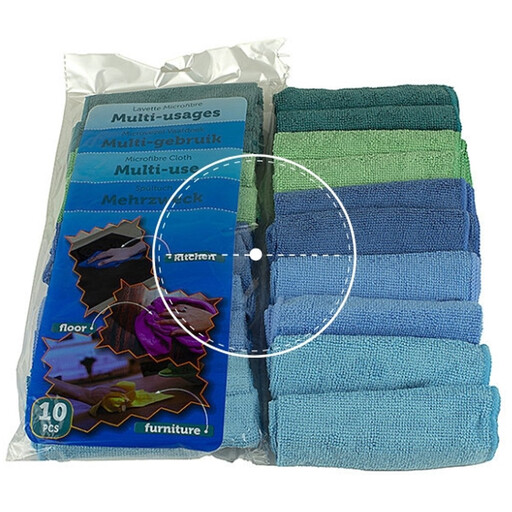
Why this fits the profile: The set contains 10 microfibre cloths measuring 30 x 30 cm in different colours. That’s practical for households that want to use a separate cloth for each room.
You’re not just paying for a high number of pieces: the size and the different colours are clearly stated. Do check the washing instructions on the packaging.
Set of 10, microfibre material, washable and suitable for dust, dirt and stains according to the product description.

Why this fits the profile: This cloth is aimed at those who look at material specifications first. The size of 30 x 30 cm and the stated density of 260 g/m² are easy to compare.
The product information doesn’t just mention “microfibre”, but also the density. This allows you to make a more informed choice than relying on marketing language alone.
260 g/m², 30 x 30 cm, machine washable up to 60 °C according to the product description and suitable for the home, car and office.
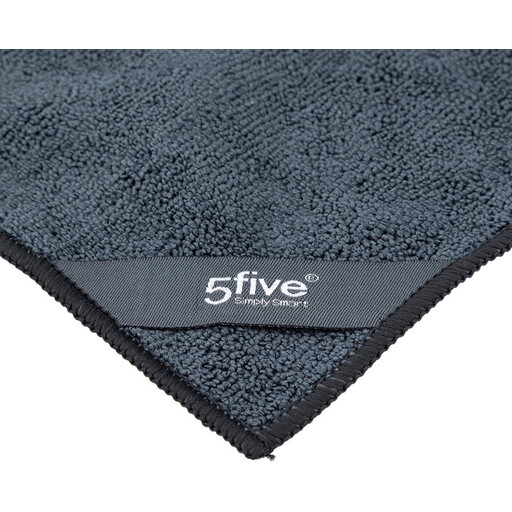
Why this fits the profile: The three colours and the larger size suit more intensive use around the home, a small office or when cleaning smooth surfaces such as glass and stainless steel.
The colour coding helps you separate cloths by task. The care instructions state washing at 40 °C without fabric softener or bleach.
Three cloths measuring 40 x 30 cm, polyester-polyamide material and, according to the product description, suitable for dry and wet cleaning.
Use a cloth dry for dust and loose particles. Dampen it lightly for grease, fingerprints and dried-on dirt. Too much water can actually cause streaks, especially on glass and mirrors.
For streak-free cleaning, these habits help:
For a car or office, it’s handy to have different absorbent cleaning cloths on hand. For the kitchen, dishcloths or kitchen cloths in a larger size can be more practical than small dusting cloths.
We’ve put together a full, up-to-date list of products that fully meet these strict selection criteria and comply with current European safety regulations.
Yes, they can be, especially when the product description states the cloth is suitable for glass and smooth surfaces. Use little water, a clean cloth and, if necessary, dry the surface afterwards with a second cloth. On delicate coatings, test a small area first.
There is no fixed number of washes that applies to every cloth. The lifespan depends on the material, usage, soiling and care. Wash the cloth according to the label and avoid products that can clog or damage the fibres, such as fabric softener when it is not recommended.
A reusable cloth can last for several cleaning sessions, meaning you need to buy new cloths less often. When buying, compare not just the price per set, but also the number of pieces, size, washing instructions and suitability for your surfaces.
