
Vandaag of morgen in huis

Kwaliteit gegarandeerd

Welkomstaanbiedingen ontgrendelen: GRATIS bezorging | Tot 80% korting | Gratis 30 dagen JoyPlus-proefperiode
Download de app
Microfibre cloths are popular because you can use them dry or damp, and reuse them after washing. However, cleaning cloths vary greatly in size, material, density and washing instructions. A cheap set can be awkward for windows, while a soft glass cloth is less suitable for a dirty floor.
The right choice therefore starts not with colour or packaging, but with the intended use. Also watch out for a few common pitfalls that can lead to a bad purchase.
A cloth used for the toilet, the kitchen and the car interior can spread dirt and residue between surfaces. A set with different colours helps you separate tasks. For example, use a fixed colour for the bathroom, another for the kitchen and a separate cloth for glass.
A cleaning cloth set with ten pieces may seem good value, but the size and material density determine how practical the cloths are. A cloth measuring 30 x 30 cm is suitable for furniture, worktops and smaller surfaces. For a floor, a larger size or a cloth with a mop attachment is more efficient.
Microfibre can lose its structure due to fabric softener, bleach or too high a temperature. So always check the label. Some cloths can be washed at 40 °C, others at 60 °C and certain floor cloths, according to the product description, even at 90 °C. Always follow the manufacturer's instructions.
Microfibre often consists of polyester, polyamide or a combination of these. The product information does not always state the exact ratio. A higher density, expressed in g/m², generally means a cloth is heavier and fuller. The Microfibre Cloths 30 x 30 cm Set of 1, for example, has a stated density of 260 g/m².
That is a verifiable product specification, but it does not in itself tell you how well a cloth works in every situation. Also look at the fibre structure, softness and recommended use.
For everyday use, sizes around 30 x 30 cm are easy to hold and rinse out. A cloth of 40 x 30 cm offers a bit more surface area for larger furniture or worktops. For floors, sizes such as 45 x 14 cm for a mop head or 50 x 60 cm as a loose floor cloth are more practical.
A cloth that is too small quickly becomes saturated on a large surface. A large cloth can be awkward on mirrors, screens or taps.
Many microfibre cloths can pick up dust dry or loosen dirt when damp. Check whether the manufacturer allows use with cleaning product. With some products, use without harsh chemicals is described, but according to the brand's or seller's own product information, that is no guarantee for every type of stain or surface.
On delicate materials, use a clean, soft cloth and first remove coarse sand and dust. This reduces the risk of scratches. On untreated wood, varnished surfaces and screens, test on an inconspicuous area first.
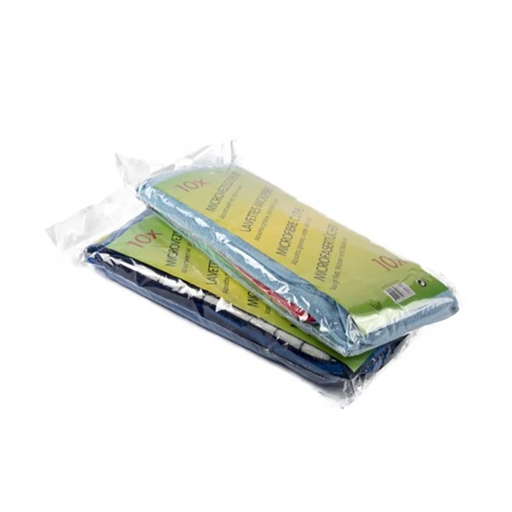
Why this fits the profile: A set of ten cloths is handy when you want to keep different rooms separate. According to the product description, the cloths are intended for, among other things, the kitchen, bathroom, glass and electronics.
The different cloths allow colour coding and reduce the need to use one cloth for every cleaning task.
Ten pieces, microfibre material and reusable according to the product information. Suitable for dry and damp use.

Why this fits the profile: This cloth has a concretely stated weight of 260 g/m² and is compact enough for the kitchen, bathroom, car and office.
The density and size are clearly stated. Washing instructions are also available: wash up to 60 °C and do not use fabric softener.
260 g/m², 30 x 30 cm, machine washable up to 60 °C and, according to the product description, suitable for delicate surfaces.
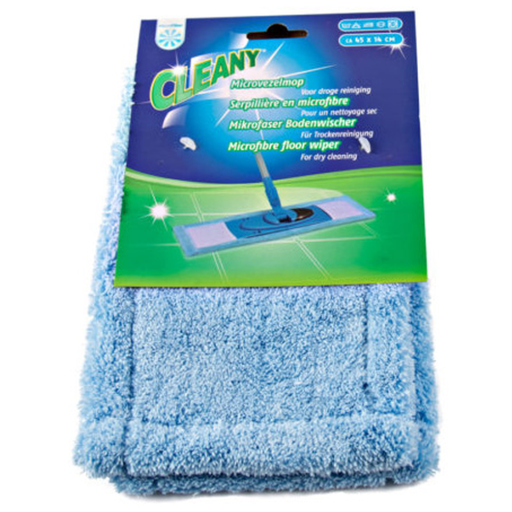
Why this fits the profile: This mop cloth is intended for floor maintenance and has a size of 45 x 14 cm. According to the product information, it is suitable for, among other things, wood, laminate, PVC, tiles and carpet.
It is not a general cloth that you try to attach to a mop, but a replacement cloth with stated dimensions. Do check whether this size fits your system.
Microfibre material, 45 x 14 cm and washable at 60 °C according to the product data. The cloth is designed for various floor surfaces.
The lifespan depends on how often you use the washable cleaning cloths, how dirty they become and how you wash them. Do not just look at the number of washes: manufacturers do not always state a fixed figure for this. Check the fibres, seams and absorbency regularly.
We have compiled a full, up-to-date list of products that fully meet these strict selection criteria and current European safety regulations.
You can for light dust and dirt residue. Whether water is sufficient depends on the surface and the type of dirt. For grease or stubborn residue, a suitable cleaning product may be needed. Follow the usage instructions and do not use any product that could damage the surface.
This varies per product. The product data for the cloths mentioned includes 40 °C, 60 °C and 90 °C as maximum temperatures. The wash label on your cloth is the deciding factor. Fabric softener and bleach can affect the fibre structure.
Use a clean, lint-free glass cloth and first remove coarse dust and sand. Work with a limited amount of moisture and then dry the surface with a second cloth. A cloth that has been used for the kitchen or bathroom may contain grease residue and is therefore less suitable for streak-free cleaning of glass.
