
Vandaag of morgen in huis

Kwaliteit gegarandeerd

Welkomstaanbiedingen ontgrendelen: GRATIS bezorging | Tot 80% korting | Gratis 30 dagen JoyPlus-proefperiode
Download de app
Microfibre cloths are ideal for dust, grease, moisture and fingerprints. However, cleaning cloths can vary considerably in size, material, density and intended use. A cloth that works well on a table is not automatically suitable for glass, electronics or floors.
The biggest pitfalls are often not related to the colour or packaging, but to missing information. Before buying a set, pay attention to the following:
Microfibre consists of extremely fine fibres that can trap dust and dirt. When buying, check whether the material is actually stated. Some products also specify the density in g/m². This is the weight of the cloth per square metre.
One example is the Microfibre Cloth 30 x 30 cm Set of 1 (260 g/m²). The product information states that it is a microfibre cloth measuring 30 x 30 cm, with a density of 260 g/m², and that it is machine washable up to 60 °C. This gives you more concrete information than a general description such as “extra strong”.
A higher density can be useful for furniture, glass or the car interior, but it is not essential for every task. For wiping down a worktop every day, simple microfibre cleaning cloths may be perfectly adequate.
The size determines how easy a cloth is to handle:
A compact cloth is easier to rinse and store. For floor cloths, a larger size is generally more convenient, as you can cover more area with each movement.
Many microfibre cloths can be used dry or slightly damp. When dry, they are particularly suitable for dust and loose particles. Slightly damp, they work better on marks and everyday dirt.
Do not automatically use a large amount of cleaning product. On glass and screens, too much liquid can actually cause streaks or leave residue. Always check the instructions provided by both the manufacturer and the surface being cleaned. Not every cloth is suitable for heat, harsh products or undiluted bleach.
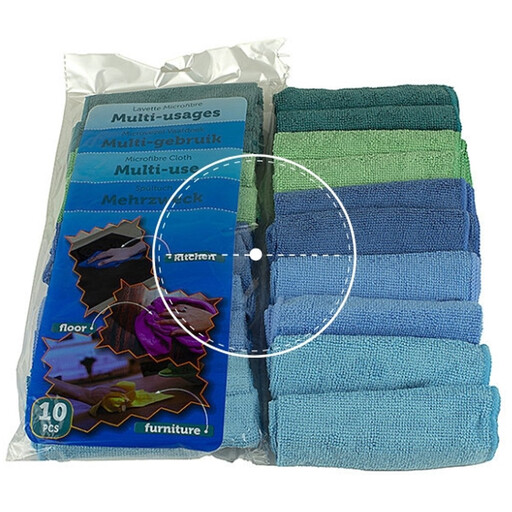
Why it suits this profile: The set contains 10 microfibre cloths measuring 30 x 30 cm. The different colours can help you assign cloths to different rooms or tasks, such as the kitchen, bathroom and furniture.
The quantity, size and material are clearly stated. This makes it easier to compare the contents with individual cleaning cloths or dishcloths.
10 cloths, 30 x 30 cm, washable and reusable according to the product description.

Why it suits this profile: If clear specifications are your priority, this product provides information about the dimensions, density, material and washing instructions. This makes the cloth suitable for a wide range of surfaces at home, in the car or in the office.
The stated density of 260 g/m² means you do not have to rely on marketing language alone. However, the set contains just one cloth, so check whether that suits your cleaning routine.
30 x 30 cm, 260 g/m² and machine washable up to 60 °C according to the product details.
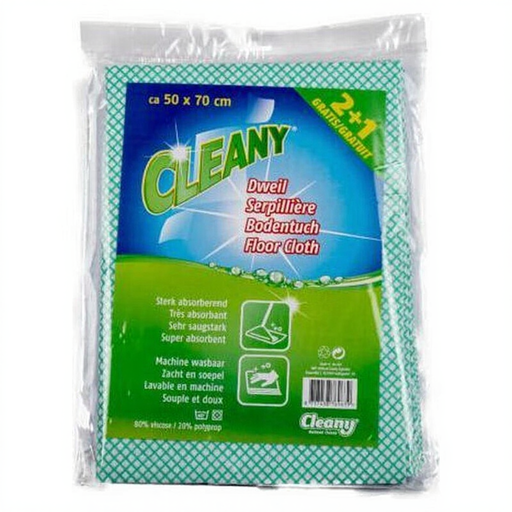
Why it suits this profile: For larger surfaces, 50 x 70 cm floor cloths are more practical than small cleaning cloths. This set contains three cloths and is machine washable according to the product information.
The larger size means you do not need several small cloths for a floor-cleaning job. Do check that it is compatible with your mop or floor wiper.
Set of 3, measuring 50 x 70 cm and suitable for floor cleaning according to the product details.
For windows and mirrors, glass cloths are often the obvious choice. The g'woon Glass Cloths come as a set of 20. According to the instructions, first remove any coarse dirt and dust, then work from top to bottom using circular movements. See the g'woon Glass Cloths 20pcs for the latest product information.
If you mainly clean in the kitchen, you could also consider kitchen cloths, viscose cloths or traditional dishcloths. These are not the same as microfibre cleaning cloths and may have different moisture absorption and drying times. For floors, large floor cloths are more practical; for mirrors and windows, smooth glass cloths are generally easier to handle.
We have put together a complete, up-to-date list of products that fully meet these strict selection criteria and the applicable European safety regulations.
They can be, depending on the cloth’s structure and the instructions for use. First remove any coarse dust and dirt. Then use a slightly damp glass cloth with a small amount of liquid. A streak-free finish is not guaranteed: dirt, limescale, cleaning product and the condition of the window also play a part.
There is no fixed number of washes that applies to every cloth. Their lifespan depends on how they are used, the type of dirt, the wash programme and drying. Replace a cloth when it starts to fray, continues to smell unpleasant or visibly absorbs less moisture. Always follow the care label.
Reusable cloths can be an attractive option when you use them frequently and wash them correctly. Disposable cloths save time for occasional or particularly dirty jobs, but you need to keep buying new supplies. So do not compare only the price per pack; also consider the number of cloths, their size, washability and expected usage.
