
Vandaag of morgen in huis

Kwaliteit gegarandeerd

Welkomstaanbiedingen ontgrendelen: GRATIS bezorging | Tot 80% korting | Gratis 30 dagen JoyPlus-proefperiode
Download de app
Microfibre cloths may seem straightforward, but the differences between sets are significant. A budget-friendly pack might, for example, contain too few cloths for daily use, while a large set can prove impractical due to its size or washing instructions. What's more, terms like "streak-free", "extra absorbent" and "durable" aren't always explained in the same way.
With these points in mind, you can compare microfibre cloths, cleaning cloths and kitchen towels in a practical way. This will help you choose a set that suits your household, cleaning routine or use on the go.
A set of ten sounds appealing, but the number alone tells you little without considering the size and intended use. Small cloths are handy for taps, mirrors and furniture. For a worktop, table or larger surfaces, bigger cloths are more efficient.
Always check:
Microfibre is usually a blend of polyester and polyamide. This makes the material suitable for many smooth surfaces, but not every cloth has the same structure or thickness. A thin cloth can be pleasant for daily wiping, whereas a more coarsely woven cloth may be better suited to dirtier surfaces.
Use separate cleaning cloths for, for example:
A colour-coding system helps to limit cross-contamination. This is especially practical when several people in the household are cleaning.
Reusable cleaning cloths are only cost-effective if you wash them correctly and let them dry thoroughly. Detergent residue, fabric softener and bleach can affect the structure of microfibre. So always follow the care label on the product you choose.
Pay attention to the differences:
With microfibre cleaning cloths, the material often consists of polyester, polyamide or a combination of the two. Polyester generally contributes to shape retention, while polyamide is used in many products for its soft structure and moisture absorption. Check the exact composition in the product information; "microfibre" alone doesn't tell you how much of each material has been used.
For glass, stainless steel and other smooth surfaces, a fine cloth structure is practical. For heavier dirt, a woven or ribbed structure can offer more grip. On delicate surfaces, avoid using a cloth with visible dirt or hard particles.
A size of 30 × 30 cm is easy to hold and suitable for small cleaning tasks. A cloth of 30 × 40 cm gives you a bit more surface area without much extra bulk. Larger kitchen towels of 40 × 60 cm are particularly handy for drying and larger surfaces.
A simple guide to help you choose:
For a small household, a set of three to five cloths can be sufficient if you wash them regularly. Families, households with pets and people who clean daily will benefit from having more spares. That way, you don't have to wash a used cloth straight away.
Also look at the care instructions. Some 5five cloths can be washed at 30 °C or 40 °C. According to the product information, you should avoid fabric softener and bleach with certain variants. That's verifiable information and more useful than a general claim about a long lifespan.
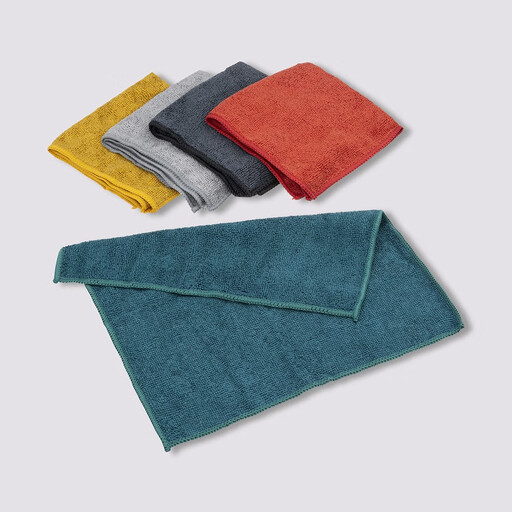
Why this fits the profile: A set of five cloths is manageable for anyone wanting to start with microfibre without buying a large stock straight away. The 30 x 30 cm size is suitable for small cleaning tasks in the kitchen or bathroom.
The quantity, size and material are clearly stated: five cloths of 30 x 30 cm, made from polyester and polyamide. This means you can compare the pack on concrete details rather than just marketing terms.
Set of 5 pieces; compact size; care instructions recommend washing at a moderate temperature and prohibit bleach, ironing and dry cleaning.
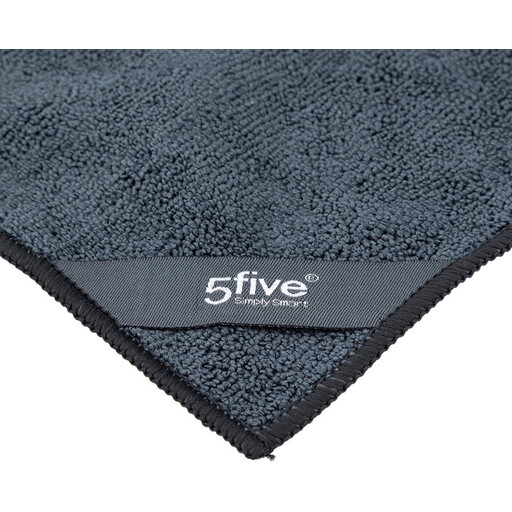
Why this fits the profile: This set comes in three colours and a larger size of 40 x 30 cm. That makes colour-coding by room practical, for example for the kitchen, bathroom and furniture.
The product information states the material, dimensions, quantity and the advice to wash without fabric softener or bleach. This means you know in advance what maintenance is required.
Three colours; size of 40 x 30 cm; according to the product description, suitable for smooth surfaces such as glass and stainless steel; machine washable at 40 °C.
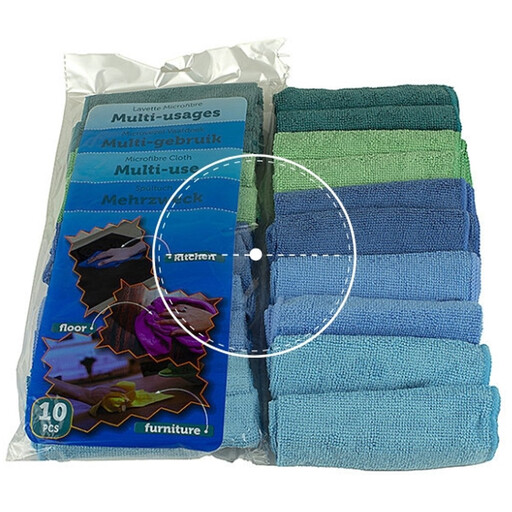
Why this fits the profile: If you clean often, having several cloths on hand is a real benefit. This pack contains ten microfibre cloths of 30 x 30 cm in different colours.
The colour variation supports a fixed allocation per room, and the set size reduces the need to reuse a used cloth straight away. According to the product information, the cloths are washable and reusable.
Ten pieces; multiple colours; size of 30 x 30 cm; suitable for dust, dirt and stains according to the product description.
For daily cleaning, reusable cleaning cloths usually make sense if you have a washing routine. They take up little space and can be sorted by room. For travel, camping, sport or caregiving, disposable washcloths can be more practical. The HeltiQ Disposable Washcloths, for example, are available in packs of 20 and 50 pieces. These dry, non-impregnated washcloths are intended for single use and must not be flushed down the toilet.
Compressed towels can also be handy on the go. The C&S Compressed Towels consist of 20 tablets which, according to the product information, expand with water to approximately 24 × 30 cm. Always check the disposal instructions for disposable products and do not reuse them if the packaging advises against it.
We've put together a full, up-to-date list of products that fully meet these strict selection criteria and comply with current European safety regulations.
Always follow the care label. With many variants, use a moderate temperature and avoid fabric softener and bleach if the product information says so. Let the cloths dry completely before storing them. Wash cloths used for the toilet and kitchen separately from textiles for personal use, where possible.
That depends on the quality of the cloth, how often you use them and how you wash them. There is no fixed lifespan that applies to all microfibre cloths. Look out for frayed edges, a persistent odour or a cloth that no longer picks up dirt properly. These are practical signs that it's time to replace a cloth.
Not automatically. Check the product information and try a new cloth on an inconspicuous area first. Do not use a cloth with sand or hard dirt particles on delicate surfaces. For the kitchen and bathroom, it's wise to use different cleaning cloths and distinguish them by colour.
