
Vandaag of morgen in huis

Kwaliteit gegarandeerd

Welkomstaanbiedingen ontgrendelen: GRATIS bezorging | Tot 80% korting | Gratis 30 dagen JoyPlus-proefperiode
Download de app
If you’re searching for micellar water for your face, you’re probably looking to remove make-up, SPF, sebum and dirt without that tight, uncomfortable feeling. Yet many bottles look alike. A product labelled “gentle” isn’t automatically kind to your skin or effective on waterproof make-up. The right choice depends on your skin type, the ingredients and how you use the product.
A general skin-type claim gives you little information about fragrance, alcohol, oils or cleansing agents. For sensitive skin, those details can be crucial. So check the ingredients list and look out for terms like fragrance-free or alcohol-free. A product with fragrance isn’t necessarily unsuitable, but it may be less appropriate if your skin reacts quickly.
Not every cleansing water for face and eyes is designed for long-wear mascara, lip colour or water-resistant SPF. A standard micellar formula may need several cotton pads and extra rubbing to shift them. That’s inconvenient and can make the delicate eye area uncomfortable. If you wear heavy make-up, choose a product that clearly states it’s suitable – for example, a waterproof or biphasic formula.
Micellar water is usually applied with a cotton pad and, according to many product instructions, doesn’t need to be rinsed off. A foaming cleanser, cleansing tonic or “cleansing water” may be intended to be used with water and rinsed away. The product name can therefore be confusing. Always check the usage instructions before adding a bottle to your daily skincare routine.
Match the formula to your skin’s needs:
Micelles are cleansing particles that can bind dirt, oil and make-up to the cotton pad. Their effectiveness varies by formula and product type. For removing heavy or waterproof cosmetics, an oily or two-phase formula may be more practical. Shake a two-phase product well if the label says so.
A good technique is simple: wet the cotton pad thoroughly, hold it over closed eyes for a few seconds, then gently wipe downwards. Use a fresh cotton pad for the rest of your face. Stop if irritation occurs and rinse with water if the product gets into your eyes, following the safety information on the packaging.
A 400 ml bottle is practical if you cleanse daily or use make-up often. A 145 to 200 ml pack is easier to take with you. Also pay attention to the dispensing system: a pump or dispenser can help you avoid using more product than necessary.
The term “natural” or a percentage of naturally derived ingredients doesn’t, on its own, tell you anything about tolerance. Always look at the full INCI list. Product information and claims can change from pack to pack, so check the current label before you buy.
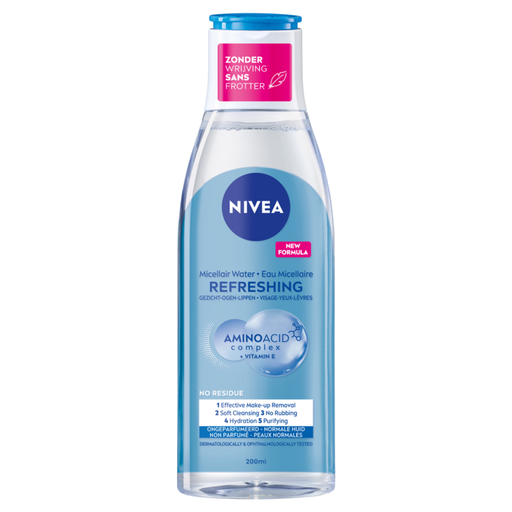
Why this fits the profile: A compact size for anyone looking for a simple daily make-up remover and facial cleanser for normal skin.
The product description explicitly mentions daily cleansing, make-up removal and no rinsing. Check the current label for the ingredients.
200 ml, with amino acids and vitamin E according to NIVEA; the description states a fragrance-free formula.
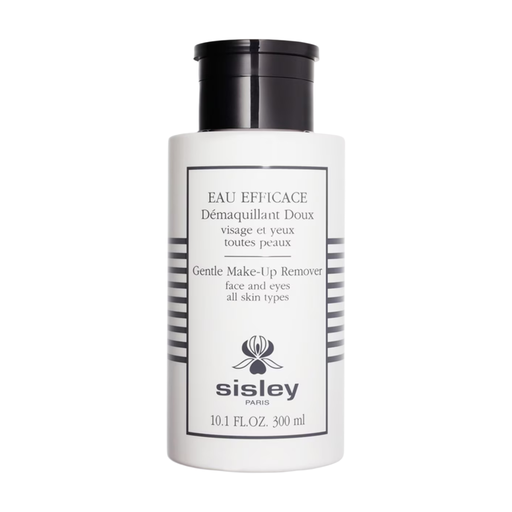
Why this fits the profile: Ideal for anyone wanting one product for face and eyes, with a pump bottle and a 3-in-1 positioning.
The instructions say to remove eye make-up first, then cleanse the face. Stop if irritation occurs; avoid contact with the eyes.
300 ml, suitable for face and eyes according to the product information, with cleansing and toning function.
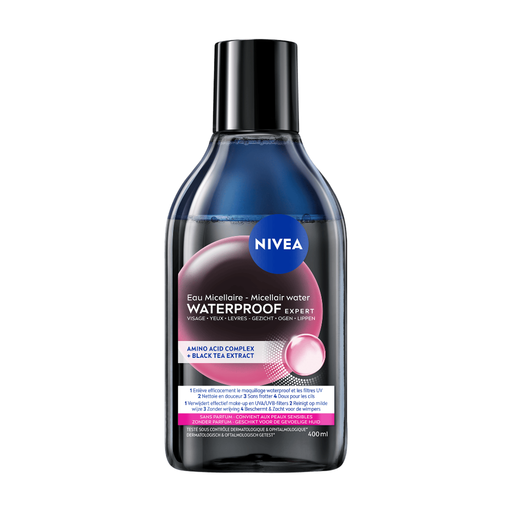
Why this fits the profile: For anyone who regularly uses waterproof mascara, long-wear make-up or SPF and wants a larger bottle.
The product description mentions waterproof make-up and cleansing without rubbing. This remains a brand claim; follow the safety information and stop if irritation occurs.
400 ml, with amino acid complex and black tea extract according to NIVEA; dermatologically and ophthalmologically tested according to the product information.
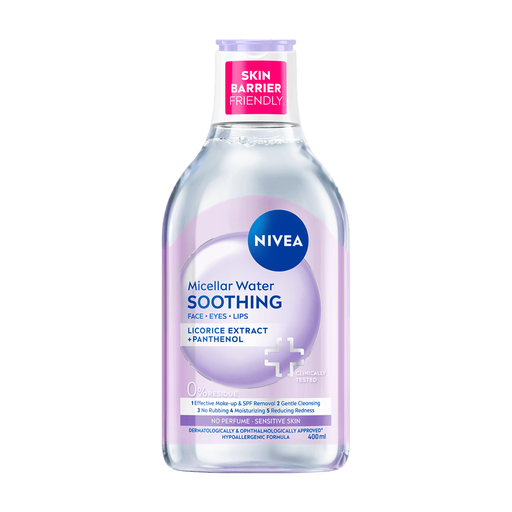
Why this fits the profile: For anyone looking for a fragrance-free micellar water for daily gentle facial cleansing and use around closed eyes.
According to NIVEA, the formula is fragrance-free and intended for sensitive skin. Check the current packaging if you have reacted to ingredients before.
400 ml, with panthenol, liquorice root extract and amino acid complex according to the ingredients list; the description states no rinsing required.
We’ve put together a full, up-to-date list of products that fully meet these strict selection criteria and current European safety regulations.
A foaming cleanser like ORIGINS Checks and Balances Frothy Face Wash works differently: this gel turns into foam and, according to the product description, is used with water. That may suit anyone who prefers a classic facial cleanser over a product applied with a cotton pad.
That depends on the formula and your skin. Many products mention use in the morning and evening, but individual tolerance varies. Cleanse gently, don’t rub hard, and stop if your skin or eyes become irritated.
Not always. Many micellar waters state “no rinsing required” in the usage instructions. A foaming facial cleanser or cleansing tonic may need to be rinsed off. So follow the label of the exact product you buy.
Choose a formula that explicitly mentions waterproof make-up. Wet a cotton pad thoroughly, hold it over your closed eye for a few seconds and wipe away gently. If any make-up remains, repeat with a fresh cotton pad instead of rubbing harder.
