
Vandaag of morgen in huis

Kwaliteit gegarandeerd

Welkomstaanbiedingen ontgrendelen: GRATIS bezorging | Tot 80% korting | Gratis 30 dagen JoyPlus-proefperiode
Download de app
A metal storage cabinet may seem like a straightforward purchase at first glance. Yet many buyers later run into the same problems: shelves that do not suit their belongings, doors that are awkward to open or a cabinet that is unstable without being fixed to the wall. If you focus only on the material or a low price, you can quickly end up with a solution that proves impractical.
In this buying guide, you will learn what to look for in a steel storage cabinet, a lockable cabinet or a metal shelving system with shelves. The recommendations are based on verifiable product specifications, such as dimensions, material, load capacity and whether a lock is included.
A high total weight may sound appealing, but it does not always tell you enough. Check whether the stated load capacity applies per shelf, to the entire cabinet or only to an evenly distributed load. A cabinet for paint tins, machinery or heavy boxes requires different specifications from a storage cabinet for office supplies.
Also pay attention to the difference between static load and everyday use. A shelf may be able to support a certain weight when it remains stationary, but sliding, impacts and unevenly distributed items can affect stability.
Adjustable shelves are useful, but only when the height configuration suits your belongings. Measure the tallest items in advance, such as a toolbox, printer paper, storage bin or kitchen appliance. Also check the internal dimensions; the external measurements do not tell you how much space you will actually have available.
A metal shelving unit can provide plenty of storage space, while a closed cabinet keeps belongings better out of sight. So first decide between open and closed storage.
A lockable cabinet is practical for documents, cleaning products or tools that you do not want to leave unattended. However, a standard lock does not automatically make a cabinet suitable for use as a safe. Check which type of lock is supplied and whether the doors close securely.
An anti-tip kit is also important for a tall or wide cabinet. Follow the assembly instructions and fix the cabinet to the wall when recommended for the construction.
A steel cabinet generally has a metal frame and steel doors or shelves. Some models combine MDF, chipboard or other sheet materials with steel. This is not necessarily a problem, but it does affect how the cabinet can be used. For a damp garage or shed, it is sensible to check which parts are metal and how the surface has been finished.
According to the product descriptions of various models, a powder coating can help with everyday maintenance and protect the surface. This is not a guarantee against rust in every environment. Therefore, do not leave a metal cabinet in standing moisture for extended periods and wipe up any spilled liquid promptly.
Measure the available space at three points:
For a garage cabinet with shelves, wide levels are useful for bins and toolboxes. A narrow cabinet is more likely to fit next to a workbench or in a storage room. In the kitchen, a compact rack for pans and lids may be more efficient than a full-sized floor-standing cabinet.
Look for a stated maximum load per shelf. According to the product specifications, the Ochama shelving unit has a maximum static load capacity of 175 kg per level and 875 kg in total. These values apply under the manufacturer’s stated conditions, including correct assembly and even weight distribution.
According to their product information, the JOYFURNOS cabinets specify 25 kg per adjustable shelf and 30 kg for the top. This makes them suitable for light to medium-duty storage, but not automatically for heavy machinery or large quantities of building materials.
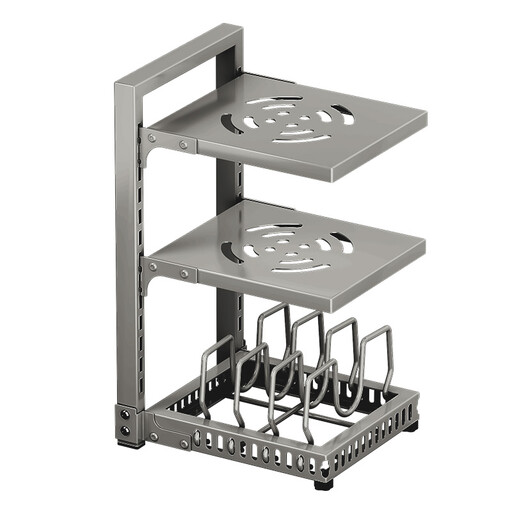
Why it suits this profile: This compact rack, measuring approximately 23 x 28 x 43 cm, is designed for pans, lids and cookware in a kitchen cabinet or deep drawer.
The product description mentions an adjustable configuration and hooks, so you are not restricted to one fixed distance between the tiers.
Powder-coated carbon steel according to the product information, three tiers and placement inside a cabinet or drawer.
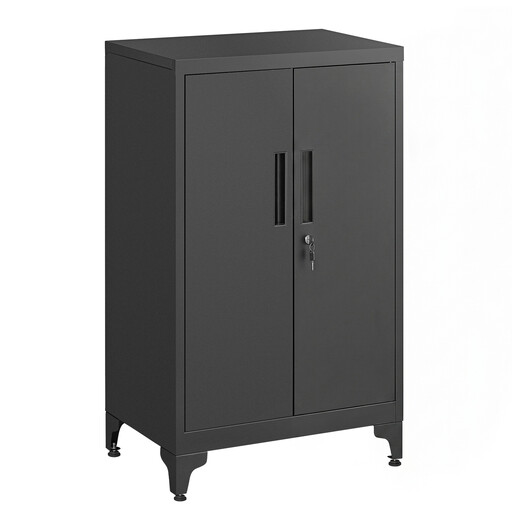
Why it suits this profile: Measuring 40 x 60 x 90 cm, this cabinet fits in an office, garage or living room and combines enclosed storage with adjustable shelves.
The stated shelf load of 25 kg and the supplied anti-tip hardware make the usage limits clearer than a general claim about sturdiness.
Steel construction, adjustable shelves, lockable doors and a stated load capacity of 25 kg per shelf.
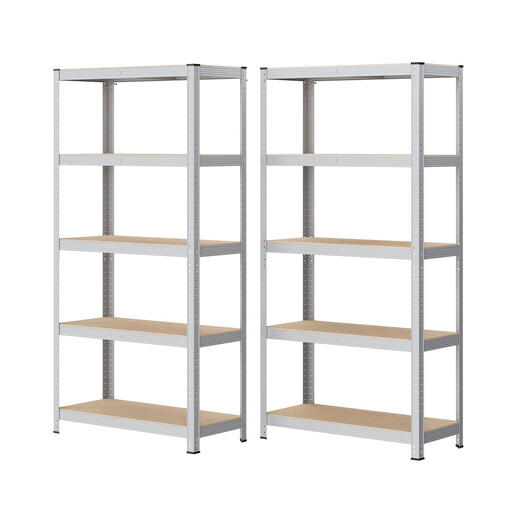
Why it suits this profile: This open storage rack for a garage or shed provides two separate shelving units with five levels and is suitable for large quantities of stock or tools.
The product specifications state both the load capacity per level and the total capacity. The supplied anti-tip kits indicate that wall fixing is necessary.
175 kg static load per level according to the product information, adjustable shelves and a set of two units.
Choose a metal shelving unit when you want quick access to boxes, bins and tools. An open layout works well in a garage, storage room or workshop. A lockable storage cabinet is a more sensible choice for documents, stock, cleaning products or belongings that need to be kept out of sight.
For an office, a cabinet with doors often creates a tidier look. In the kitchen, a compact pan rack such as the Maxcook organiser may be more useful than a large floor-standing cabinet. Whichever option you choose, pay attention to assembly, ventilation and the surface on which the product will stand.
We have put together a complete, up-to-date list of products that fully meet these strict selection criteria and the applicable European safety regulations.
First, level the cabinet on a stable surface. Place heavier items on the lower shelves and avoid allowing the weight to build up on one side. Use the supplied anti-tip kit when available and follow the assembly instructions. Check beforehand that the fixing materials are suitable for your type of wall.
Its lifespan depends on the material, load, assembly and environment. A cabinet kept indoors in a dry location and not used above the stated shelf load will generally endure less wear than one in a damp shed. Regularly check the screws, connections, doors and any damage to the coating.
In most cases, wiping it regularly with a soft, slightly damp cloth is sufficient. Do not use harsh cleaners that could damage the finish. Dry metal surfaces thoroughly after contact with water and remove dirt or spilled liquids promptly, particularly in a garage or kitchen.
