
Vandaag of morgen in huis

Kwaliteit gegarandeerd

Welkomstaanbiedingen ontgrendelen: GRATIS bezorging | Tot 80% korting | Gratis 30 dagen JoyPlus-proefperiode
Download de app
A metal storage cabinet may seem like a straightforward purchase at first glance. However, there are clear differences in stability, layout, load capacity and security. A cabinet suitable for light office supplies is not automatically suitable for use in a garage, workshop or stockroom.
For private individuals, DIY enthusiasts, home workers and small business owners, these three pitfalls are particularly important:
A good-looking cabinet without sufficient load capacity
A metal casing says little about how much weight the shelves can support. Tins of paint, tools and archive files can quickly weigh more than expected.
Not paying enough attention to dimensions
Check not only the width, but also the depth, height and door opening. A cabinet may fit on paper, but be impractical in a narrow garage or next to a workbench.
Mistaking a lock for complete security
A lockable storage cabinet keeps belongings out of sight and restricts access. However, a standard cabinet lock is not a substitute for a certified safe. Check the type of lock, the number of keys and whether the cabinet can be secured to the wall.
Compare the maximum static load capacity per shelf. This is the weight that a shelf can support when stationary, according to the product information. Distribute heavy items evenly and place the heaviest items at the bottom.
A standard steel storage cabinet is practical for documents, cleaning products and smaller tools. For heavy machinery, storage bins or building materials, a heavy-duty warehouse shelving unit may be more suitable. Also pay attention to the difference between the total load capacity and the load capacity per level.
Adjustable shelves make a cabinet suitable for items of different heights. Check how many shelves are included, at which heights they can be positioned and whether the construction is suitable for the load you require.
For documents, a metal filing cabinet with fixed or adjustable levels is often a neat solution. Wider compartments are more convenient for tools. A tool cabinet with doors and a lock also prevents loose parts from spreading around the room.
Steel is generally suitable for everyday use, but stability also depends on the construction, feet, floor and wall fixing. A tall cabinet or garage shelving unit should be secured to the wall with an anti-tip kit, in accordance with the instructions.
Also look out for:
According to the product descriptions of some models, the steel surface is water-resistant or resistant to rust and moisture. Treat this as a product specification provided by the seller, not as a guarantee that the cabinet will remain rust-free in all conditions. In an unheated shed, good ventilation and avoiding prolonged contact with moisture can help.

Why this suits the profile: A compact solution for lightweight items in a storage room, cellar, utility room or small garage. The six storage boxes help you organise loose items.
The stated dimensions of 68 x 34 x 98 cm and maximum load capacity of 30 kg provide a clear framework in advance. This helps prevent a lightweight cabinet from being used for heavy materials.
Steel frame, three shelves and six boxes. Self-assembly and a stated minimum legal guarantee of two years under EU consumer law.
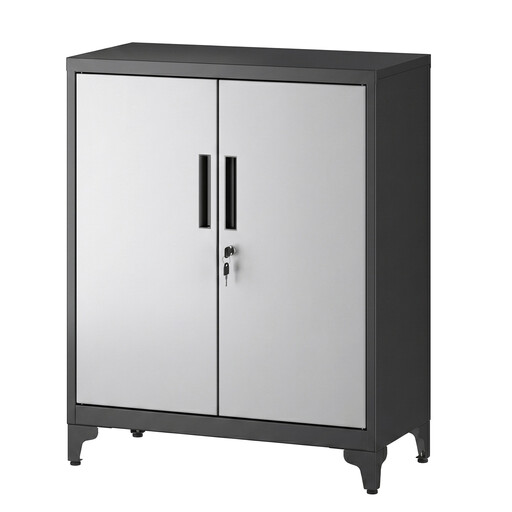
Why this suits the profile: This cabinet is ideal for a home worker or small business owner who wants to keep documents, office supplies and personal belongings out of sight.
The cabinet has two height-adjustable shelves, a steel lock with two keys and an anti-tip kit included. This makes the layout, access and stability easy to assess in advance.
Dimensions of 40 x 80 x 90 cm, a load capacity of 25 kg per adjustable shelf and 30 kg for the top panel, according to the product information.
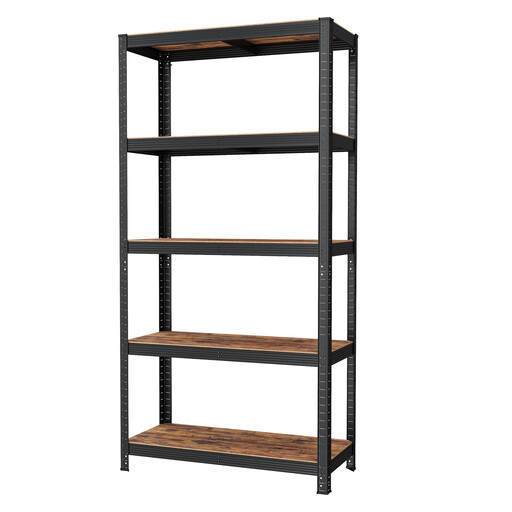
Why this suits the profile: For a garage, shed or workshop where boxes, tools and stock need to be stored on open levels.
The seller states a load capacity of 175 kg per level and 875 kg in total. The shelves are adjustable and an anti-tip kit is included; wall fixing remains essential.
Five levels, a steel frame, MDF shelves and dimensions of 40 x 90 x 180 cm. The stated capacity is suitable for heavier storage than a compact cabinet.
We have compiled a complete, up-to-date list of products that fully meet these strict selection criteria and the applicable European safety regulations.
Before assembly, check that the floor is level and that there is enough space to open the doors. Sort items by how often you use them: place everyday essentials at eye level and heavy products lower down. If the cabinet has a lock, it is sensible to keep the keys in a fixed, dry place.
Use an anti-tip kit in accordance with the instructions. Wall fixing can improve stability, particularly with tall cabinets, heavy-duty warehouse shelving or cabinets that are not fully loaded. Never exceed the stated load capacity and ensure that the weight is distributed evenly.
That depends on the finish and the conditions. Some product descriptions state that steel surfaces are water- or rust-resistant, but this does not mean that prolonged exposure to condensation will have no effect. Ensure good ventilation, avoid direct contact with damp floors and check the cabinet regularly.
Its service life depends on the material, load, assembly and maintenance. A cabinet that is not overloaded and is kept dry may remain usable for longer than a model that is constantly subjected to heavy loads or kept in a damp environment. Check the hinges, shelf supports and fixing points regularly.
A lockable storage cabinet or lockable cabinet is suitable for keeping documents, tools and stock out of sight and beyond the reach of unauthorised people. For cash, jewellery or other highly valuable items, a certified safe is a different type of solution. Always check what level of security the manufacturer actually specifies.
