
Vandaag of morgen in huis

Kwaliteit gegarandeerd

Welkomstaanbiedingen ontgrendelen: GRATIS bezorging | Tot 80% korting | Gratis 30 dagen JoyPlus-proefperiode
Download de app
Metal kitchenware is popular with home bakers, families and campers because it is often lightweight, stackable and less breakable than ceramic or glass. However, not every metal product is suitable for the same task. A metal pizza baking tray requires different properties from a stainless steel plate or an oven-safe dish.
Product descriptions can also be confusing. A non-stick pan is not automatically dishwasher-safe, and a stainless steel plate is not necessarily suitable for the oven, microwave or hob. Use the following checks to avoid buying something that ends up in the cupboard after only a few uses.
“Metal” says little about the exact composition. Steel with a non-stick coating requires different care from 304 stainless steel. A coating can make it easier to remove pizza, cake or quiche, but scouring pads and the dishwasher can damage it.
According to 5five’s product description, the metal pizza baking trays have an ILAG non-stick coating. The same description states that hand washing is recommended and that the trays are not suitable for the dishwasher. This is an important difference from a metal product that is explicitly marketed as dishwasher-safe kitchenware.
A diameter of 32 or 33 cm sounds suitable for pizza, but you should also check the internal dimensions of your oven. Also measure the height of the rim and the available space on the oven rack. For a metal baking tin or quiche tin with a loose base, the height is relevant: a shallow tin behaves differently from a deep cake tin.
For rectangular baking trays, pay attention to the difference between the external dimensions and the usable baking surface. A rim, handles or raised base can take up several centimetres of the effective space.
A metal dinner plate is not automatically suitable for the oven. More importantly, metal should generally not be used in the microwave unless the manufacturer expressly permits it. Check each product to see whether it is suitable for:
According to the product information, the Maxcook 304 stainless steel deep plates are suitable for the oven, steam oven and induction hob. The product information also warns against high heat, heating while dry and touching hot surfaces. Always check the instructions for the specific model.
A standard metal baking tray is often made from steel or a steel alloy. This can be a practical choice for everyday baking, but the product specification should clearly state whether it has a coating.
304 stainless steel is often used for plates, dishes and serving trays. In the supplied product information, this material is described as corrosion-resistant and suitable for contact with food. Also consider the finish. A brushed or satin finish can make fingerprints less visible, while a smooth finish tends to shine more easily.
Aluminium is often lightweight, but check whether the product is intended for food preparation or serving only. The material name alone does not determine whether an item is oven- or dishwasher-safe.
A non-stick coating can be useful for pizza, quiche and baked goods. If recommended by the manufacturer, use silicone, wooden or plastic utensils. Avoid metal knives and harsh scouring pads if you want to protect the coating.
A metal baking tray may be dishwasher-safe, but hand washing remains the recommended method in many product descriptions. According to its product specification, the Alpina baking tray measuring 35 × 24 cm is dishwasher-safe, although hand washing is recommended for care.
A divided plate is useful when you want to serve different ingredients separately. An RVS plate with compartments can be suitable for families with children, lunch boxes, buffets and camping tableware. Pay attention to the depth of the compartments, stability on the table and overall diameter.
For baking, the base and rim are important. A perforated pizza baking tray may be designed to influence the texture of the pizza base, but always check the manufacturer’s instructions. A quiche tin with a loose base is practical for removing baked goods, but the loose base requires extra care when moving a still-hot tin.
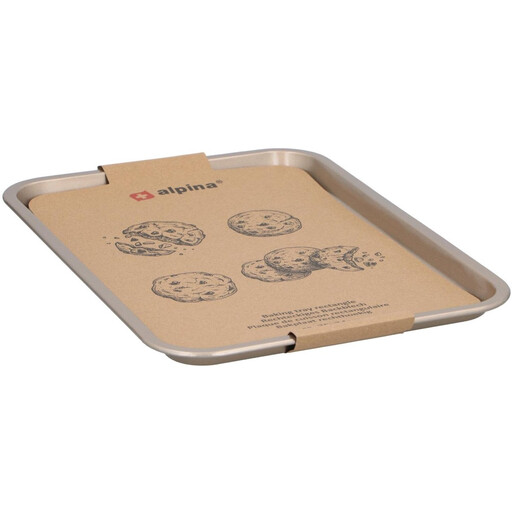
Why it suits this profile: A compact size for everyday use, with no loose base or complicated parts.
The dimensions are clearly stated, and the product information explicitly confirms that the baking tray is dishwasher-safe.
35 × 24 cm; suitable as a cake tin; no loose base; dishwasher-safe according to the product specification.
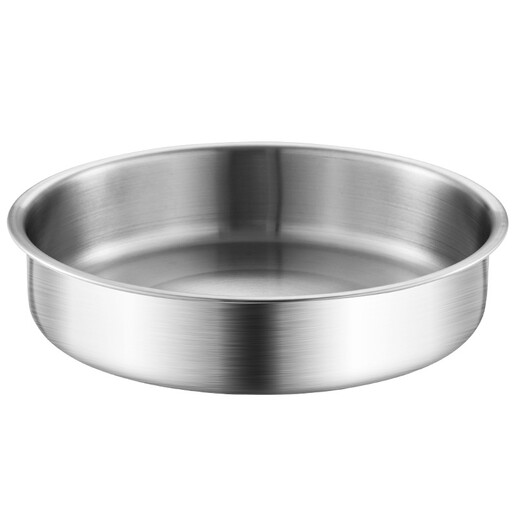
Why it suits this profile: A deep 304 stainless steel plate for anyone wanting one product for serving, steaming and use with specific heat sources.
The product information lists the material and compatible appliances separately. This means you do not have to infer oven suitability from the word “metal”.
304 stainless steel; deep design; suitable for the oven, steam oven and induction hob according to the product specification.
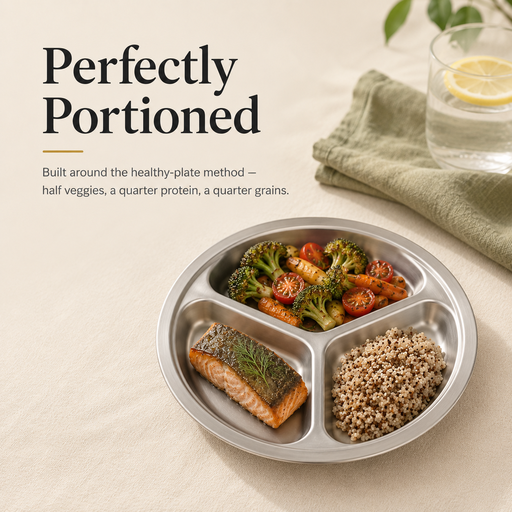
Why it suits this profile: Three compartments are practical for families, catering, canteens and campers who want to serve food separately.
The diameter, height, material and three compartments are specified. It also states that the product is not intended for microwave use.
19.5 cm diameter; 3.9 cm high; 304 stainless steel; set of two; dishwasher-safe according to the product specification.
We have put together a complete, up-to-date list of products that fully meet these strict selection criteria and the applicable European safety regulations.
Sometimes. Check the product specification rather than relying solely on the material. The PURECOOK tray is described as dishwasher-safe, while the 5five pizza trays and the 5five quiche tin should be hand-washed according to their product information.
304 stainless steel is a practical choice for an RVS plate with compartments or camping tableware because it does not break like glass or ceramic. However, bear in mind that the material conducts heat. A plate containing hot food can therefore become hot and should be placed securely.
A non-stick coating can be useful for pizza, cake and quiche, especially when you want to remove baked goods easily. Untreated 304 stainless steel is an appealing option for repeated use and serving. The right choice depends on your recipes, cleaning routine and whether you want to use a dishwasher.
