
Vandaag of morgen in huis

Kwaliteit gegarandeerd

Welkomstaanbiedingen ontgrendelen: GRATIS bezorging | Tot 80% korting | Gratis 30 dagen JoyPlus-proefperiode
Download de app
A new men’s wallet may seem like a simple purchase, until you find yourself dealing with one that’s too bulky, won’t fit your most important card or lets coins fall out of an open pocket. Marketing terms such as “slim”, “RFID” and “premium leather” don’t always tell you enough about how a wallet performs day to day.
This guide helps you compare wallets based on features you can check: the number and layout of compartments, the size, the material and how you carry cash and cards.
A slim men’s wallet will only stay compact if you limit the number of cards you carry. A model with lots of card slots might look slim on paper, but adding cards, coins and banknotes will increase its thickness. So check more than just the number of compartments: see whether it has a coin pocket, a banknote compartment or a metal card holder too.
When choosing a wallet with RFID protection, check which parts are stated as protected in the product information. RFID isn’t a universal quality guarantee, and it won’t stop a wallet from being damaged, lost or used incorrectly. Treat it as an additional feature, not a reason to overlook other specifications.
“Leather look”, synthetic materials and genuine leather are different categories. A leather men’s wallet may develop a different appearance over time from a model made from polyester, aluminium or carbon-fibre-look material. Check the material description and look at the stitching, fastenings and lining. Good looks alone don’t tell you whether the layout is practical.
A compact men’s wallet should suit what you carry every day. Start by making a simple list:
A wallet with a card holder and pop-up mechanism gives you quick access to a few cards. A classic design with several card slots is more suitable if you carry lots of cards. Bear in mind, though, that having lots of compartments doesn’t automatically mean they’ll all be easy to access.
The most common options are:
Also consider the fastening. A zip keeps coins more secure than an open pocket. Hook-and-loop fastening is practical on a sporty design, while a press stud or classic fold-over fastening offers a different feel in use.
If a product title mentions RFID protection, this is a feature stated in the product information provided by the brand or seller. If in doubt, check the full specifications and instructions for use. Claims about performance shouldn’t be presented as established fact without a source, whether they come from research or a brand. For this category, the key thing is to consider RFID claims alongside card capacity, fastening and size.
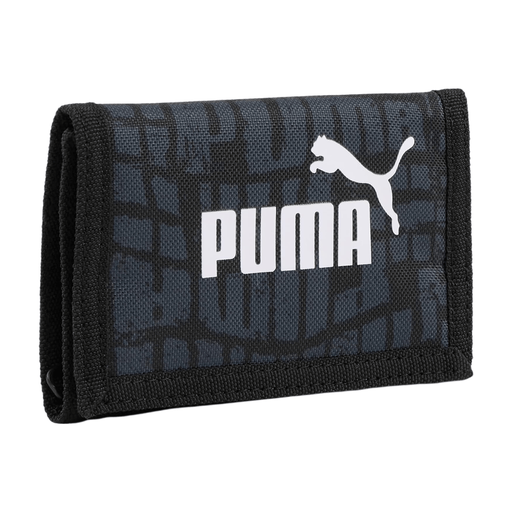
Why it suits this profile: This sporty design measures 12.5 × 9.5 × 2.5 cm and offers a straightforward layout for everyday use.
Three card slots, a banknote compartment and an internal zipped pocket make the layout clear, rather than simply promising a “compact” design.
Banknote compartment, three card slots, internal zipped coin pocket and hook-and-loop fastening. According to the product information, at least 90% of the main material is recycled.
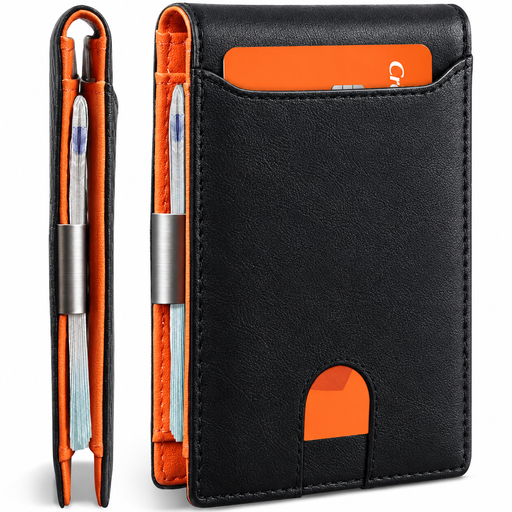
Why it suits this profile: A good fit if you want a slim shape combined with multiple card slots, an ID window, a banknote clip and a coin pocket.
The product title spells out the layout: 11 card slots, an ID window, a banknote clip and a coin pocket. That makes it easier to judge the capacity than a general claim that it’s slim.
RFID protection according to the product listing, 11 card slots, an ID window, a banknote clip and a coin pocket. The model is described as carbon-fibre leather.
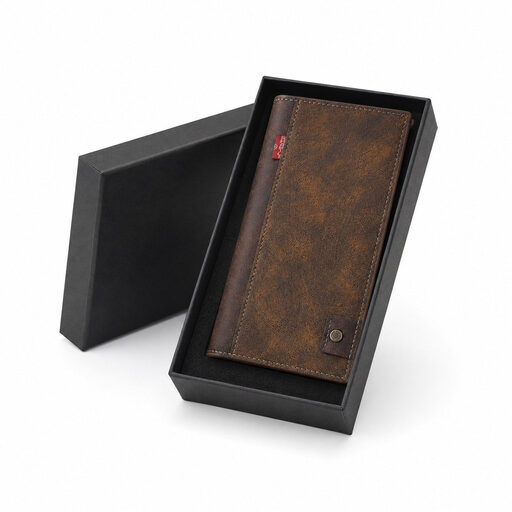
Why it suits this profile: This long wallet is a good option if you want to keep lots of cards, banknotes and coins organised.
The product name lists 15 card slots, a zipped coin pocket, a clear window and a separate banknote compartment.
Plenty of card capacity, a zipped coin pocket, an ID window and a banknote compartment. The description refers to a vintage leather look; check the full material details before buying.
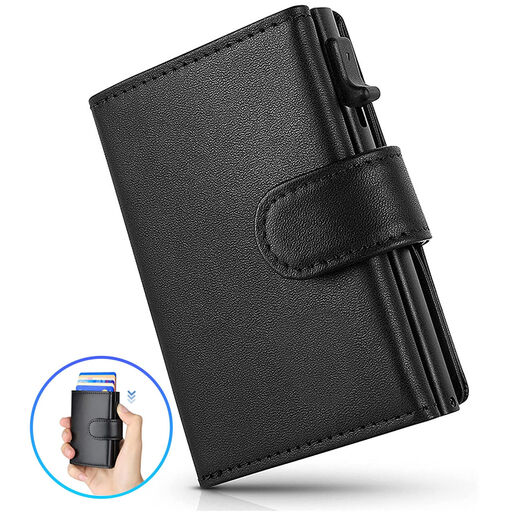
Why it suits this profile: A practical choice if you want quick access to a few cards and are looking for a modern aluminium wallet with a coin pocket.
The product name specifies both the pop-up card holder and the coin pocket. Before buying, check how many banknotes and cards it can hold at the same time.
Aluminium design, pop-up card holder, compact card format, coin pocket and gift packaging according to the product title.
We’ve put together a full, up-to-date list of products that meet these strict selection criteria and the applicable European safety regulations.
First, count your bank card, ID card, driving licence and any cards you use every week. A few slots may be enough for everyday essentials. If you carry loyalty cards or work passes, look for a model with 11 to 15 card slots. Bear in mind that filling every slot will make the wallet thicker.
It depends on your preference and the product information. RFID protection may be a useful extra feature, but always check that the description clearly states that the model has it. Also consider the size, card capacity and fastening; RFID alone won’t determine whether a wallet suits your needs.
Its lifespan depends on the material, stitching, fastening, how much you carry and how you use it every day. Don’t put more cards in a slot than it’s designed to hold, and avoid putting unnecessary strain on zips or hook-and-loop fastenings. Keep leather and leather-look wallets dry, and follow the manufacturer’s care instructions.
