
Vandaag of morgen in huis

Kwaliteit gegarandeerd

Welkomstaanbiedingen ontgrendelen: GRATIS bezorging | Tot 80% korting | Gratis 30 dagen JoyPlus-proefperiode
Download de app
Your walking boots should suit the terrain you’ll be covering. A lightweight shoe for woodland paths performs differently from a sturdy mountain boot designed for rocks, mud or snow. Yet many models are promoted using the same terms: waterproof, breathable, durable and suitable for all terrain. These descriptions don’t always tell the whole story.
So focus on features you can check, such as the type of sole, boot height, membrane, fit and how you plan to use your boots.
A shoe may be described as water-resistant because it has a coating, even though it has no membrane. You’ll notice the difference most in prolonged rain, wet grass or snow. Check whether the product information specifies a waterproof membrane, such as Gore-Tex or another membrane construction. Pay attention to the tongue and seams, too: water can get in through the opening around the laces.
No walking boot will keep your feet completely dry in every situation. Water can run down the boot and get in if you step through deep puddles or streams.
A sole with deep lugs may look suitable for every kind of terrain, but it can feel less comfortable on tarmac or hard, flat paths. Deep tread is useful in mud, on loose stones and on wet woodland ground. For everyday walks, you’ll often be better off with a flexible sole and a moderate tread.
The rubber is also important when choosing men’s winter walking boots. According to Salomon’s product information, the Winter Contagrip sole on the X Ultra 4 Mid Winter TS is designed to provide grip on snow and ice. That’s a product specification, not a guarantee of grip on every slippery surface.
Boots that are too small can cause pressure on descents. If they’re too big, your heel may move around, which can lead to blisters and instability. Measure both feet at the end of the day, wearing the socks you plan to walk in.
For the PELLIOT Hiking Boots, the size information recommends choosing the larger size if you’re between two sizes. Always check the latest size guide on the product page, as EU sizing can vary between brands and models.
Waterproof walking boots for men are useful for walks in the UK in the rain, across wet heathland and along muddy paths. A membrane helps keep moisture out. At the same time, a fully enclosed construction can feel warmer than an open mesh upper.
Choose as follows:
Gore-Tex walking boots for men are a popular option, but check the boot height, lining and fastening as well as the membrane. Waterproof material doesn’t automatically make a low-cut trail running shoe suitable for deep snow.
If you’re looking for walking boots with good grip, check:
For men’s mountain boots, grip is just one consideration. A higher cuff, reinforced toe and stable midsole may be more important when you’re carrying a heavy rucksack over uneven terrain.
A high-cut walking boot offers more ankle support than a low-cut hiking shoe, but it’s usually heavier and less flexible, too. A low-cut shoe is better suited to day walks and trail running. A mid- or high-cut model is a better match for rougher terrain, loose stones and longer walks with a pack.
Also look for:
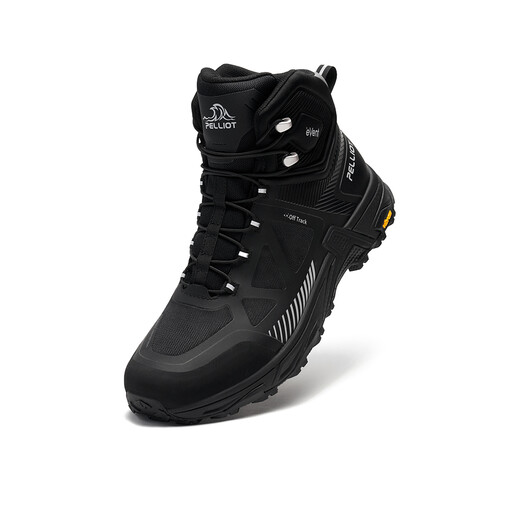
Why it suits this type of walker: According to the product information, this model has a waterproof, breathable lining, a protective toe and a deep-tread sole. It’s a good fit for new walkers looking to explore a mix of woodland, mud and hilly terrain.
The product description specifically mentions a membrane, protective toe and specialist tread pattern. Be sure to check the fit and consult the size guide before ordering.
Waterproof lining, hard-wearing synthetic outer, protective toe and Fitgo quick-lacing system, according to the product information.

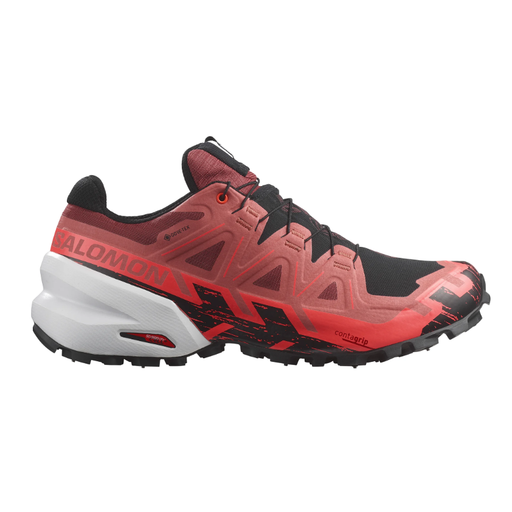
Why it suits this type of walker: According to the product information, these Salomon walking shoes combine a Gore-Tex membrane, 3D Advanced Chassis, Contagrip sole and Quicklace fastening. They’re a good choice for walkers looking for one lightweight shoe for wet paths and technical terrain.
Waterproofing, stability and grip are linked to specific technologies rather than relying on general marketing terms alone.
Gore-Tex membrane, 3D Advanced Chassis, Contagrip rubber and Quicklace fastening, according to the product description.
Why it suits this type of walker: Designed for winter trail running and slippery paths, this model is made for snow and ice. According to the product information, it has a Gore-Tex membrane and twelve tungsten carbide studs.
Its intended use is clearly defined: winter trail running and outdoor activities. The studs aren’t designed as an all-purpose solution for tarmac or indoor floors.
Gore-Tex protection and twelve tungsten carbide studs, according to the product information; designed for snow and ice.
We’ve put together a complete, up-to-date list of products that meet these strict selection criteria and current European safety regulations.
Their lifespan depends on how often you wear them, the terrain, your body weight, how well you care for them and how you store them. Check the soles, seams and heels in particular. When the tread is visibly worn or the outer starts to split, protection is reduced. After a wet walk, let your boots dry at room temperature and avoid putting them on a radiator or in a tumble dryer.
They can be, but not every waterproof model is comfortable on tarmac. A membrane keeps moisture out, but it can feel warmer. For everyday wear in town and the park, a flexible low-cut shoe is often more practical. Waterproof models offer more protection on wet walking routes, in mud and in the rain.
Hiking shoes are usually designed for stability, protection and long walks. Trail running shoes are lighter and more flexible, with a focus on freedom of movement and cushioning. For mountain paths with loose stones or when carrying a heavy rucksack, a sturdier model is generally the better choice. For brisk walks and running on unpaved paths, a trail running shoe may be a better fit.
