
Vandaag of morgen in huis

Kwaliteit gegarandeerd

Welkomstaanbiedingen ontgrendelen: GRATIS bezorging | Tot 80% korting | Gratis 30 dagen JoyPlus-proefperiode
Download de app
Training trousers should do more than simply look sporty. You should be able to wear them for workouts, cycling to the gym, relaxing at home or running errands. Yet many purchases disappoint: the trousers turn out to be too warm, slip down during movement or have a fit that does not match the size chart.
With this practical guide to men’s training trousers, you can compare models by material, fit, intended use and care requirements. Afterwards, you will find several popular options for different situations.
Terms such as “performance”, “training” or “sportstyle” do not automatically tell you how a pair of trousers will feel. Always check the material composition. Polyester training trousers are generally lightweight and relatively quick-drying, while cotton or a cotton blend may feel softer and warmer.
For high-intensity workouts, a heavy, soft jogger fabric may be less practical. For warm-ups, travel and relaxation, that same fabric can be particularly comfortable.
A size M is not the same across every brand or model. Pay attention to:
Joggers with a drawstring offer additional adjustability, but a drawstring cannot compensate for the wrong size. Measure your waist around its natural position and compare it with the chart for the specific product.
Trousers with zipped pockets are useful for keeping your keys secure while walking. A soft, fleece-like inner lining is better suited to cold days than an intense fitness session. Smooth, lightweight fabric can work well as a warm-up layer, but may feel less cosy during an evening at home.
First, ask yourself what you mainly need the trousers for: training, fitness, warm-ups, relaxation or everyday wear.
Polyester is widely used in sportswear because it is lightweight and, according to the brand’s product description, can dry quickly. The Nike Dri-FIT Academy Pants, for example, are listed as being made from 100% polyester. Nike describes its Dri-FIT technology as a moisture-management system; this is a brand claim from the product information and is not a guarantee that every user will have the same experience.
A cotton blend often feels softer. According to the product details, the Under Armour Rival Terry Jogger consists of 80% cotton and 20% polyester and has a brushed interior. This may appeal to those looking for a pair for warm-ups or relaxation, but always check the care instructions to help minimise shrinkage and wear.
An athletic fit generally sits closer around the leg. A regular fit provides more room and is versatile enough for everyday wear. A tapered model narrows towards the ankle. This can pair well with trainers and prevents the trouser leg from hanging loosely around the shoe.
For strength training, cycling or dynamic exercises, sufficient room around the hips and knees is more important than a slim appearance alone. Also check whether the trousers have an elasticated waistband and cuffs.
Check whether the pockets are open, zipped or secured with press studs. For men’s sports trousers worn outdoors, secure pockets can be useful. An internal phone pocket is particularly practical when walking or travelling.
Also consider care requirements. Some models require cold washing, a low drying temperature or no fabric softener. Always follow the label inside the trousers; the product page may provide general guidance, but the garment label takes priority.
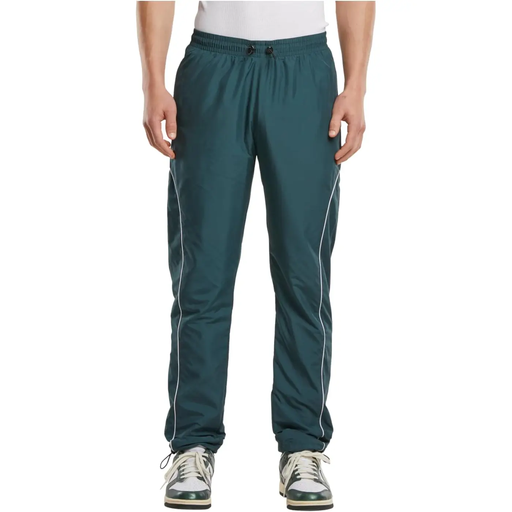
Why it’s a good fit: A practical choice for everyday wear, light activities and a sporty outfit with trainers.
The product information specifies 100% polyester, a regular fit, straight legs and an elasticated waistband with drawstring. This makes the key features easy to verify.
Lightweight polyester outer fabric, a drawstring and striped side panels. Available in several sizes; check the chart before ordering.

Why it’s a good fit: Ideal for anyone looking for a recognisable brand for training, fitness and sporty everyday wear.
The product page clearly specifies 100% polyester, size M, an athletic fit and a plain blue colour. You can therefore base your decision on the actual features rather than the brand name alone.
Lightweight material, an athletic fit and a design intended for training and everyday wear according to the product description.
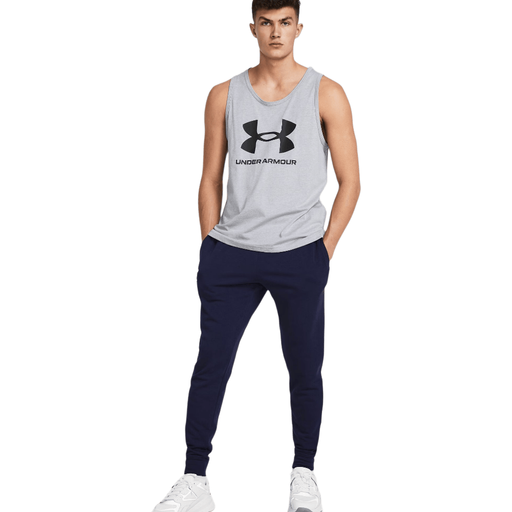
Why it’s a good fit: A warm pair of joggers for warm-ups, the gym, travel and relaxing moments.
The product details list a regular fit, an elasticated waistband with an external drawstring, and a blend of 80% cotton and 20% polyester. This makes the fabric choice clearer than broad comfort claims.
Brushed interior, open hand pockets and a secure back pocket. The size chart indicates that the model fits true to size.
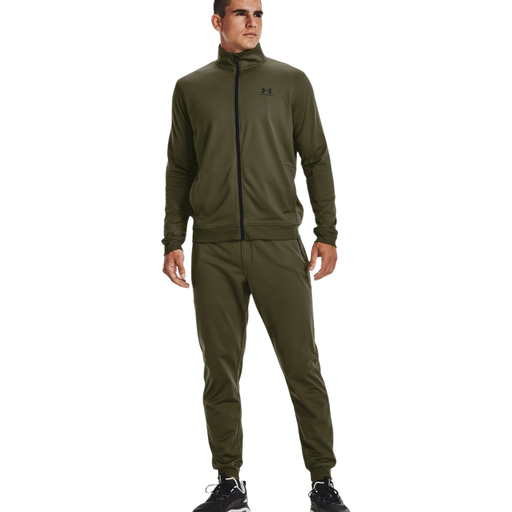
Why it’s a good fit: For anyone looking for smooth, lightweight sports trousers for warm-ups, training and life on the go.
The product information specifies 100% polyester, a regular fit, a 76 cm inside-leg length in size M and a tapered leg. This makes it easier to assess whether the model suits your build.
Tapered legs, ribbed cuffs, multiple pockets and an external drawstring. Under Armour also states in its own product information that the fabric offers moisture management and quick-drying performance.
Explore a current selection of lightweight men’s joggers in a range of fits, materials, colours and sizes.
Use this concise checklist:
Nike training trousers, Under Armour training trousers or men’s track pants may suit a range of situations. However, the brand name alone does not determine the right choice. Material, measurements and intended use provide a more reliable basis for comparison.
Men’s joggers are often designed with comfort and relaxation in mind, for example with cotton or a soft inner lining. Men’s sports trousers more commonly feature lightweight synthetic fabric, a performance-oriented fit and details such as zipped pockets or quick-drying properties. The distinction is not fixed, so always check the product details.
That depends on the type of training. For high-intensity movement, many people choose lightweight polyester. For warm-ups or lower-intensity workouts, a cotton blend may feel more comfortable. Do not look only at the composition; also consider the fabric weight, fit and ventilation.
Wash the trousers according to the label, use the recommended temperature and avoid products that are not permitted, such as fabric softener for some synthetic models. Low drying temperatures or air-drying can help preserve the shape and fabric for longer. Before buying, also check the seams, cuffs and pocket closures in the product information.
