
Vandaag of morgen in huis

Kwaliteit gegarandeerd

Welkomstaanbiedingen ontgrendelen: GRATIS bezorging | Tot 80% korting | Gratis 30 dagen JoyPlus-proefperiode
Download de app
A pair of men’s trainers may seem like a quick online purchase. However, small differences in fit, materials and sole construction can have a major impact on comfort. A trainer that feels comfortable for a quick trip to the shops is not necessarily suitable for long walks, training sessions or trail running.
Pay particular attention to these common pitfalls:
Do not just check the EU size; also look at the stated width and fit. For example, the product information lists a standard fit with a D width for several Skechers models. The Salomon DRX DEFY GRVL is available in size 43 1/3, while the adidas Barreda Decode is offered in EU 40 2/3 and 44, among others.
A useful check:
If you normally wear EU sizes 41 to 46, it is worth checking the available sizes for each product. A half size, such as 42 1/2 or 43 1/3, can make a difference if you are between sizes.
For everyday wear, synthetic leather, mesh and textile are practical choices. Breathable trainers with mesh inserts can feel airier during your commute or light training. Synthetic leather is generally easy to wipe clean, which is useful in changeable Dutch weather.
If you are specifically looking for men’s leather trainers, check the material description carefully. A model may look like leather but, according to the product specifications, be made entirely or partly from synthetic materials. Look for the stated “upper” material rather than relying on the product title alone.
For wet conditions, a membrane such as GORE-TEX is a more specific product feature than a general claim such as “weather-resistant”. According to the product information, the Salomon XA Pro 3D v9 GTX comes with a GORE-TEX membrane. However, make sure you follow the stated care instructions for this type of shoe; machine washing is not recommended for this model.
A rubber sole offers a practical combination of durability and grip, but the tread also helps determine what the shoe is suitable for. A flat cupsole works well with casual outfits and for everyday use. A deeper tread makes more sense for gravel, woodland terrain or wet paths.
With Memory Foam trainers, the feature refers to the insole. The Skechers Burns Agoura and Summits models specify a non-removable Memory Foam insole. This can provide a soft feel when walking, but it also makes replacing the insole more difficult. So check whether you plan to use orthopaedic or customised insoles.
For sporting activities, additional features are important:
These terms describe product components. They do not guarantee that a shoe will be comfortable for every foot or surface.
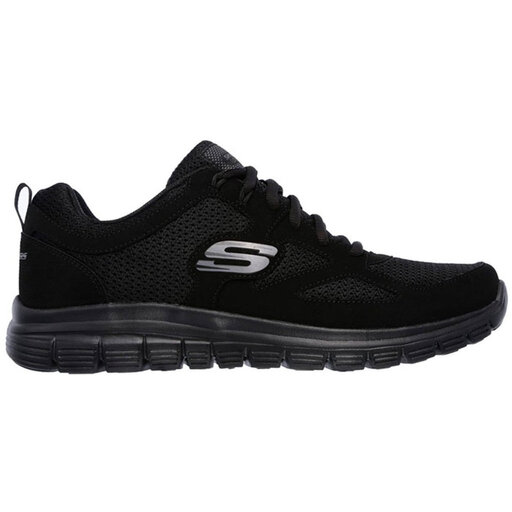
Why it suits this profile: This model is designed for everyday use and combines a standard fit with a lace-up fastening, mesh inserts and a rubber outsole. The black colour works well with jeans and sporty casual clothing.
The product information specifies the materials and a non-removable Memory Foam insole, so you know what you are buying in advance.
Synthetic leather upper, mesh for ventilation, rubber sole and lace-up fastening.
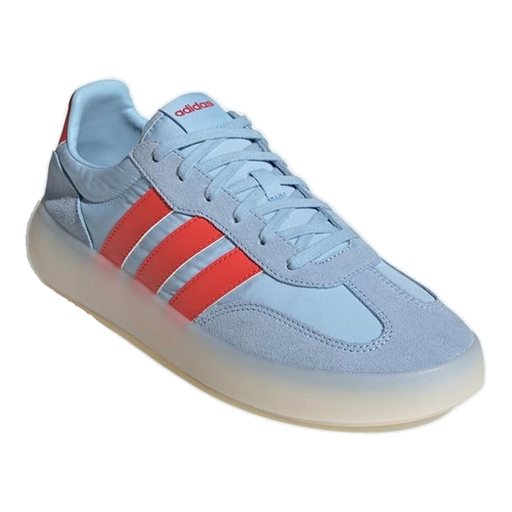
Why it suits this profile: The combination of suede, nylon and a classic T-toe design is ideal for shoppers looking for a polished casual trainer for work, the city and leisure time.
The product specification states a regular fit, lace-up fastening and rubber cupsole. You therefore do not have to rely on appearance alone.
Suede and nylon upper, cushioned midsole and rubber cupsole.

Why it suits this profile: This model is designed for trail running and walking on technical or changing terrain. The Quicklace system and the specified treaded sole are practical for outdoor use.
The shoe is not simply described as sporty: GORE-TEX, 3D Advanced Chassis, Quicklace and Contagrip are all specified in concrete terms.
GORE-TEX membrane, Quicklace fastening, Contagrip rubber and reinforced toe and heel zones.
We have put together a complete, up-to-date list of products that fully meet these strict selection criteria and the applicable European safety regulations.
Choose a standard fit, lace-up fastening and a rubber sole with sufficient flexibility. Mesh inserts can be comfortable if you wear the shoes mainly indoors or during your commute. Skechers Burns Agoura and Skechers Summits are examples of models with a casual sporty design and a Memory Foam insole.
Their lifespan depends on walking distance, body weight, the surface, care and how often you alternate them with other shoes. Look out for wear on the sole tread, seams coming away and an insole that remains permanently misshapen. Clean synthetic leather and mesh according to the product label and allow the shoes to air-dry. A rubber sole does not prevent wear entirely, but the material is practical for regular use.
For short walks on paved roads, many casual trainers may be sufficient. For longer walks, gravel paths or trail running, men’s walking shoes or Salomon trail running shoes with grip, stability and protection are a more targeted choice. Always check that the model is suitable for the surface and the distance you actually plan to cover.
