
Vandaag of morgen in huis

Kwaliteit gegarandeerd

Welkomstaanbiedingen ontgrendelen: GRATIS bezorging | Tot 80% korting | Gratis 30 dagen JoyPlus-proefperiode
Download de app
A good T-shirt should feel comfortable, hold its shape reasonably well, and suit the purpose you’re buying it for. Yet many shoppers focus mainly on brand name, colour or discount. As a result, a shirt can end up at the back of the wardrobe before long: the neckline goes baggy, the fabric is too thin, or the fit turns out different from expected.
With this practical selection guide, you’ll first check the verifiable features of men’s T-shirts. After that, you can make a targeted choice from a cotton men’s T-shirt, a sports model, a long-sleeve or a men’s T-shirt multipack.
A brand doesn’t automatically tell you anything about the fit or material of a specific model. Within one brand, a slim fit men’s T-shirt and a regular fit men’s T-shirt can feel very different. Always check the product information, size guide and any notes about the cut.
The label “cotton” doesn’t tell you how thick, soft or sturdy a shirt is. A 100% cotton T-shirt can be light and thin, while a heavier jersey has more structure. Where available, look at fabric weight in grams per square metre, such as 160, 180 or 240 g/m². This isn’t a direct guarantee of durability, but it does help you distinguish between lighter and heavier fabrics.
An oversized men’s T-shirt often already has broader shoulders and a roomier body. Ordering another size up can make the sleeves and length unnecessarily large. With a slim fit, you might actually need to size up if you want more room to move. So compare chest width and length with a T-shirt you already know fits well.
For everyday wear, 100% cotton is a popular choice. The product details from brands including Calvin Klein, Nike, adidas, U.S. Polo Assn. and The North Face list cotton models. Also pay attention to the construction:
With a men’s sports T-shirt, the composition is especially relevant. The Nike Dri-FIT Park 20 Tee is described as a model with Dri-FIT technology; according to Nike’s product information, it is designed for moisture management. The stated composition is 57% cotton and 43% polyester. Treat this as a product specification from the brand and check whether it suits your sporting needs.
Choose the fit based on your clothing style:
Also look at the ribbed collar, chest pocket and prints. A small logo or embroidery affects wearability less than a large print. With dark colours, such as a black men’s T-shirt, care instructions can be especially important to minimise colour fading.
A European size isn’t exactly the same across every brand. So check:
With the Calvin Klein Core Monologo Pocket Slim Tee, the product information states, for example, that the model comes up large. For a standard fit, they recommend going down a size; for a roomier look, you can consider your usual size. Always check this against your own measurements.
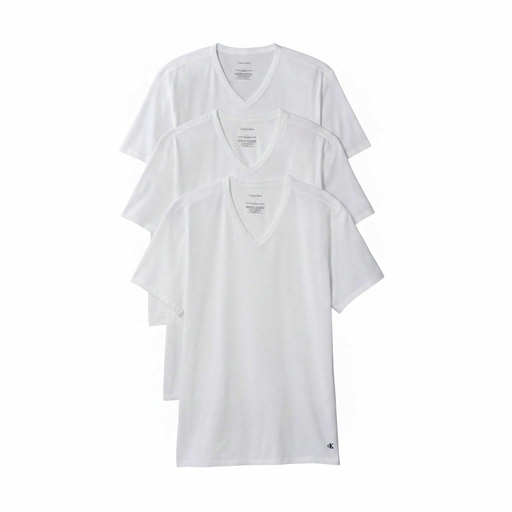
Why this suits the profile: A set of three white T-shirts is practical if you want to build a simple basics wardrobe or regularly need a fresh shirt.
The packaging makes the number of shirts clear, and the product information states a cotton composition and V-neck. So you don’t have to rely on a brand offer alone.
Three white shirts, V-neck and suitable for daily wear or under a shirt.
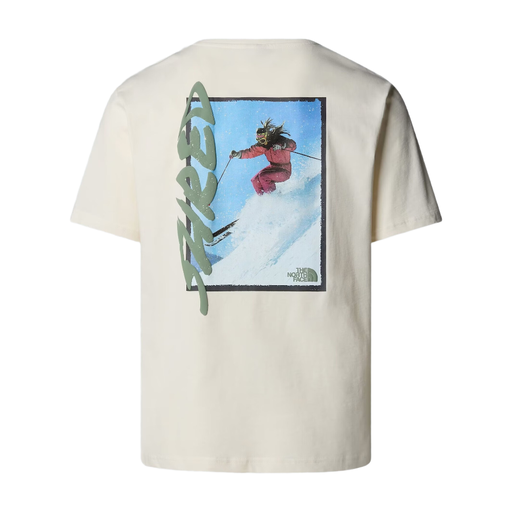
Why this suits the profile: This shirt combines a relaxed fit with a 160 g/m² cotton jersey according to the product description. That suits casual city use, travel and layering.
The fabric weight and relaxed fit are clearly stated. This helps you judge whether the shirt is too thin or too tight for your use.
100% cotton, 160 g/m² jersey and a relaxed fit with a crew neck.

Why this suits the profile: For football, training or an active day, a sports model with a regular fit can be more practical than a heavy cotton shirt.
The fabric composition, regular fit and sports category are stated. According to Nike’s product information, Dri-FIT is designed for moisture management; check whether this matches your activity.
Regular fit, short sleeves and a cotton-polyester blend according to the product details.
If you’re after a sturdy, loose look, you might consider a Heavy Oversized Tee White M. The product information states 100% cotton, 180 g/m² and an oversized fit. A similar model from Urban Classics is described with 240 g/m². You may notice that difference in structure and warmth, but it’s not an automatic guarantee of quality.
With oversized models, especially compare the half-chest width and length. That way, you avoid a roomy fit turning into a shirt that’s too long or too wide.
We’ve put together a full, up-to-date list of products that fully meet these strict selection criteria and current European safety regulations.
A white men’s T-shirt and black men’s T-shirt are easy to combine with jeans, chinos and shorts. White can show through thin clothing, while black may show colour fading over time if not treated according to the care label. So choose the colour based on your existing wardrobe and the maintenance you’re prepared to do.
The lifespan depends on the fabric, stitching, how often you wear it and how you wash it. Wash according to the label, use the recommended temperature and avoid drying in a way the garment can’t handle. A heavier fabric may have more structure, but that alone doesn’t tell you how long the shirt will last.
A multipack can be practical when you need several identical basics. Do compare the price per shirt, composition, size and neckline. A set is less worthwhile if you end up with a colour or fit that doesn’t suit your clothing needs.
