
Vandaag of morgen in huis

Kwaliteit gegarandeerd

Welkomstaanbiedingen ontgrendelen: GRATIS bezorging | Tot 80% korting | Gratis 30 dagen JoyPlus-proefperiode
Download de app
Men’s socks might seem simple to buy, but small differences in length, material and size determine whether they stay comfortable. A pair that feels good when you try them on can slip down during a long working day, become too warm or wear out quickly. With this practical guide, you can compare men’s socks using verifiable product information, so you shop more wisely for the office, everyday wear, sport or outdoor activities.
A high cotton content sounds appealing, but it doesn’t tell you everything about the fit. Cotton men’s socks can feel soft and breathable, while polyester and elastane actually help with shape retention and stretch. So also look at the knit structure, the cuff and the heel construction.
For intense training, sports socks for men are often more practical than thin cotton models. According to the product description, socks with polyester or nylon may be designed for moisture wicking and faster drying. That doesn’t automatically make them suitable for every foot or activity.
A stretchy sock doesn’t fit every foot size. A size that’s too small can create tension around the toes and cuff, while a sock that’s too large will wrinkle or shift more easily. Always check the EU size on the product page. For many shoppers, men’s socks in size 39-42 are a common choice, but sizes such as 35-38, 43-46 and 47-50 also exist.
Also pay attention to the difference between shoe size and sock size. A model with size 39-41 is not necessarily the same as a model with size 39-42.
No-show socks and low-cut socks stay mostly hidden under trainers, loafers or low summer shoes. Men’s ankle socks sit a little higher and offer more coverage. For smart shoes, mid-calf or medium-length socks are often more logical, because less bare skin is visible when you’re sitting down.
For skiing and winter sports, ordinary ankle socks are less suitable. Ski socks are longer and often have extra zones around the shin, heel and arch. Compression socks can offer a snug pressure distribution; follow the product information for these and don’t choose a model solely based on a general promise about comfort or performance.
Check three points:
With low-cut socks, the shape around the heel is also important. A low cuff without enough elasticity can slip down while you walk.
Cotton generally feels soft and is often used in everyday socks. A blend with polyester and elastane can offer more stretch and durability. For running, running socks with a synthetic fibre mix, a snug fit and possibly a cushioned sole are practical features to compare.
Claims such as “antibacterial” or “odour-resistant” should not be taken as a proven effect without a source. In the Utree product description, for example, a 10A antibacterial and odour-removing effect is mentioned according to Utree’s own product specification. When buying, check exactly what information the manufacturer provides and whether it’s relevant for your use.
Thin business socks fit better with leather shoes that have little room. Sports socks can have a thicker sole for cushioning, but that also takes up more space inside the shoe. Washing instructions vary by model:
Wash dark and white socks separately when colour retention matters. Always check the label, because the instructions on the product itself are the ones to follow.
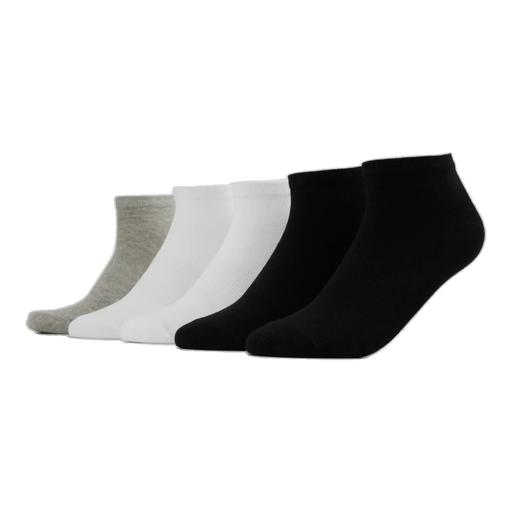
Why this fits the profile: A five-pack with black, white and grey offers variety for trainers, loafers and casual outfits. The size 39-42 matches a frequently requested shoe size.
The product information states both the composition and the EU size. This means you don’t have to rely solely on the term “universal”.
75% cotton, 23% polyester and 2% elastane; low no-show shape; five pairs in a mix of colours.
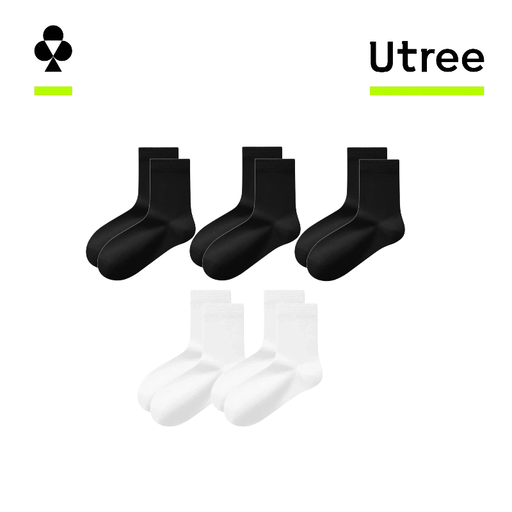
Why this fits the profile: This model is aimed at the office, commuting and leather shoes. The combination of black and white suits both business and everyday clothing.
The description mentions a flat toe seam, elastic cuff and 3D heel. The antibacterial claim is presented here solely as information according to Utree’s own product specification.
100% cotton excluding elastic fibres; medium length; choice of black, white and grey variants.
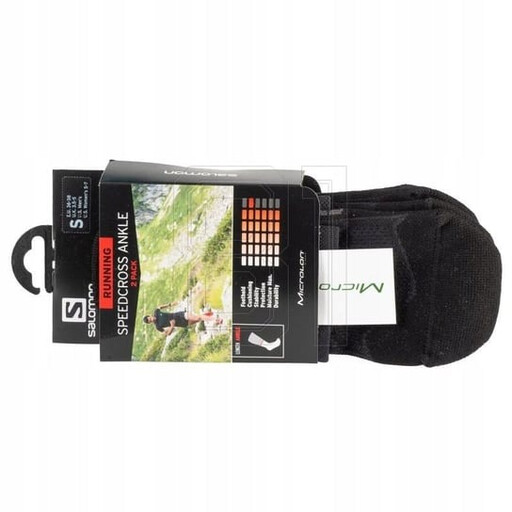
Why this fits the profile: This unisex model is designed for running and has an ankle height, a cushioned sole and a pack of two pairs.
The product description states the size 39-41, the materials and the running use case. This lets you compare the sock with your shoe and training goal.
Two pairs; polyester, nylon and elastane mix; according to the product information, moisture wicking, quick drying and a cushioned sole.
We’ve put together a full, up-to-date list of products that fully meet these strict selection criteria and comply with current European safety regulations.
For everyday use, you can choose cotton men’s socks with an elastic cuff and a size that fits well. For the office, medium-length black socks are practical. Under trainers, men’s ankle socks or no-show socks are a logical choice. Also consider the thickness: a thick sock can feel tight inside a smart shoe.
The lifespan depends on the material, washing programme, drying method and use. Thin socks for everyday wear can wear out faster than models with a reinforced sole or heel. Wash according to the label, avoid unnecessarily high temperatures and check over time for thin spots at the heel, toe and ball of the foot.
They can be, but check the product details. Men’s sports socks for training aren’t always designed for long running distances. For running, the right size, a snug fit, moisture management and a suitable sole are more important than just the logo or colour. For skiing, choose ski socks instead; for a supportive, close-fitting model, you can compare compression socks with extra attention to size and usage advice.
