
Vandaag of morgen in huis

Kwaliteit gegarandeerd

Welkomstaanbiedingen ontgrendelen: GRATIS bezorging | Tot 80% korting | Gratis 30 dagen JoyPlus-proefperiode
Download de app
Buying a new pair of men’s shoes seems simple, until you realise after a few weeks that the fit is disappointing, the sole offers little grip or the material is unsuitable for rain. Marketing copy often focuses on comfort, durability and versatility, but the underlying product specifications tell you more.
Pay particular attention to these three common pitfalls:
The right choice depends on the surface, how long you will be wearing them and the fit you want. Men’s trainers with a textile or mesh upper are practical for everyday use and commuting. They generally offer better ventilation than fully enclosed synthetic models, but usually provide less protection against rain.
For training or light sporting activities, look for men’s sports shoes with a cushioning midsole, firm heel and enough freedom of movement. For longer walks, men’s walking shoes with a profiled sole and supportive construction are a more logical choice. If you regularly tackle unmade paths, changes in elevation or wet terrain, men’s trekking shoes or trail models may be more suitable.
Colour also has a practical role. Black men’s shoes are easy to coordinate and show light mud less readily than pale mesh models. In rainy conditions, it is more important to check the construction than to choose based solely on the colour or model name.
Do not look only at the EU size. Also check the stated width and the described fit. In product information, width is often indicated by a letter, such as D or G. A regular fit may work well for one foot but feel too tight on a wider foot.
When ordering online:
If you are looking for men’s shoes in large sizes or men’s shoes sizes 43 to 47, it is a good idea to check which sizes are actually available for each colour and version. For example, one model may be available in size 45, while another version of the same design only goes up to size 44.
Mesh and textile usually allow more air through than synthetic leather or nubuck. This can be pleasant for everyday use and indoor activities. On the other hand, loosely woven materials offer less protection against rain and splashing water.
Synthetic leather is easier to wipe clean and creates a more enclosed look. Nubuck can be suitable for a sturdy winter or outdoor shoe, but requires care with products designed for this material. Always check the washing instructions: some models must not be put in the washing machine and should be cleaned with a damp cloth.
A rubber outsole can provide durability and grip, but the tread pattern also affects how the shoe performs on slippery or loose ground. A flatter profile is often better suited to city use, while deep grooves are more useful on sand, gravel and mud.
Also pay attention to the precise moisture claim:
A waterproof shoe may also feel warmer than an airy mesh model. Choose based on how you will use it, rather than focusing on a single prominent product term.
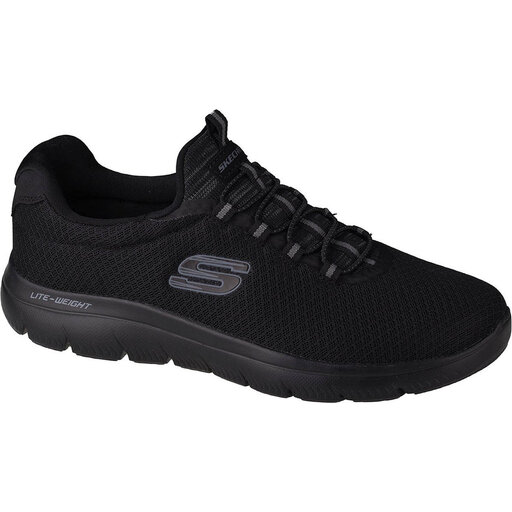
Why it suits this profile: This black slip-on version is designed for everyday use and offers a generous size option for those looking for large men’s shoes. The size information states size 47.5, width D and a regular fit.
The product information specifically mentions mesh, a rubber sole and a fixed fit, rather than relying only on general comfort language. The shoe is not described as waterproof, allowing you to choose it for dry everyday use.
Knitted mesh upper, bungee laces and a memory foam insole. The rubber sole is practical for everyday use.
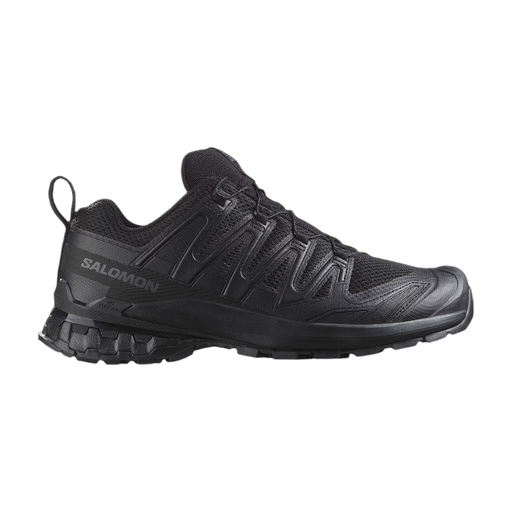
Why it suits this profile: This trail and walking model is designed for users who regularly walk on technical trails or varied terrain. The product specification lists a GORE-TEX membrane, 3D Advanced Chassis, Quicklace and a Contagrip rubber outsole.
Choosing a specific membrane and named outsole makes the moisture and grip information easier to verify than a general claim such as “for all conditions”.
GORE-TEX according to the product description, a stabilising chassis, Quicklace fastening and Contagrip rubber.
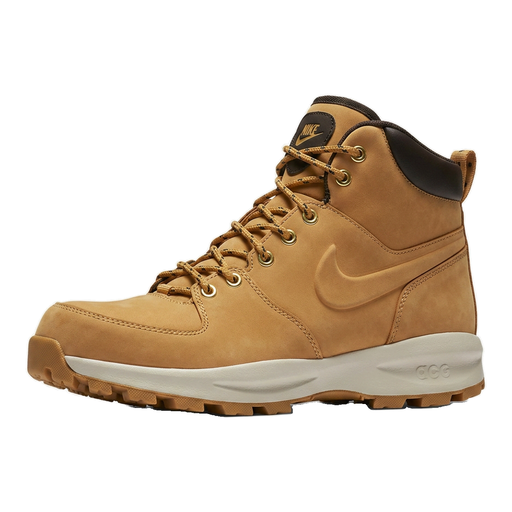
Why it suits this profile: The high-cut construction, nubuck leather upper and rubber outsole make it suitable for winter use, walks and adventurous outings. The product specification states a water-repellent construction, not a fully waterproof membrane.
The specification distinguishes between water-repellent and waterproof. This means you can use the model appropriately in light rain without assuming it offers more substantial protection from wet weather.
Nubuck leather, a high shaft, padded polyurethane foam insole and a profiled rubber outsole.
We have compiled a complete, up-to-date list of products that fully meet these strict selection criteria and the applicable European safety regulations.
For everyday use, low-top trainers with a regular fit, a rubber outsole and a breathable textile or mesh upper are often practical. Pay attention to the fastening: laces offer more adjustability, while slip-ons are quicker to put on and take off. Also check whether the insole is fixed in place and whether the model must be cleaned by hand according to the care instructions.
Their lifespan depends on walking distance, body weight, surface, rotation and care. A pair worn every day will generally wear out faster than two or three pairs that are alternated. Look for a tread that is becoming smooth, cracks in the upper and lasting deformation around the heel. Allow wet shoes to dry naturally and do not place them directly on a radiator.
Not always. Waterproof walking shoes can be useful in rain and on wet paths, but a membrane can restrict ventilation and make the shoe feel warmer. For mainly urban use in dry conditions, a lighter mesh model may be more comfortable. Choose a waterproof version when protection from moisture matters more than maximum ventilation.
