
Vandaag of morgen in huis

Kwaliteit gegarandeerd

Welkomstaanbiedingen ontgrendelen: GRATIS bezorging | Tot 80% korting | Gratis 30 dagen JoyPlus-proefperiode
Download de app
Choosing the right men’s running shoes may seem straightforward, until you come across terms such as “maximum cushioning”, “ultralight” and “race technology”. These descriptions only become meaningful when you match them to specific specifications, your running goals and the shape of your foot.
A relaxed long run calls for different features than a marathon or interval session. Below, you’ll find what to look out for and which models suit different running profiles.
Lightweight men’s running shoes can seem immediately appealing. However, less material does not automatically mean greater comfort. A thin sole may be less suitable for long training sessions, while a slightly heavier model may offer more support or cushioning.
That’s why you should always consider the combination of weight, midsole, fit and stability. A lightweight racing shoe may feel great during a fast race, but be less suitable for everyday use.
A thick midsole often feels soft in the shop. When running, it’s not just about softness, but also about how steadily your foot rolls through each stride. A very soft shoe may feel less controlled for some runners.
Check which material is used in the midsole, how wide the outsole is and whether the manufacturer designed the shoe for daily training, long distances or racing. According to a brand’s own research, percentages relating to cushioning, energy return or stability may provide an indication, but they are no guarantee of your personal running experience.
Running shoes should generally fit differently from casual shoes. Your toes need room so they do not press against the front of the shoe over longer distances. At the same time, your heel should not lift when you push off.
Ideally, measure your foot at the end of the day, wearing the socks you use for running. Compare your foot length with the product’s size chart. Also look out for differences between EU sizes and models with their own sizing system, such as EU 42 1/3 or EU 43 2/3.
For training running shoes and long runs, a comfortable midsole is often more important than an extremely low weight. EVA foam is widely used because it combines flexibility with cushioning. According to the product description, some LI-NING running shoes also use BOOM or Tempo Bounce material.
Look out for:
Stable running shoes often have a wider base, a firm heel construction or a supportive element around the midfoot. This can provide a more controlled feel, but a stability model is not necessary for everyone.
If you have a broad forefoot, look for running shoes with a wide fit or a model with a wider last. A roomy toe box prevents your toes from being squeezed together. However, make sure the heel and midfoot still fit securely.
Breathable running shoes usually have a mesh or woven textile upper. This can help release heat during indoor or outdoor training. A breathable upper is not the same as being waterproof; in rainy conditions, mesh materials may allow moisture through more quickly.
For outdoor running shoes, the outsole is at least as important. Rubber with a clearly defined tread will generally offer more grip than an almost smooth sole. A light tread is often sufficient for asphalt, while trail-style surfaces require more traction.
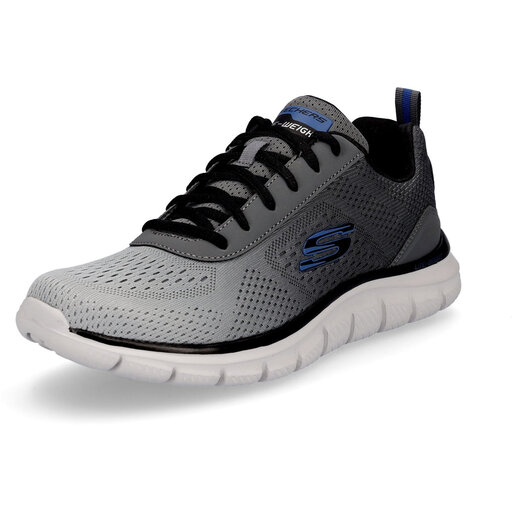
Why it suits this profile: According to the product description, this model is designed for fitness, everyday use and comfortable training. The mesh upper and Memory Foam insole make it a good choice for runners looking for a versatile shoe for light running sessions and the gym.
The specifications mention a regular fit, rubber outsole and flexible cushioning. This means you can assess the model based on specific features rather than marketing terms alone.
Soft mesh upper, foam insole, flexible sole and machine-washing instructions at a maximum of 30 °C according to the product information.
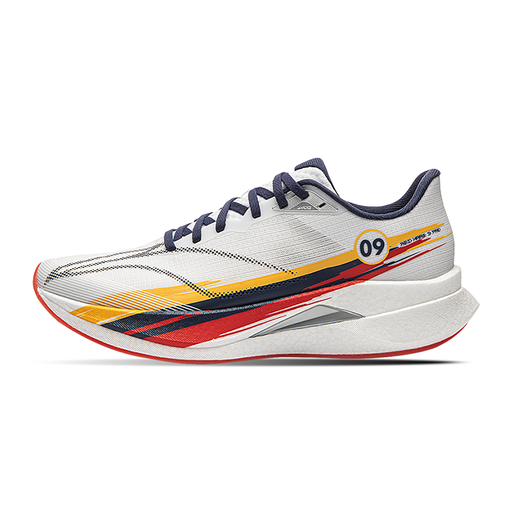
Why it suits this profile: This model is designed for runners looking for a lightweight shoe with a wider base, cushioning and a breathable upper for training and faster road sessions.
The product description lists a widened last, dual-layer BOOM midsole, TPU element and GCR rubber outsole. These details provide more substance than a standalone claim about “maximum performance”.
Wider forefoot and heel, dual-layer BOOM foam, woven BOOM FIBER upper and GCR outsole according to the product details.
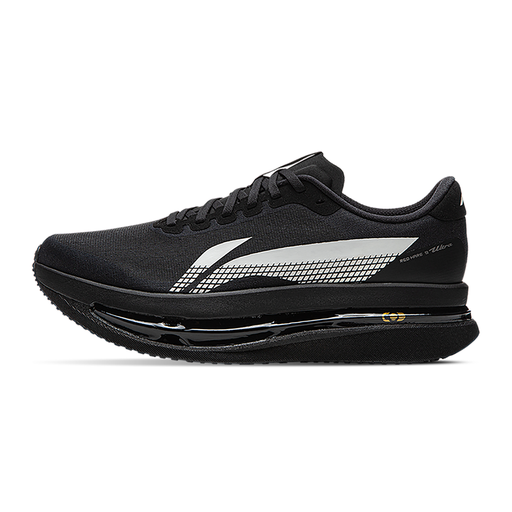
Why it suits this profile: According to the product information, this shoe was developed for intensive training, long distances and road races. Its race-focused fit and glass-fibre plate will appeal to runners specifically looking for men’s racing running shoes.
The choice is based on verifiable components: a three-layer midsole, glass-fibre plate, breathable textile and GCU outsole. The firm racing fit also makes it clear that this is not primarily a casual training model.
Three-layer BOOM midsole, race-focused wraparound fit, breathable BOOM FIBER upper and GCU rubber outsole for road running and outdoor sports according to the product description.
We’ve put together a complete, up-to-date list of products that fully meet these strict selection criteria and the applicable European safety regulations.
Use this simple guide:
According to the product description, a model such as the PELLIOT Running Shoes is designed for road-to-trail use, with an EVA midsole, mesh upper and ROCKYTEC outsole. This makes this type of shoe relevant for runners who regularly switch between asphalt and off-road terrain.
Try on new men’s running shoes indoors first, wearing your running socks. Check that your heel does not move up and down and that there is approximately a small finger’s width of space in front of your longest toe. With wide-fit models, take particular care to ensure that the heel is not too loose.
Alternate shoes after a wet training session and allow them to air-dry away from direct heat. Follow the washing instructions for each model: some shoes can be carefully machine-washed, while LI-NING models and many performance shoes should, according to the product information, only be cleaned with a damp cloth.
Lifespan depends on body weight, running surface, training frequency and sole wear. Do not replace a pair solely based on a fixed number of kilometres. Look out for a tread that has become smooth, permanent midsole deformation or an upper that no longer fits securely.
Your toes should not touch the front of the shoe. Leave approximately a small finger’s width of space, especially when running long distances. The heel and midfoot should still fit firmly to help reduce movement and blisters.
Not always. Lightweight models are often well suited to faster efforts, interval training or races. For daily and long-distance training, a shoe with more cushioning, a wider base or additional stability may feel more comfortable. Choose based on how you will use the shoes, not just their weight.
Check the tread, the shape of the sole and how securely the upper fits on a regular basis. Replacement makes sense when the sole wears unevenly, the cushioning feels noticeably different or the shoe no longer feels stable around your foot. The right replacement time varies from runner to runner and depends on the surface.
