
Vandaag of morgen in huis

Kwaliteit gegarandeerd

Welkomstaanbiedingen ontgrendelen: GRATIS bezorging | Tot 80% korting | Gratis 30 dagen JoyPlus-proefperiode
Download de app
If you’re looking for men’s running shoes, you’ll soon come across terms such as extra cushioning, lightweight, stable and waterproof. These only mean something if they suit the way you’ll use the shoes. A shoe for tarmac needs different features from one designed for muddy woodland paths. And a sneaker that needs to be comfortable for walking and everyday wear calls for a different choice from a running shoe for several training sessions a week.
Not every sneaker with a running-inspired silhouette is suitable for regular running training. Retro styles such as the adidas Run 70s 2.0 are described in the product information as being designed mainly for everyday comfort and versatile style. They may be suitable for walking, casual wear and light sporting activities, but always check the sole, fit and cushioning before wearing them for longer runs.
Well-cushioned running shoes feel comfortable, but more softness isn’t automatically the right choice. A very soft midsole can feel less responsive. That may be fine for short distances; for a firmer, more stable feel, a different construction may suit you better. So pay attention to the fit, heel support and flexibility of the sole, too.
Sizes vary between brands and models. An adidas EU size 43 1/3 isn’t necessarily the same as a size 43 from another brand. Measure both feet at the end of the day, wear the socks you use for exercise and compare your foot length with the size guide. If you’re searching online for running shoes in sizes 40 to 47, also check that your chosen version is actually available in your size.
The midsole has a major effect on how a shoe feels. Product information may mention:
These brand names refer to product technologies; they don’t guarantee a particular running experience. According to the product descriptions, they’re designed to provide comfort, responsiveness or shock absorption. Also consider the overall weight, sole height and how the shoe fits.
A mesh upper can help with airflow and is often suitable for training and everyday wear. Synthetic overlays can add structure and durability. If you mainly run in rainy conditions, look for a membrane. According to the product information, the Salomon XA Pro 3D v9 GTX has a GORE-TEX membrane.
Bear in mind: a water-resistant construction may feel warmer than open mesh. For dry summer days, a breathable upper is often more practical; on wet paths, protection from moisture may be more important.
A flatter rubber tread is usually sufficient for tarmac, paving slabs and cycle paths. For men's trail running shoes, grip is key. A deeper tread can provide more traction on loose ground, wet stones and mud, but may feel less smooth on flat tarmac.
Check the stability features, too. For example, the New Balance U2002RCE and U1906 models list Stability Web for arch support and stability. That’s a product specification, but the final fit is still a personal choice.
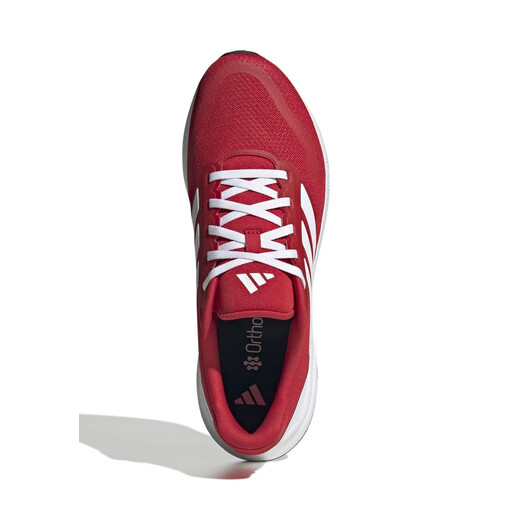
Why it suits this profile: The product description says this model is suitable for road running and short distances of 0 to 10 km. That makes it a practical option if you’re new to running or want one pair for sport and everyday wear.
The intended use is clearly specified. Cloudfoam, an Ortholite insole and an Adiwear rubber outsole are listed as separate components.
Mesh upper, Cloudfoam midsole and rubber outsole; size 42 2/3, with a stated foot length of 26,7 cm.
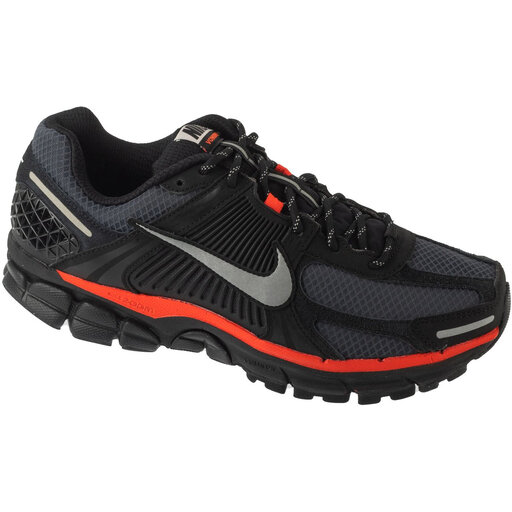
Why it suits this profile: This model combines mesh with synthetic reinforcements, a padded collar and tongue, and a rubber outsole with a waffle tread. It’s a good fit for buyers who want to wear their running shoes for long periods and as casual footwear, too.
The outsole, upper and fit details are described separately. This lets you base your choice on specific features rather than the brand image alone.
Zoom Air units according to the product information, breathable mesh and a rubber outsole with a waffle pattern; size 44.5.
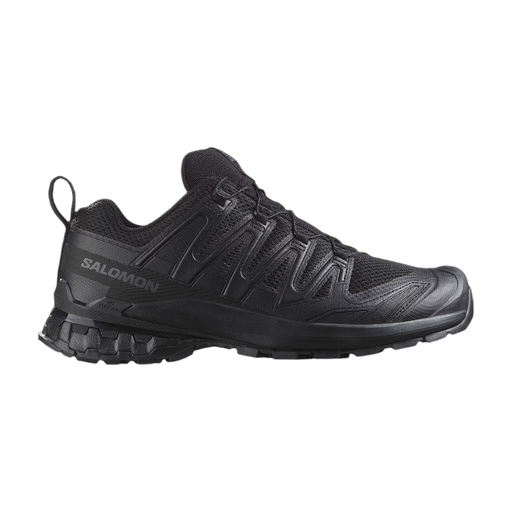
Why it suits this profile: This is a trail running and walking shoe for anyone who regularly tackles unpaved paths, wet ground or technical terrain.
The model is described as more than just a lightweight running shoe: the product information also lists GORE-TEX, 3D Advanced Chassis and Contagrip as features for wet conditions, stability and grip.
Waterproof membrane according to the product description, Quicklace system, reinforced toe and heel, and a Contagrip rubber outsole.
We’ve put together a full, up-to-date list of products that meet these strict selection criteria and the applicable European safety regulations.
Once your shoes arrive, check that your toes can move freely without your heel slipping up. A little room at the toes is often useful for running, as your feet can swell during exercise. Lace them so the fastening holds your instep securely without creating pressure points.
Clean men's sports shoes with a soft brush and mild detergent, unless the care label says otherwise. Many models shouldn’t be put in the washing machine or tumble dryer. Leave them to air-dry, away from direct heat. Their lifespan depends on how often you run, the terrain, your body weight, how well you care for them and the wear on the outsole. Replace your pair when the grip has noticeably decreased, the sole wears unevenly or the fit no longer feels stable.
Look for a breathable upper, a rubber outsole and a midsole that feels comfortable when walking and standing. Models such as the New Balance U2002RCE and adidas Ultrarun 5 are described in the product information as suitable for both sporting activities and casual or everyday wear. Make sure the fit is right for your feet, though.
There’s no fixed lifespan that applies to every pair. Check the cushioning, tread and seams regularly. If you often run on tarmac, the outsole may wear down faster than it would for someone who mainly uses their shoes for walking. Alternating between two pairs can spread the wear, but it won’t make a worn-out sole suitable again.
They can be used for short stretches, but a deep trail tread is designed for unpaved terrain. On tarmac, it may feel less smooth and wear down more quickly. Choose Salomon trail running shoes or other trail models when grip, protection and stability on woodland paths, stones or mud matter more than a smooth stride on the road.
