
Vandaag of morgen in huis

Kwaliteit gegarandeerd

Welkomstaanbiedingen ontgrendelen: GRATIS bezorging | Tot 80% korting | Gratis 30 dagen JoyPlus-proefperiode
Download de app
A men's polo shirt may seem simple to choose. Yet many disappointing purchases are caused by the wrong fit, a fabric that is unsuitable for the intended use or a size chart that has not been checked carefully. A polo can look smart in a product photo but feel too tight in practice, lose its shape quickly or become uncomfortable in warm weather and during movement.
With these practical selection tips, you can compare men's polos based on the features that really matter. Afterwards, you'll find some targeted recommendations for casual wear, smart-casual outfits and tennis.
A slim-fit men's polo is cut closer to the body across the chest, waist and sometimes the sleeves. That does not automatically mean you should choose a smaller size. If you normally wear a size S polo shirt, pay particular attention to the chest measurement and shoulder width when choosing a slim-fit style. A model that is too tight will pull visibly around the buttons and restrict your freedom of movement.
A regular-fit men's polo generally offers more room around the torso. This can be more comfortable for everyday wear, for example with jeans, shorts or chinos.
Cotton piqué often feels light and has the distinctive texture of a classic polo shirt. A cotton men's polo is suitable for casual and smart-casual wear, but cotton can shrink after washing or take longer to dry.
For sports use, polyester with elastane may be more practical. The K-Swiss polos in this selection are made from 94% polyester and 6% elastane. According to the product description, the fabric is lightweight, breathable and stretchy for tennis and training. This is a product specification, not a guarantee of a particular sporting performance.
A polo that is not cared for according to its wash label may fade, shrink or lose its shape more quickly. Before buying, check:
Several models in this selection are not recommended for tumble drying. This is particularly important for cotton piqué and stretch piqué.
Choose slim fit if you want a close-fitting silhouette and usually wear the polo untucked or under a lightweight jacket. Measure your chest carefully and compare it with the brand's size chart.
Choose regular fit if comfort and freedom of movement are your priorities. According to the product information, the Tommy Hilfiger 1985 Regular Polo is made from 100% cotton piqué and has a more generously cut fit.
Bear in mind that sizes can vary between brands. In the size charts provided, an EU size 46 often corresponds to S, while L generally equates to around EU 50. Always check this on the product page. For a size L or XL polo shirt, your chest measurement is more important than the letter label alone. If you're looking for a size XXL polo shirt, it's also worth checking your waist and neck measurements.
Pay attention to the number of buttons, the collar, the cuffs and the positioning of the logo. An embroidered brand logo looks distinctly different from a large printed logo. For a refined smart-casual outfit, subtle details are often the better choice.
A Calvin Klein men's polo in this selection has a small logo and a classic collar. A Tommy Hilfiger men's polo features an embroidered flag on the chest, along with a ribbed collar and cuffs. The K-Swiss models are primarily designed for tennis and leisurewear thanks to their white colour and sporty cut.
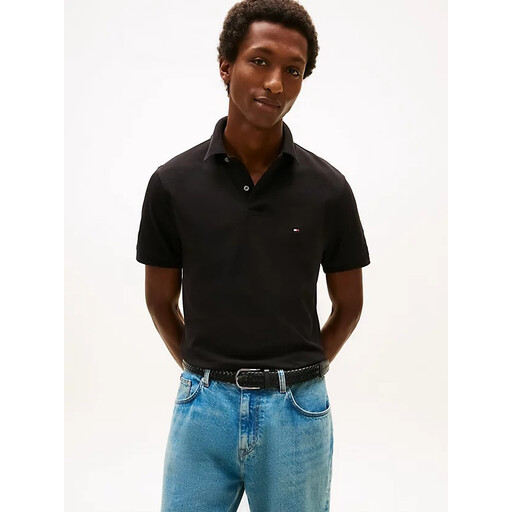
Why it suits this profile: The regular fit provides extra room, while the black colour is easy to pair with jeans, chinos and shorts.
The size chart lists the chest measurement for each size, so you do not have to rely on the S label alone. The regular fit prevents an overly close-fitting cut.
100% cotton piqué, two buttons, and a ribbed collar and cuffs.

Why it suits this profile: The dark blue colour and close-fitting cut work well with a smart, modern smart-casual wardrobe.
The composition is clearly stated: 96% cotton and 4% elastane. This makes the stretch component clear rather than presenting it merely as a marketing term.
Slim fit, stretch piqué, machine-washable fabric and a subtle Calvin Klein logo.
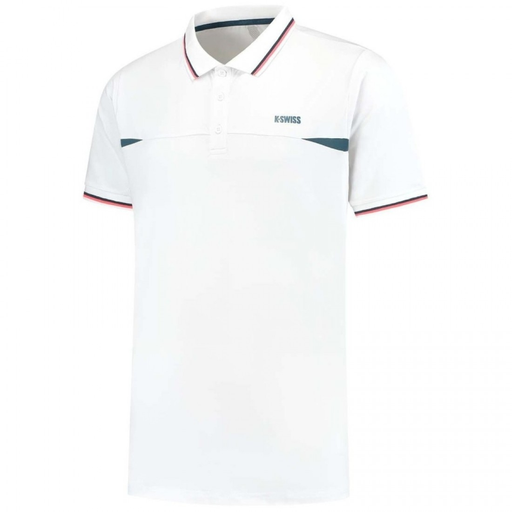
Why it suits this profile: This white men's sports polo is designed for tennis, training and activities where lightweight, stretchy fabric is desirable.
The fabric composition of 94% polyester and 6% elastane makes it easy to compare with the intended use. The product information also states that it is machine-washable at 30 °C and should not be tumble-dried.
Lightweight stretch fabric, classic polo collar and size L available in this style.
We've put together a complete, up-to-date list of products that fully meet these strict selection criteria and the applicable European safety regulations.
Use this checklist before placing your order:
Don't look only at S, M, L, XL or XXL. Compare your chest, waist and neck measurements with the size chart for the specific brand. A slim fit may be closer-fitting than a regular fit in the same letter size.
It depends on how you plan to use it. Cotton piqué is well suited to everyday and smart-casual wear. Polyester with elastane is lightweight and stretchy, making it a better choice for tennis or training. Always check the care instructions as well.
Wash the polo according to the label, use the recommended temperature and avoid tumble drying when advised against. Ideally, dry the polo flat or on a wide hanger, and iron it at the specified low temperature.
