
Vandaag of morgen in huis

Kwaliteit gegarandeerd

Welkomstaanbiedingen ontgrendelen: GRATIS bezorging | Tot 80% korting | Gratis 30 dagen JoyPlus-proefperiode
Download de app
In the Netherlands, a men's outdoor jacket needs to cope with more than a brief shower. The weather can change during a walk, you can face strong headwinds on your bike and, when camping, you may not want to travel with several separate jackets. Even so, marketing claims can be difficult to assess properly. A high hydrostatic head, for example, does not automatically mean that a jacket will remain comfortable during exercise.
“Waterproof” is not a complete product specification. Also check:
A jacket may be described as suitable for rain, but can still let water in through the seams or openings if these areas do not close properly.
A thick men's winter jacket is not always suitable for walking or trekking. During active use, a warm jacket can retain too much moisture and heat. Conversely, a thin men's windproof jacket offers little insulation when you are standing still.
So pay attention to the difference between:
An outdoor jacket is often worn over a shirt, fleece or jumper. If you only consider your body measurements, you may end up with restricted movement around the shoulders and arms. With a men's 3-in-1 jacket, also check the sizes of both the outer jacket and the inner layer.
Measure your chest and compare it with the product's size chart. Also check the sleeve length. A jacket that is too loose can let wind in, while one that is too tight limits the use of insulating layers.
The hydrostatic head indicates how much water pressure a material can withstand in a particular test. A higher value points to greater resistance to water pressure, but it does not tell you everything about the performance of the complete jacket. The seams, zips and hood also play a part.
For everyday commuting, a simple waterproof men's jacket may be sufficient. For camping, mountainous terrain or prolonged rain, a higher hydrostatic head, a storm flap and cuffs that close securely are practical features to consider.
Breathability is often shown as MVTR, for example in grams per square metre per 24 hours. The value indicates how much water vapour a material can let through under test conditions. This is not a guarantee that you will stay dry in every situation: temperature, exertion, humidity and clothing layers also have an impact.
If you are looking for a men's walking jacket or men's trekking jacket, it is worth including ventilation zips and an adjustable fit in your comparison. For relaxed everyday use, these are less important than a comfortable lining and enough pocket space.
A durable outdoor jacket should suit the way you intend to use it. For woodland walks and trekking, abrasion resistance and tear resistance are important. For city use, low weight, easy care and a neutral style often matter more.
Always check the care label. Some jackets may only be washed at a low temperature and must not be tumble-dried. A water-repellent finish may require care or reproofing over time. Follow the manufacturer's instructions.
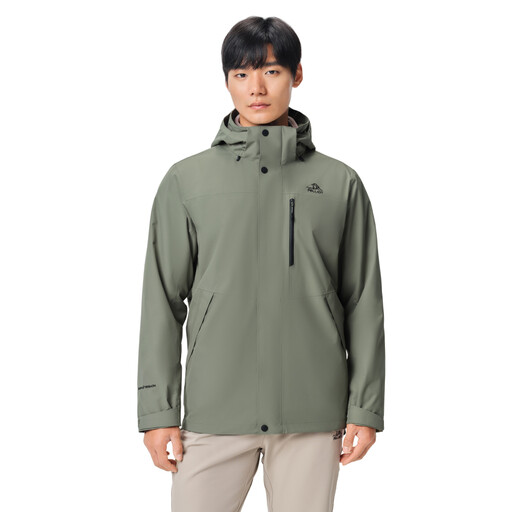
Why it suits this profile: The combination of an outer layer and fleece inner layer is practical for commuting, camping and walks in changeable weather. According to the product description, the two layers can be worn separately or together.
The product description states a hydrostatic head of 35.900 mm H₂O, an MVTR of 16.000 g/m²/24 hours, and an adjustable hood, hem and cuffs. Before buying, however, check the current size chart and product terms.
3-in-1 wearing options, fleece lining and, according to the product description, abrasion resistance of more than 40.000 rub cycles.

Why it suits this profile: This Triclimate 3-in-1 jacket is designed for users who want one system for a range of conditions, including travelling, walks and longer trips.
According to the product description, the outer layer has taped seams, underarm zips, an adjustable hem and adjustable cuffs. The inner layer can be worn separately.
Outer layer and down-filled inner layer in one system; according to the product information, the filling has 550 fill power and the outer fabric is made from recycled polyester.

Why it suits this profile: According to the product description, this jacket is intended for outdoor training and running. That makes it suitable for users who are highly active and mainly need a lightweight rain jacket.
The product information mentions sealed seams, a DryVent outer fabric, zipped pockets and a hood with elasticated edging. This means you do not have to rely solely on the word “waterproof”.
According to the product description, the shell is made from 100% recycled polyester and the fabric has a PFC-free DWR finish.
We have put together a complete, up-to-date list of products that fully meet these strict selection criteria and the applicable European safety regulations.
Use this order:
For example, the PELLIOT models distinguish between the measurements of the outer and inner jackets. For size L, the stated chest measurement ranges from 121 cm for the outer jacket to 114 cm for the inner jacket. Always use the current product page as your guide.
Only wash an outdoor jacket when necessary, and fasten the zips and hook-and-loop fastenings beforehand. Use the wash programme and detergent stated on the label. Avoid bleach if this is advised against, and hang the jacket up to dry when the instructions do not permit tumble-drying.
Check the water-repellent performance after washing. For some models, the manufacturer recommends reproofing or reactivating the DWR finish. The required care varies by material. A men's fleece-lined jacket also needs different treatment from a lightweight breathable men's rain jacket.
Look for a combination of water-resistant outer fabric, adjustable features and sufficient breathability. For longer walks, a 3-in-1 jacket is practical because you can adapt the inner layer to the temperature and level of exertion.
The lifespan depends on use, friction, washing and care. A jacket worn every day under a heavy rucksack will wear differently from one used occasionally for trips around town. Look for signs of wear around the shoulders, cuffs, zips and seams, and follow the manufacturer's care instructions.
Not always. First decide what you will use the jacket for. For commuting, a simple windproof or water-repellent jacket may be enough. For camping, trekking and prolonged rain, taped seams, ventilation and a verifiable hydrostatic head are more relevant than the price or brand name alone.
