
Vandaag of morgen in huis

Kwaliteit gegarandeerd

Welkomstaanbiedingen ontgrendelen: GRATIS bezorging | Tot 80% korting | Gratis 30 dagen JoyPlus-proefperiode
Download de app
Buying a jacket seems straightforward until you realise during the first heavy downpour that the fabric lets water through, the sleeves are too short or there is barely enough room for a jumper. The features of men’s jackets are also often described in broad terms. A jacket may be “water-repellent” without being suitable for prolonged rain. Similarly, a thick appearance does not automatically indicate how warm it is.
With this buying guide, you can compare jackets based on measurable features. This helps you find a model for everyday wear, winter conditions, sport, commuting or outdoor activities without relying solely on marketing terms.
A coating can temporarily make light rain bead up. This is different from a waterproof men’s jacket with a membrane, taped seams or a stated hydrostatic head. So check:
For a jacket for wet autumn and winter days in the Netherlands, an adjustable hood, fastening cuffs and a longer back are also practical features.
A men’s puffer jacket or padded jacket may feel warm, but very bulky filling can make cycling, driving or climbing stairs less comfortable. Look at the cut, armholes and sleeve length. If you wear a fleece or jumper under the jacket, you should also allow extra room around the chest and shoulders.
A men’s fleece-lined jacket often provides a pleasantly soft inner surface. With a lined jacket, it is important to check whether the lining covers the entire body or only specific sections.
M, L and XL are not fixed body measurements. Brands use different size charts, and some models have a regular, slim or roomier fit. Measure your chest and, if necessary, your waist, then compare these measurements with the chart for the specific product. With a men’s 3-in-1 jacket, also check the sizes of the outer layer and inner jacket separately.
For cold days, the filling, lining and length are more important than simply calling something a “winter coat”. A men’s padded jacket with polyester filling may be suitable for everyday use. For prolonged exposure to cold, it is also important to consider how well the jacket keeps out the wind and whether the hood and cuffs are adjustable.
Look out for these details:
A down product requires extra attention when it comes to care and origin. The product information for some models states a fill power and certification; always check the specific product page before making your choice.
A men’s windproof jacket generally has a tightly woven outer material, adjustable cuffs and a fastening that helps keep out draughts. For heavy rain, the material construction and seams are more important than a water-repellent finish alone.
Technical outdoor jackets may list ratings such as hydrostatic head and breathability. The hydrostatic head indicates how much water pressure the fabric can withstand according to a test method. A higher rating is a technical indication, but it does not tell you everything about real-world performance: seams, zips and wear also play a role.
Breathability is sometimes expressed as MVTR, for example in grams per square metre per 24 hours. This figure describes how much water vapour can pass through the material under test conditions. It is not a guarantee that you will stay dry during every activity.
Choose a men’s outdoor jacket for walking or camping based on more than just colour. Check the pockets, hood, ventilation zips, adjustment points and freedom of movement. For everyday commuting, an inside pocket, two-way zip or longer back can be useful.
For a formal occasion, a lightweight model in a subtle colour with a more fitted cut is a better choice than a bulky puffer jacket. A sporty men’s jacket, on the other hand, can offer more freedom of movement and technical details.
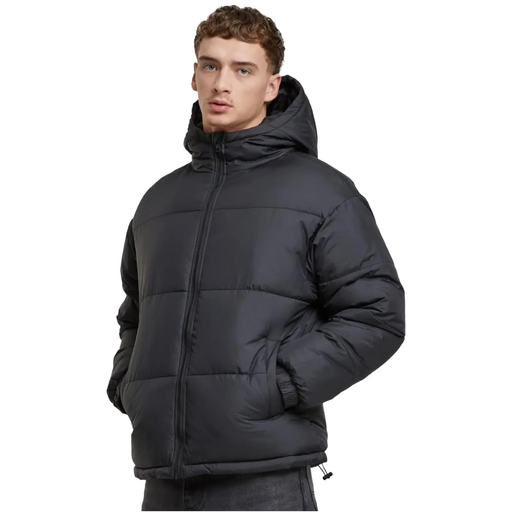
Why it suits this profile: This model is designed for everyday use and features a hood, polyester filling and a simple winter look.
The product information specifies the materials: an outer layer made from 100% polyamide and filling made from 100% polyester. This gives you a clearer idea of what you are buying than a general claim about “extra warmth”.
Polyester filling, hood and care instructions for machine washing at a low temperature.

Why it suits this profile: The Triclimate construction is designed for changing conditions and provides an outer layer and a down inner jacket that can be worn separately or together.
The product description specifies taped outer seams, adjustable cuffs and a two-layer system. This makes the construction easier to verify.
GORE-TEX outer material, 550 fill power down according to the product information, and several ways to wear it.
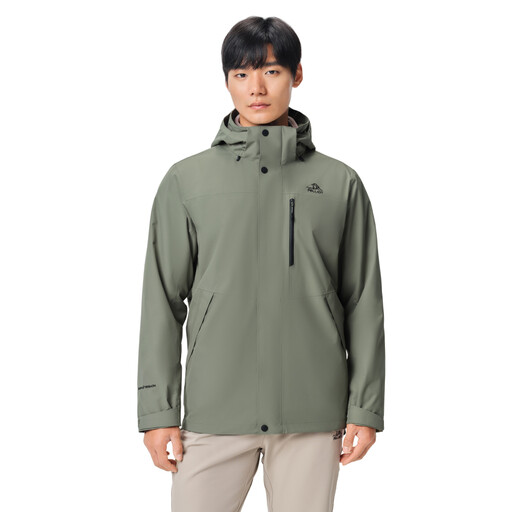
Why it suits this profile: The 3-in-1 construction is practical for camping, walking and commuting, allowing you to switch between the outer layer, inner layer or both.
The product information states a hydrostatic head of 35.900 mm H₂O, an MVTR of 16.000 g/m²/24 hours, and an adjustable hood, hem and cuffs. Check what these ratings mean in relation to your activity.
Removable or separately wearable layers, fleece lining and stated abrasion resistance of more than 40.000 rubbing cycles.
A jacket’s lifespan depends heavily on how it is used, washed and stored. Always follow the care label; instructions may differ from one model to another. A few practical points to keep in mind:
A waterproof men’s jacket may need the water-repellent outer layer to be re-treated. Only do this according to the manufacturer’s instructions. A treatment will not make a damaged seam or faulty zip waterproof.
We have put together a complete, up-to-date list of products that fully meet these strict selection criteria and the applicable European safety regulations.
Look for a stated hydrostatic head rating, finished seams, an adjustable hood and fastening cuffs. For everyday use, a parka may provide sufficient protection; for walking or more intensive activities, breathability and ventilation options are also important.
Measure your chest while wearing a thin shirt and compare it with the size chart on the product page. Leave extra room if you intend to wear a jumper or fleece under the jacket. Also check the sleeve and back lengths, particularly when ordering online.
This depends on how often it is worn, the material, friction and care. A jacket worn every day will wear more quickly around the shoulders, cuffs and pockets. Following the care label and allowing the jacket to dry properly will help preserve its fit and outer layer for longer.
