
Vandaag of morgen in huis

Kwaliteit gegarandeerd

Welkomstaanbiedingen ontgrendelen: GRATIS bezorging | Tot 80% korting | Gratis 30 dagen JoyPlus-proefperiode
Download de app
In the Netherlands, a new jacket often needs to do more than just look good. You might wear it cycling to work, out for a walk, at the football pitch or while travelling. But it’s often only after buying it that you discover whether a men’s jacket is really up to rain, wind and changing temperatures.
So don’t focus on colour or brand alone. These common pitfalls can easily lead to the wrong purchase:
For everyday cycling or walking in changeable weather, a men’s rain jacket with a hood is a practical choice. Check whether the product description mentions taped or sealed seams, a protective storm flap and an adjustable hood. Polyester outer fabric alone tells you very little about how well a jacket will protect you from prolonged rain.
Technical jackets sometimes list figures such as hydrostatic head in millimetres and breathability in grams per square metre over 24 hours. These figures are most useful when the testing method is provided too. For example, the PELLIOT 3-in-1 jacket’s product information lists a hydrostatic head of 35.900 mm H₂O and breathability of 16.000 g/m²/24 hours, according to the stated JIS method. Treat these as product specifications from the sales information, not as a universal guarantee for every weather condition.
For cold days, an insulated men’s winter jacket or parka is a more sensible choice than a lightweight men’s training jacket. Look at:
A 3-in-1 system can be useful if you’re looking for one jacket to wear across several seasons. According to the product description, you can wear the outer layer and inner jacket separately or together. Do check that the two layers fit together properly and remain comfortable when combined.
Compare your chest measurement with the size guide for the specific model. Sizes vary between brands and models. Pay attention to the cut too: a regular fit will generally leave more room for layers than a tailored fit.
Fabrics can give you an initial idea of how a jacket is intended to be used:
Always follow the care label. Some jackets are best left to air dry; others can be tumble dried on a low heat. A men’s hooded jacket is also more practical if the hood is adjustable and won’t slip down over your eyes.
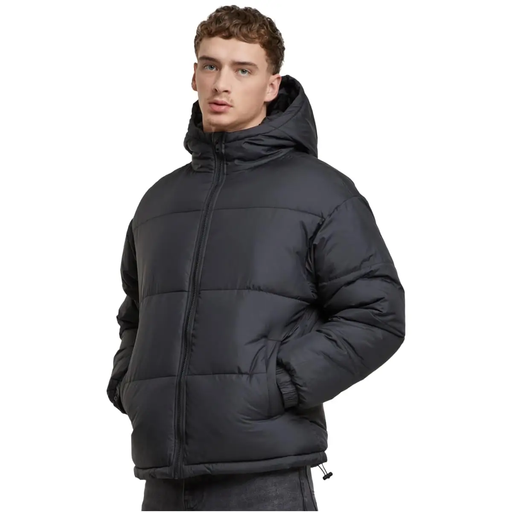
Why it suits this shopper: This black padded men’s jacket is designed for everyday wear on cold days, with a simple look that’s easy to style.
The product information clearly lists the materials: a polyamide outer layer, polyester filling and polyester lining. This means you can assess its warmth and care requirements before you buy.
100% polyester filling, a hood and a choice of sizes. The care information recommends washing at a low temperature and tumble drying on a low setting or line drying.

Why it suits this shopper: This The North Face men’s jacket is designed for changeable outdoor conditions, with a versatile system to suit a range of temperatures.
According to the product description, this model consists of an outer layer and an insulating inner jacket. You can wear the layers separately or together, so you don’t always have to rely on one heavy jacket.
3-in-1 design, adjustable hood and cuffs, taped seams, underarm zips and 550 fill power down, according to the product information.
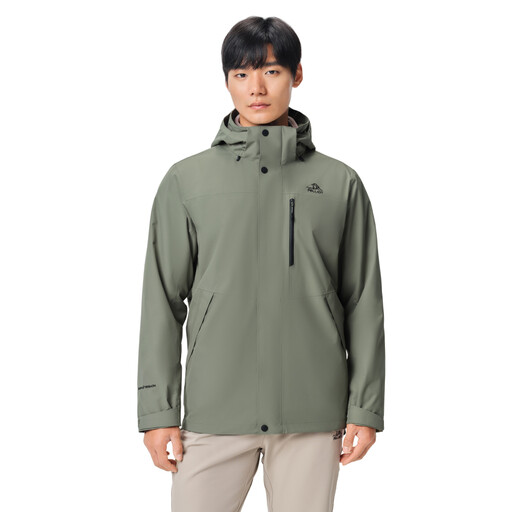
Why it suits this shopper: This men’s outdoor jacket is suited to camping, travelling, commuting and activities where protection from rain and wear is important.
The product information lists separate figures for hydrostatic head, breathability and abrasion resistance. Check these figures alongside the sizing and care instructions before ordering.
3-in-1 design, fleece lining, adjustable hood and cuffs. The stated specifications include 35.900 mm H₂O and 16.000 g/m²/24 hours, according to the specified test method.
We’ve put together a full, up-to-date list of products that meet these strict selection criteria and the applicable European safety regulations.
Look for a stated waterproof outer layer, sealed seams, an adjustable hood and protected zips. A men’s rain jacket is usually lightweight and suitable for wearing over a mid-layer, while a men’s winter jacket offers more insulation. Always check exactly what the brand means by waterproof.
Measure your chest at its widest point and compare it with the size guide for the model. Allow room for a jumper or fleece if you’ll be wearing the jacket in winter. Check the sleeve and back lengths too, if these measurements are available.
Its lifespan depends on how you use it, the material, the seams and how you care for it. Follow the care label, do up the zips before washing and avoid heat if the instructions say not to use it. The water-repellent outer layer of a waterproof jacket may become less effective over time; if so, follow the manufacturer’s care instructions.
