
Vandaag of morgen in huis

Kwaliteit gegarandeerd

Welkomstaanbiedingen ontgrendelen: GRATIS bezorging | Tot 80% korting | Gratis 30 dagen JoyPlus-proefperiode
Download de app
Buying a jacket seems simple – until you’re cycling in the rain, find that a thick jumper won’t fit underneath, or the zip starts sticking after a few weeks. When choosing men’s jackets, it’s not just about colour and brand. Focus on how you’ll use it, its construction and fit, and the features actually listed in the product information.
An outer layer with a water-repellent finish can keep out light rain for a while. That’s not the same as a jacket made with fabric, seams and fastenings designed to keep water out for extended periods. Check whether the product description mentions a waterproof outer layer, taped seams or a specific membrane. The hood matters on a waterproof men’s jacket, too: without good adjustment, rain can still run down your neck.
A thick padded men’s jacket isn’t automatically suitable for every winter’s day. Warmth depends on the filling, lining, length, wind resistance and room for a mid-layer. A short puffer can be comfortable in town, but less practical when cycling into a cold wind. On the other hand, a heavy men’s parka may be unnecessarily warm for a commute on a heated train.
A jacket should fasten without pulling tightly across your chest. Check the size guide and allow room for a jumper or fleece. Also consider sleeve length, shoulder width and pocket placement. A jacket that only feels comfortable when you’re standing still is less suitable for cycling, walking or sport.
For everyday use in the Netherlands, three features are useful:
With technical jackets, don’t treat marketing claims as a guarantee. According to The North Face product description, DryVent fabric is designed to be waterproof, with sealed seams. This is the brand’s claim; also check the care instructions and any restrictions on use.
A men’s winter jacket with synthetic filling is usually practical for everyday wear, as polyester can be easy to care for. A fleece lining feels soft and can add comfort. For changeable weather, a men’s 3-in-1 jacket is worth considering: according to the product description, its outer layer and insulated inner jacket can be worn separately or together.
For the transitional seasons, a lightweight men’s outdoor jacket, men’s sports jacket or windproof men’s jacket is often enough. A smart men’s jacket with a tailored cut is better suited to the office, business meetings or formal occasions, but usually offers less protection from prolonged rain than a technical jacket.
Before buying, check:
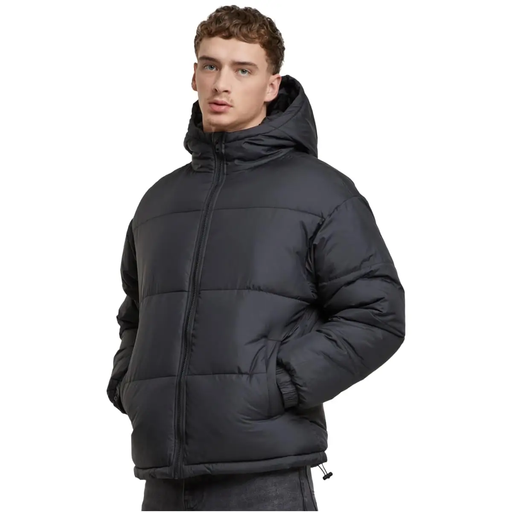
Why it suits this profile: A simple winter jacket for everyday wear, with a hood and synthetic filling for cold days in town.
The fabric composition and care instructions are clearly specified: polyamide on the outer, with polyester filling and lining.
A hood, synthetic filling and care instructions for machine-washing at a low temperature.

Why it suits this profile: A 3-in-1 system for anyone looking for one jacket solution for changing conditions and different activities.
The product description specifies layers that can be worn separately, adjustable cuffs, an adjustable hem and ventilation zips.
Described as a 3-in-1 jacket with GORE-TEX fabric, 550 fill power down insulation and several adjustment points.
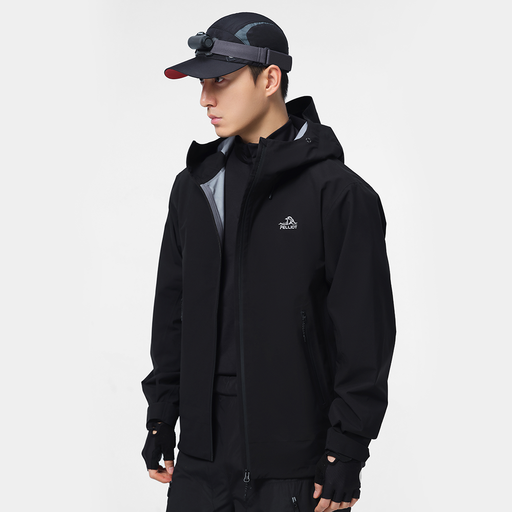
Why it suits this profile: Designed for hiking, trekking, travel and commuting where protection from wind and rain matters.
The size guide lists the jacket length, chest, shoulder and sleeve measurements. This helps you choose a layer to wear underneath.
A hardshell construction, wind resistance and a material specification that includes waterproof lamination.
We’ve put together a complete, up-to-date list of products that meet these strict selection criteria and the applicable European safety requirements.
Look for a waterproof men’s jacket with an explicitly described waterproof outer layer, a good hood and cuffs that fasten securely. For more strenuous activities, ventilation and suitable breathable fabric are also important. Always check the care instructions, as washing and drying can affect a coating’s performance.
Its lifespan depends on how often you wear it, friction, washing and storage. A jacket will usually stay in good condition for longer if you follow the washing instructions, fasten the zips before washing and avoid drying it at unnecessarily high temperatures. Technical outer layers may need to be reproofed periodically, in line with the care label.
For cycling or walking every day, a windproof men’s jacket, a lightweight men’s outdoor jacket or a waterproof style are practical choices. If you mainly work in an office, you could also consider a smart men’s jacket. Think about freedom of movement, visibility, pockets and a length that offers enough protection without getting in the way when cycling.
