
Vandaag of morgen in huis

Kwaliteit gegarandeerd

Welkomstaanbiedingen ontgrendelen: GRATIS bezorging | Tot 80% korting | Gratis 30 dagen JoyPlus-proefperiode
Download de app
A men's jacket needs to cope with the changeable weather in the Netherlands. Even so, a jacket described as waterproof, breathable or winter-ready on a product page will not necessarily perform the same way in every situation. If you focus only on colour or brand, you could end up with a jacket that is too warm for commuting, does not leave enough room for layers or loses its shape after a few washes.
This practical guide focuses on the features that really matter: intended use, size, material, protection from rain and wind, and the care the jacket requires.
A coating that causes light rain to bead up is not the same as a waterproof men's jacket with taped seams. Check whether the product information mentions hydrostatic head, seam sealing and the type of membrane. For example, a men's rain jacket for everyday cycling requires different information from a casual men's jacket for a dry spring day.
Also pay attention to the hood, zips and cuffs. Water can enter through these areas, even when the outer fabric has been given a water-repellent treatment.
A thick padded men's jacket can be warm, but may also quickly feel stuffy when walking or cycling. With a breathable men's jacket, the MVTR rating is relevant. MVTR stands for Moisture Vapour Transmission Rate and indicates how much water vapour can pass through the fabric according to a specific test method. The rating is useful for comparison, but does not precisely indicate how comfortable a jacket will be for every wearer.
You will often wear a men's winter jacket over a jumper or fleece. An outdoor men's jacket should also provide enough freedom of movement for walking, climbing or cycling. So do not just look at S, M, L or XL. Compare the chest measurement, shoulder width, sleeve length and back length with a jacket that fits you comfortably.
Hydrostatic head is expressed in millimetres of water pressure. Within the same test method, a higher figure indicates greater resistance to water pressure, but it does not tell you everything about the construction on its own. Also check whether the seams are taped and whether the zip has a storm flap.
The PELLIOT 3-in-1 jacket's product description states a hydrostatic head of 35,900 mm H₂O according to JIS. According to the brand's product information, the jacket is designed for heavy rainfall and the seams are protected. This is a brand claim, so always check the current product details and care instructions when purchasing.
Ventilation is important for walking, camping and active pursuits. The PELLIOT product description lists an MVTR of 16,000 g/m²/24 hours according to JIS. According to PELLIOT's own information, this rating helps to remove water vapour during exertion. Actual comfort also depends on your pace, clothing layers, temperature and the fit.
Underarm ventilation zips, mesh on the inside and an adjustable hem can be just as important in practice as the technical fabric.
A fleece-lined men's jacket is suitable for extra warmth on cold days, but may be too heavy for a mild autumn or spring day. A men's 3-in-1 jacket offers greater flexibility: wear the outer layer, inner layer or both together. Do check how the two parts are attached and whether the inner jacket can be worn on its own.
With down insulation, fill power is a relevant specification. THE North Face's Triclimate jacket lists an inner layer with 550 fill power down insulation. This is a verifiable product specification, but the final level of warmth also depends on the amount of filling, the fit and the clothing worn underneath.
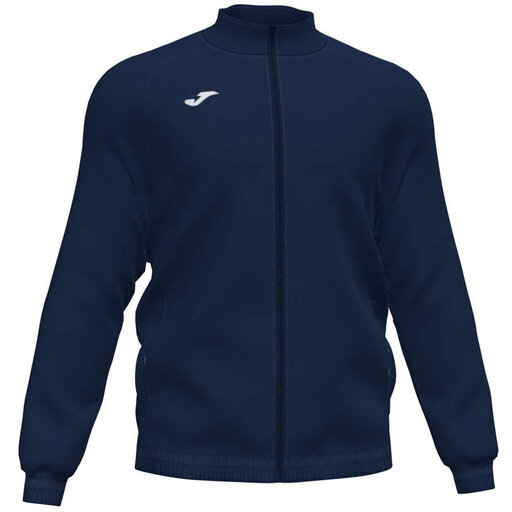
Why it suits this profile: This navy jacket has a regular fit, zip fastening and a composition of 95% polyester and 5% elastane. According to the product information, it is intended for both formal and informal occasions.
The product details clearly state the fit, fastening and materials. No technical rain performance is assumed beyond what is included in the description.
Navy colour, regular fit and lightweight fabric blend for a smart casual men's jacket.

Why it suits this profile: The Triclimate 3-in-1 construction is designed for changeable conditions. The outer layer and down inner layer can be worn separately or together.
The separate layers reduce the risk of buying one heavy jacket that is comfortable in only one temperature range.
550 fill power down insulation, adjustable hood, taped outer seams and underarm ventilation zips according to the product description.
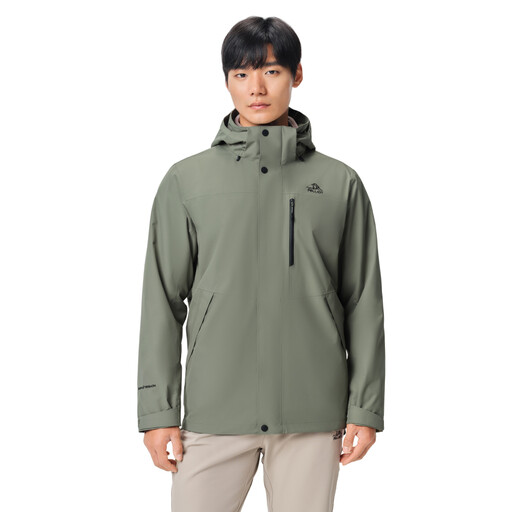
Why it suits this profile: According to the product information, this men's 3-in-1 jacket is intended for camping, travel, walking and everyday commuting. The outer layer and fleece inner layer can be worn separately or together.
The product description lists separate figures for hydrostatic head, breathability and abrasion resistance, rather than relying only on general terms such as ‘all-weather’.
According to PELLIOT's own information: 35,900 mm H₂O hydrostatic head, 16,000 g/m²/24 hours MVTR and more than 40,000 abrasion cycles.
We have put together a complete, up-to-date list of products that fully meet these strict selection criteria and the applicable European safety regulations.
Look for a waterproof men's jacket with information about hydrostatic head, seam sealing and the hood. For light showers, a jacket with a water-repellent coating may be sufficient, but its protection can decline through wear and incorrect washing.
Its lifespan depends on use, material, friction and care. A jacket with a hard-wearing outer material may be suitable for more intensive use, while a smart blazer mainly benefits from careful washing and storage. Always follow the care label and check the zips, seams and cuffs regularly.
For many models, care is limited to washing according to the label and air-drying naturally. A technical rain jacket may need a new waterproofing treatment over time. Check in advance whether the jacket is machine washable and whether it can be tumble-dried.
