
Vandaag of morgen in huis

Kwaliteit gegarandeerd

Welkomstaanbiedingen ontgrendelen: GRATIS bezorging | Tot 80% korting | Gratis 30 dagen JoyPlus-proefperiode
Download de app
Hot flushes, night sweats, tiredness and mood swings can make everyday life more challenging during the menopause transition. A menopause supplement may seem appealing as an addition to your usual diet. However, menopause capsules vary considerably in their ingredients, dosage and intended users.
The packaging does not always tell the whole story either. So don’t just look for words such as “complete”, “powerful” or “hormone balance”. Pay particular attention to the ingredients list, recommended daily dosage and warnings.
Brands often mention sage, maca, cayenne, black cohosh or wild yam in connection with menopause symptoms. That does not automatically mean the effect is established for every user. Health claims for various botanical ingredients have not yet been approved in Europe.
For example, according to Ymea’s product information, sage and maca are associated with support for hot flushes, night sweats or tiredness. The relevant health claims are listed as awaiting European approval. So treat this as a product description, not a guarantee.
More milligrams do not automatically mean that a supplement is better suited to you. A formula containing many ingredients may be convenient, but it may also be less suitable if you already take several vitamins or minerals. Pay particular attention to the reference intake, abbreviated as RI, for vitamins and minerals.
Also check for overlap. Combining a menopause supplement containing vitamin D and zinc with a multivitamin for women aged 50+ may increase your total intake. Discuss combinations with a doctor or pharmacist if you take medicines or are receiving treatment.
A supplement for women going through the menopause is not always the same as a supplement for women who are post-menopausal. Some formulas focus on general hormonal balance, while others mainly contain calcium, vitamin D and vitamin K2 to support bones and muscles.
So start by deciding what you want to achieve: are you looking for a broad formula to complement your daily diet, a vegan menopause supplement, or a product containing calcium and vitamin D?
A reliable product comparison starts with the amount provided per recommended daily dosage. With Ymea 8-in-1 Menopause Support, the daily dosage consists of two capsules containing, among other ingredients:
Plant extracts do not always have an established RI. So also check the extraction ratio, type of extract and any notes regarding the approval of health claims.
A supplement that you forget to take every day is unlikely to fit well into your routine. Check whether you need to take one or more capsules or tablets per day, and whether taking it with food is recommended.
Ymea 8-in-1 recommends one capsule twice a day, preferably with breakfast, with a maximum of two capsules per day. Lucovitaal Post Menopause Balance recommends one tablet per day. This difference matters if simplicity is important to you or if you want to calculate the cost per day of use.
If you specifically want a vegan or vegetarian supplement for the menopause, check the full product information. A vegetarian capsule is not always vegan, and a product free from the 14 main EU allergens may still contain specific ingredients that are unsuitable for you.
According to the product information, Ymea 8-in-1 is free from gluten, lactose and gelatine and is suitable for vegetarians. Lucovitaal Post Menopause Balance is listed as vegan. Lucovitaal Fish Oil Super Omega 3 is not vegan and contains fish, so it is not an obvious choice for a plant-based diet.
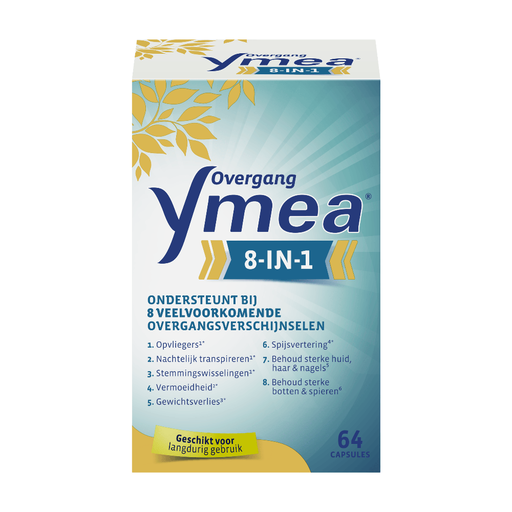
Why it suits this profile: A broad formula containing plant extracts, vitamin B6, vitamin D3 and zinc for anyone wanting to start with a single menopause supplement.
The ingredients and daily dosage are clearly stated. Bear in mind that, according to the product information, claims about sage, maca, cayenne and artichoke have not yet been approved in Europe.
64 capsules, two capsules per day, vegetarian, and free from gluten, lactose and gelatine.
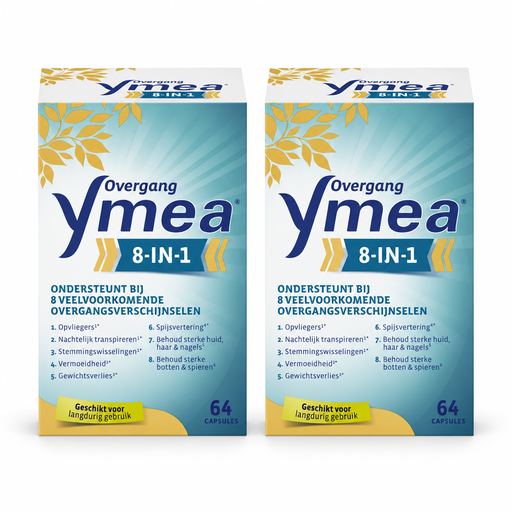
Why it suits this profile: The multipack is practical for long-term daily use when you want to continue taking the same formula.
The pack contains 2 × 64 capsules and states a maximum of two capsules per day. This makes it easy to check the cost per day of use.
Contains sage, maca, artichoke, cayenne, vitamin B6, vitamin D3 and zinc; free from sugar, lactose, gluten and gelatine.
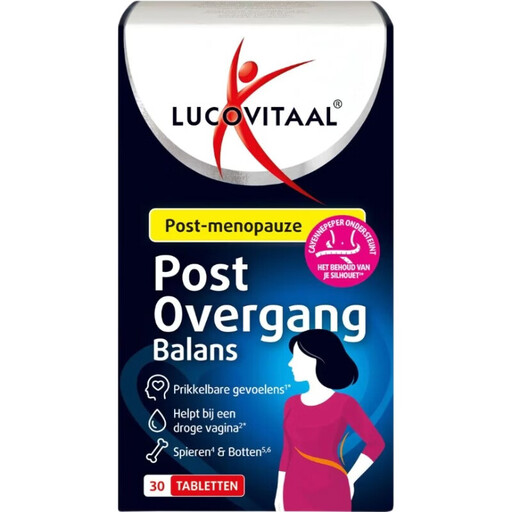
Why it suits this profile: Designed for post-menopausal women who are particularly focused on calcium, vitamin D3 and vitamin K2 alongside plant extracts.
The formula is not focused solely on menopause symptoms; it also states specific quantities: 500 mg calcium, 20 micrograms vitamin D3 and 37.5 micrograms vitamin K2 per daily dosage.
One tablet per day, vegan formula, and a combination of calcium, vitamin D3, vitamin K2, maca and sea buckthorn extract.
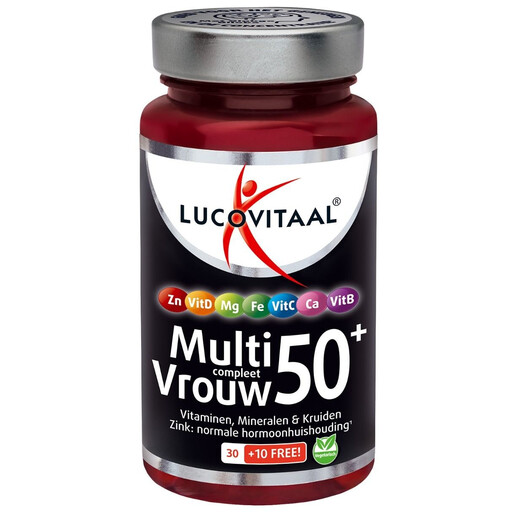
Why it suits this profile: Suitable for women aged 50+ looking for a vegan multivitamin containing vitamins, minerals and ginkgo biloba for everyday use.
The ingredients and quantities are specified per tablet. However, check whether iron, iodine and vitamin K are suitable for your personal circumstances.
Vegan, one tablet per day, 40 tablets, including vitamin D3, zinc, calcium, B vitamins and iodine.
We’ve put together a complete, up-to-date list of products that fully meet these strict selection criteria and the applicable European safety regulations.
A food supplement is not a substitute for a varied diet or healthy lifestyle. Always check the following before buying:
If in doubt, seek advice from a doctor or pharmacist. Stop using the product if you experience discomfort or an allergic reaction, and do not exceed the recommended daily dosage.
Products such as Ymea 8-in-1 and Lucovitaal Menopause Balance contain ingredients that, according to their product descriptions, are associated with support for hot flushes and night sweats. However, claims about various plant extracts have not always been approved in Europe. So compare the ingredients, dosage and warnings rather than relying solely on the promise on the front of the pack.
This varies by product. Ymea 8-in-1 states that it is suitable for long-term use at the recommended dosage. That does not mean long-term use is suitable for everyone. Regularly assess whether the supplement still fits your diet and discuss long-term use with a healthcare professional if you take medication.
Calculate the price based on the recommended daily dosage. Divide the price by the number of capsules or tablets, then multiply this by the number taken per day. A pack containing more capsules may therefore have a different cost per day of use from a smaller pack. Also check whether overlap with a multivitamin means you are unnecessarily buying several products.
