
Vandaag of morgen in huis

Kwaliteit gegarandeerd

Welkomstaanbiedingen ontgrendelen: GRATIS bezorging | Tot 80% korting | Gratis 30 dagen JoyPlus-proefperiode
Download de app
A pair of men's sports shoes may look appealing online, but that does not automatically mean it is suitable for your daily commute, training session or run. A low-profile trainer that feels comfortable during an afternoon in town may not provide enough support over longer distances, for example. Conversely, a technical running shoe may be unnecessary if you are mainly looking for casual men's shoes.
The following pitfalls are common:
A good fit starts with the length and width of your feet. Measure both feet at the end of the day, when they are usually slightly larger. Then compare the measurement with the insole length or foot length in millimetres shown on the product page.
Pay attention to the following:
For example, the adidas Galaxy 7 M is listed as EU 42 with a foot length of 270 mm. PELLIOT lists several foot lengths alongside EU, UK and US sizes. This type of information is more useful than simply stating that a model “fits true to size”.
The midsole largely determines how a shoe feels. EVA, IMEVA, Cloudfoam and similar foam materials can make the sole lighter or softer, but the experience varies from one model to another.
According to the product description, the adidas Galaxy 7 M uses a Cloudfoam midsole. The PELLIOT models are described as having an EVA midsole. IMEVA is mentioned for the PUMA Speedcat as a material that provides a lightweight feel. These are product specifications; how the shoe feels ultimately depends on your feet, running style and surface.
Do not look only at the upper. The outsole determines how much contact you have with the ground and how suitable a pair is for wet Dutch streets, sports floors or unpaved paths.
According to the product information, the Salomon DRX DEFY GRVL features an All Terrain Contagrip outsole for wet and dry surfaces. The PELLIOT models use a ROCKYTEC rubber outsole according to the description, although some versions may have a different sole variant. Always check the exact version and size you are actually ordering.
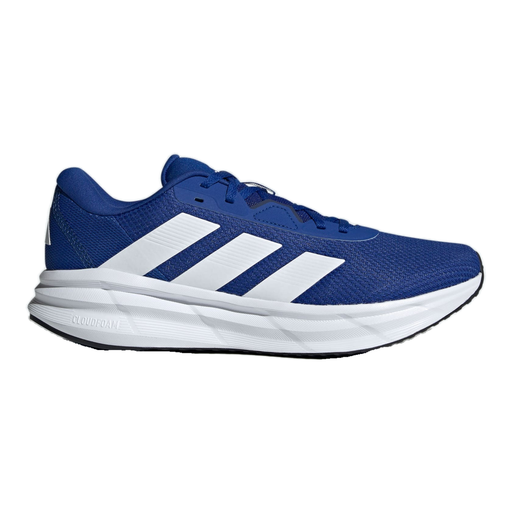
Why it suits this profile: An accessible model for beginner runners and everyday use on paved roads. The regular fit and stated foot length make choosing the right size more straightforward.
The product page lists specific sizes, a Cloudfoam midsole and a TPU outsole. This means you do not have to rely solely on vague comfort claims.
Textile upper, regular fit, Cloudfoam midsole and TPU outsole according to the product specifications.
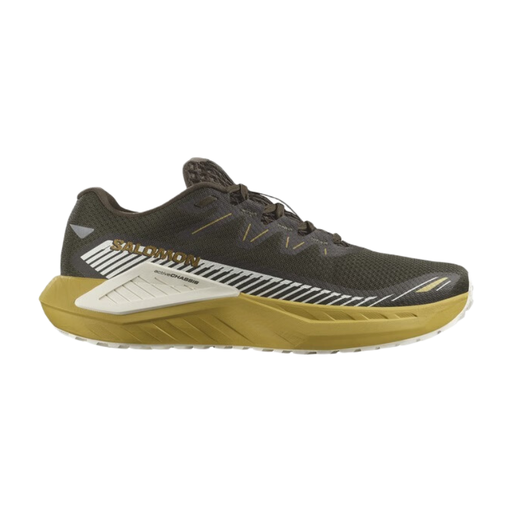
Why it suits this profile: For anyone looking for a versatile shoe for gravel, walking routes and trail running without immediately opting for a heavy mountain shoe.
The stated Active Chassis construction and Contagrip outsole make its intended use clearer than that of a general trainer.
Synthetic mesh, Energy Foam midsole and All Terrain Contagrip according to the product description.

Why it suits this profile: Designed for users who switch between tarmac, gravel and unpaved paths and value ventilation and a lugged outsole.
The product information lists standard and slim-fit versions. It also describes the materials, foot lengths and sole type separately.
Sandwich mesh, EVA midsole and ROCKYTEC rubber according to the product page; suitable for road-to-trail use.
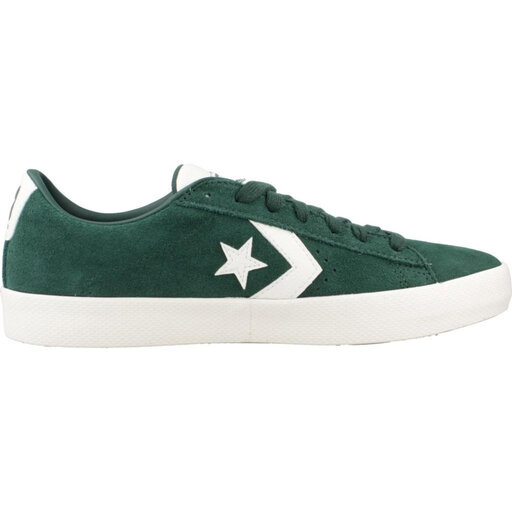
Why it suits this profile: A low-profile trainer for everyday outfits, city use and anyone who values freedom of movement.
The low profile and vulcanised rubber sole make it clear that this is primarily a casual or skate-oriented choice, not a running shoe.
Suede upper, padded insole and vulcanised rubber sole according to the product information.
We have put together a complete, up-to-date list of products that fully meet these strict selection criteria and the applicable European safety regulations.
That depends on your surface and walking distance. For the city, work and casual outfits, low-profile men's trainers with a rubber sole are often practical. If you walk several kilometres every day, look for a flexible midsole, breathable upper and a fit that does not pinch. A trail model is usually unnecessary for normal city use.
Their lifespan depends on usage, body weight, surface, care and whether you alternate them with a second pair. Check the sole for smooth patches, cracks and coming-away seams. With men's running shoes, it is sensible to look not only at the calendar but also for changes in comfort and visible wear. Allow wet shoes to dry naturally and avoid direct heat.
Not necessarily. A low weight can feel pleasant when running, but comfort is also determined by width, heel hold, cushioning and stability. If you mainly walk, you may benefit more from a sturdier shoe. If you are looking for speed and ventilation, lightweight running shoes may be the better choice. Compare the complete construction rather than just the weight.
Check which material is used in the midsole, what surface the model is designed for and how firm the shoe feels. Cushioning is not a substitute for the right size. Fit, grip and intended use together determine whether a pair is suitable for your daily activities.
